


1. Introduction to Tawang Monastery
Tawang Monastery, located at an altitude of approximately 10,000 feet in Arunachal Pradesh, is the largest monastery in India and one of the most significant centres of Tibetan Buddhism. This travel guide includes its history, opening hours, the best time to visit, entry fees, and additional tips for travellers.
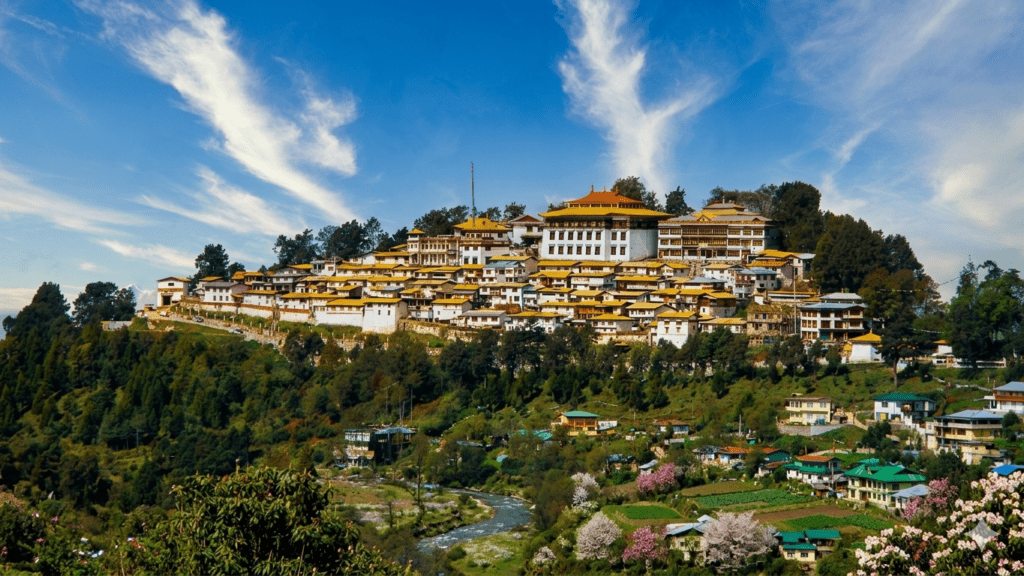
Tawang Monastery is situated 2km west of Tawang town centre, West Kameng district, close to the Indo-China border. This magnificent monastery, overlooking the Tawang valley, is not only a worship centre, but also a living centre of Tibetan Buddhism culture and tradition. The monastery compound includes a large prayer hall, a residential area, and a well-stocked library of Buddhist literature. Central to it is a very tall statue of Buddha, which symbolises peaceful spiritual wisdom.
Tawang Monastery Quick Facts:
Location: Tawang, Arunachal Pradesh
Altitude: ~10,000 ft
Founded: 1680–1681
Sect: Gelug school of Tibetan Buddhism
Entry fee: Free
Time required: 1–2 hours
2. Why is Tawang Monastery significant?
Tawang Monastery is an extremely significant monument because of the following reasons:
- Tawang Monastery is a spiritual hub of Tibetan Buddhism (Gelugpa school) in India.
- Its history dates back to the 17th century, and it is associated with Ngawang Lobsang Gyatso.
- It is the cultural centre of the Monpa tribe, which forms the local traditions and festivities.
- Tawang Monastery is home to the Torgya Festival, a rich celebration of masked dances and rituals.
- The Grand prayer hall and the Giant Buddha statue are architectural landmarks inside the monastery.
- Tawang Monastery houses rare manuscripts and scriptures that preserve Buddhist knowledge.
- Tawang Monastery has a strategic and picturesque position along the Indo-Tibet border, which adds to its geographic significance.
Consequently, it is a significant attraction for Arunachal tourism among most travellers.
Check out Arunachal Pradesh tour packages, and you could visit a destination like Tawang as a part of your itinerary on a trip.
3. History of Tawang Monastery
Tawang Monastery was built between 1680 and 1681 by Merak Lama Lodre Gyatso, under the guidance of the 5th Dalai Lama, as documented in historical and religious texts. Locals believe the location was chosen by God when the Lama’s horse went missing, and it was later found there. Hence, the monastery was named Tawang (meaning “chosen by the horse”). The monastery was founded as one of the Gelugpa sects of Tibetan Buddhism and became a significant centre of Buddhist learning and spirituality. It has, over the centuries, preserved ancient scriptures, rituals, and monastic traditions and remains an important cultural and religious institution in the area.
4. Cultural Significance of Tawang Monastery
The cultural and spiritual centre of the area is the Tawang Monastery, which shapes the identity and the worldview of the Monpa community. It is both a place of worship and a living institution where traditions, values, and communal memory are preserved and actively lived. Festivals such as Losar and Torgya are not just festivals but rather symbolic representations of faith, rebirth, protection, and the balance of the universe. The monastery preserves religious art, oral culture, and ritual, ensuring continuity between the past and the present and situating the region’s cultural identity in a deeper spiritual and philosophical context.
5. Architecture of Tawang Monastery
Tawang Monastery is constructed as a fortification complex with both spiritual and strategic purposes. Enclosed within high walls, it is like a mini-monastic town with gates, courtyards and interconnected structures. The Dukhang, or main prayer hall, is the core of the structure, a large gathering space, bold in its murals, rich in thangkas, and home to a great statue of Buddha. The design is a classic Tibetan one, with sloping roofs and wooden facades of different colours, with lots of carvings. Around the main courtyard, there are residential quarters for monks and spaces for. There is also a library, forming a self-sustaining spiritual environment that combines functionality with symbolic design.
Inside the Tawang Monastery complex, you will find:
- Large prayer halls where rituals and ceremonies happen daily
- A library with rare and ancient Buddhist scriptures.
- Complex murals and thangka paintings that are very colourful and vividly describe the Buddhist teachings and stories
- An idol of Buddha in the main hall acts as the spiritual centre
- Living quarters occupied by hundreds of monks, as an expression of a self-sustaining monastic lifestyle
- Interior courtyards where people would gather, teach and perform festival dance shows such as Torgya
All the elements of the monastery are thoughtfully designed to fulfil the spiritual and artistic purpose.
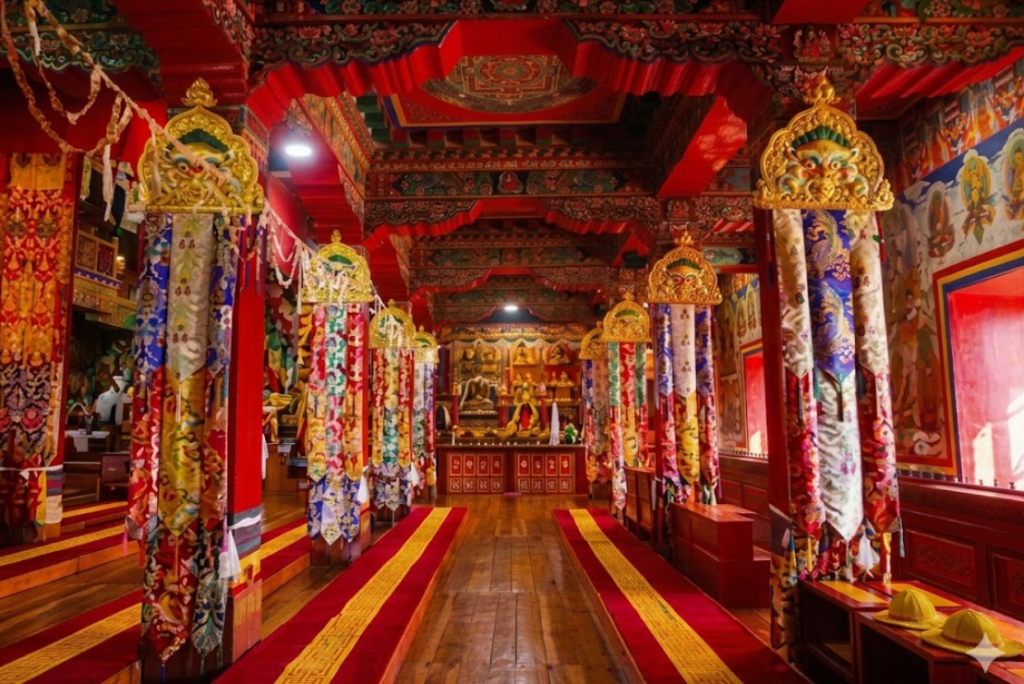
The monastery as a whole brings together history, culture, and architecture into a unified entity.
6. Tawang Monastery Timings and Entry Fee
It’s always better to pre-plan your visit, especially to religious places & institutions, by knowing the timings well in advance. The timings and prices at Tawang Monastery will help you plan in advance and avoid last-minute inconveniences.
Opening Hours:
The monastery has a fixed daily schedule.
- Opening Hours: 7 AM to 7 PM (daily).
This schedule may vary slightly depending on the local conditions, weather, or special religious events in Tawang. It is never a waste of time to enquire with the locals before visiting anyway.
Access and Payment to Enter:
There is no entrance fee to Tawang Monastery; however, you may be asked to make a small donation for the monastery’s maintenance. There is also a museum inside Tawang Monastery, and the entrance fee is approximately 20 INR. Sometimes a modest fee for carrying a camera may be requested.
Most public areas, including courtyards and outdoor spaces, are accessible to visitors. There are occasions when only a few people can perform rituals and festivals in the inner prayer halls. Always adhere to local instructions when visiting.
7. How to Get an ILP for Tawang Online?
You should obtain an ILP for Tawang online before you visit Arunachal Pradesh. The Indian travellers are required to have an Inner Line Permit (ILP) to visit the state.
This permit helps control travel and safeguard the region’s cultural and environmental balance. Thus, all the visitors should have their ILP with them throughout the trip.
Fortunately, the process is not complicated, as it is online. You can apply anywhere before you take off.
Steps to Apply for ILP Online:
- First, visit the official Arunachal Pradesh ILP portal.
- Now fill in your personal and travel information.
- Then, upload a valid ID proof and a passport-size image.
- Make the necessary payment for the permit.
- Lastly, download your permit.
In most cases, the ILP is typically approved by the authorities within a few hours or even a day. However, you must apply early to avoid any last-minute inconveniences.
Always carry a printout or a digital copy of your Arunachal Inner Line Permit with you on your trip. The officials may check the same at different entry points.
As a whole, the ILP process is straightforward, easy to obtain, and not very time-consuming. If you are joining the Arunachal group tour, your travel company will most likely handle it.
8. Best Time to Visit Tawang Monastery
A visit to Tawang Monastery is influenced by seasonal variations, which affect the landscape, ambiance, and travel comfort. It is advisable to plan your visit based on your preferred experience.
Winter (December to February)
The best time to see snow in Tawang is winter. During this season, the entire territory turns into a white fairy tale. The monastery, roads and surrounding mountains are covered with heavy snow. The travelling, however, is difficult due to the road conditions. Therefore, the season is better suited to travellers who like snow, uncertainty, and adventure.
Spring (March to April)
Tawang spring is characterized by sunny weather and clean mountain air. As the snow starts to thaw, access to roads increases, making travel easier. It is an invigorating season, with pleasant weather that is neither cold nor hot, making it suitable for travellers who need comfort and natural beauty at the same time.
Autumn (September-November)
The month of the best visibility and stable weather is autumn. The skies are clear, and the landscape is bright and colourful. The weather is just perfect – neither warm nor too cold. Therefore, it is ideal for sightseeing and photography.
To get a more detailed idea of what you plan to visit, you may check upcoming departures on the Transforming Travels trip calendar and select the season that best suits your travel habits.
9. How to Reach Tawang Monastery + Travel Tips & Visitor Guide
Tawang Monastery is a great place to visit. The journey could feel a little arduous, but the highway has one of the best views of Northeast India.
How to Reach Tawang Monastery
Lokpriya Gopinath Bordoloi International Airport is the closest airport. From there, travellers typically continue their journey with a road trip to Tawang.
The standard route to Tawang passes through Guwahati, Bomdila, and Dirang.
Along the journey, you will gradually pass through beautiful scenery and stunning mountain passes.
It is worth mentioning that the views of the alpine lakes are breathtaking at Sela Pass. Also, Nuranang Falls is an unexpected and beautiful sight between green cliffs and adds to the trip.
Things to Keep in Mind
Once you visit the monastery, you should worship in a spiritual ambience:
- Dress decently, with shoulders and legs covered
- Be silent in the prayer halls
- Do not click selfies with Buddha statues
- Participate respectfully in prayers and rituals with the monks
- Remove shoes where required
- Avoid disrupting or interfering with ongoing religious ceremonies
How Much Time is Sufficient?
You can explore the monastery in a relatively short time, usually within one to two hours. However, setting aside half a day allows for a much more fulfilling experience. With additional time, you can walk around at a relaxed pace, observe the architecture more closely, take photographs, and truly appreciate the calm surroundings.
A longer visit also gives you the opportunity to sit quietly and take in the spiritual atmosphere, rather than rushing through the site, making the experience more memorable and meaningful.
10. Tawang Monastery: Interesting Facts and Frequently Asked Questions
Not only is Tawang Monastery stunning, but it is also considered to have a unique history and is massive.
Interesting Facts:
- It is the second-largest monastery in the world.
- It houses more than 300 monks.
- It is known as “Galden Namgey Lhatse,” which means “celestial paradise.”
- It has a breathtaking view of the Tawang Valley.
- It is a significant centre of Mahayana Buddhism.
Frequently Asked Questions:
Q1. What is Tawang Monastery famous for?
It is renowned for its magnitude, historical significance, and spiritual significance in Tibetan Buddhism. It also has breathtaking Himalayan scenery.
Q2. Should one visit Tawang Monastery?
Yes, it has a perfect combination of culture, spirituality, and picturesque landscapes. Hence, it is a must-visit for most travellers.
Q3. How much time do you need at Tawang Monastery?
A basic visit will require approximately 1-2 hours. But a half-day visit permits more time to immerse in the local surroundings and time for photography.
Q4. Is Tawang Monastery open to tourists?
Yes, tourists are allowed to visit most areas of the Tawang Monastery premises. Sometimes, an area of the monastery could be restricted to visitors due to ongoing events. Nevertheless, a few inner sections are mostly always open.
Q5. What is the location of Tawang Monastery?
It is situated in Tawang, in the eastern Himalayas, in Arunachal Pradesh.
Q6. Is Tawang Monastery the largest in India?
Yes. Tawang Monastery is the largest monastery in India and the second-largest in the world, after the Potala Palace monastery complex in Tibet.
Q7. Who built Tawang Monastery?
Tawang Monastery was built in the 17th century by Merak Lama Lodre Gyatso under the guidance of the 5th Dalai Lama.
11. Planning Your Arunachal Pradesh Journey
Not only is the spiritual centre of Arunachal Pradesh located in Tawang Monastery, but it is also one of the largest Buddhist monasteries in India. The monastery is one of the best reasons to visit Tawang, whether you are interested in its history, architecture, or mountain views.
Good travel planning makes all the difference. It ensures smoother transport, richer local experiences, and a well-paced itinerary, so you can focus on enjoying the journey instead of managing the details.
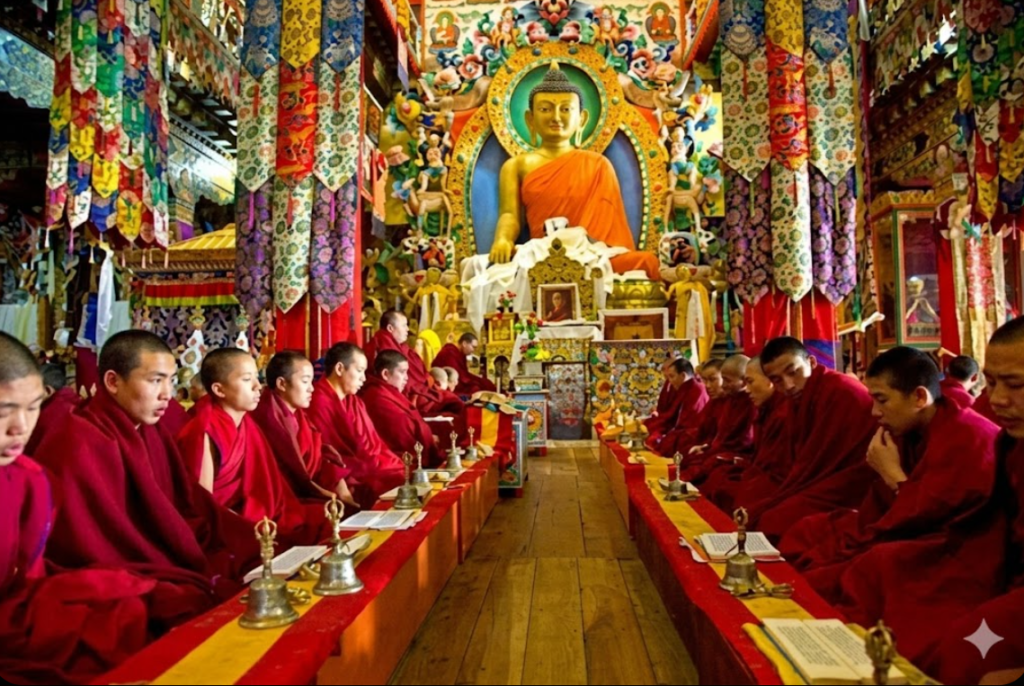
Lastly, Tawang Monastery stays with you long after you leave. With its serene atmosphere, vibrant culture, and breathtaking landscapes, it offers an experience that is both memorable and meaningful. If the Himalayas are on your mind, this is a place you shouldn’t miss.
To be inspired, one can also follow our travel stories on Instagram to learn about real travel experiences. Besides, you can also read Why Thiksey Monastery Should Be on Your List to see another legendary monastery in the Himalayas.

