
Leh: A complete guide to the heart of Ladakh
Tags
Leh: A complete guide to the heart of Ladakh
An old Tibetan saying translates to, “The


Chase spring through Ladakh’s apricot orchards, where pink and white blossoms transform the Himalayan countryside. Discover the cultural charm of Aryan Valley, Turtuk, and the surreal landscapes of Sham Valley. Cross spectacular mountain passes and soak in the beauty of Nubra Valley and Pangong Lake.
Starts: from Leh Airport
Ends: at Leh Airport
Group Type: Mixed Gender
Start: 10 Apr 2027
End: 17 Apr 2027
₹ 50500
Join us on a 7 Nights/8 Days spectacular springtime journey through Ladakh, when its picturesque valleys come alive with delicate pink and white apricot blossoms. Discover the unique culture and traditions of Aryan Valley, explore the Scenic Sham Valley, the fascinating Moonland Landscapes of Lamayuru, and the charming village of Turtuk. Experience the breathtaking beauty of Nubra Valley, cross the legendary Khardung La and Chang La Passes, and soak in the surreal beauty of Pangong Lake. From blooming orchards and ancient monasteries to dramatic Himalayan landscapes, discover Ladakh in one of its most enchanting seasons.
Did you know that this itinerary is thoughtfully designed to maximize apricot blossom sightings across multiple days and altitudes? If one orchard is past its bloom, another may be in full bloom! So, keep your cameras ready, wear your brightest smiles, and get ready to chase spring!
Ladakh, a land of dramatic contrasts and extraordinary beauty, is often described as a place so explored yet unexplored. While most travellers know it for its rugged mountain passes, turquoise lakes and stark high-altitude landscapes, there is another side to this Himalayan wonderland that comes alive with the arrival of spring. As winter gradually loosens its grip, the valleys begin to transform, with delicate pink and white apricot blossoms bringing unexpected splashes of colour to the otherwise rugged terrain. This is the season to slow down, wander through charming mountain villages and chase the fleeting beauty of apricot blossoms across Ladakh
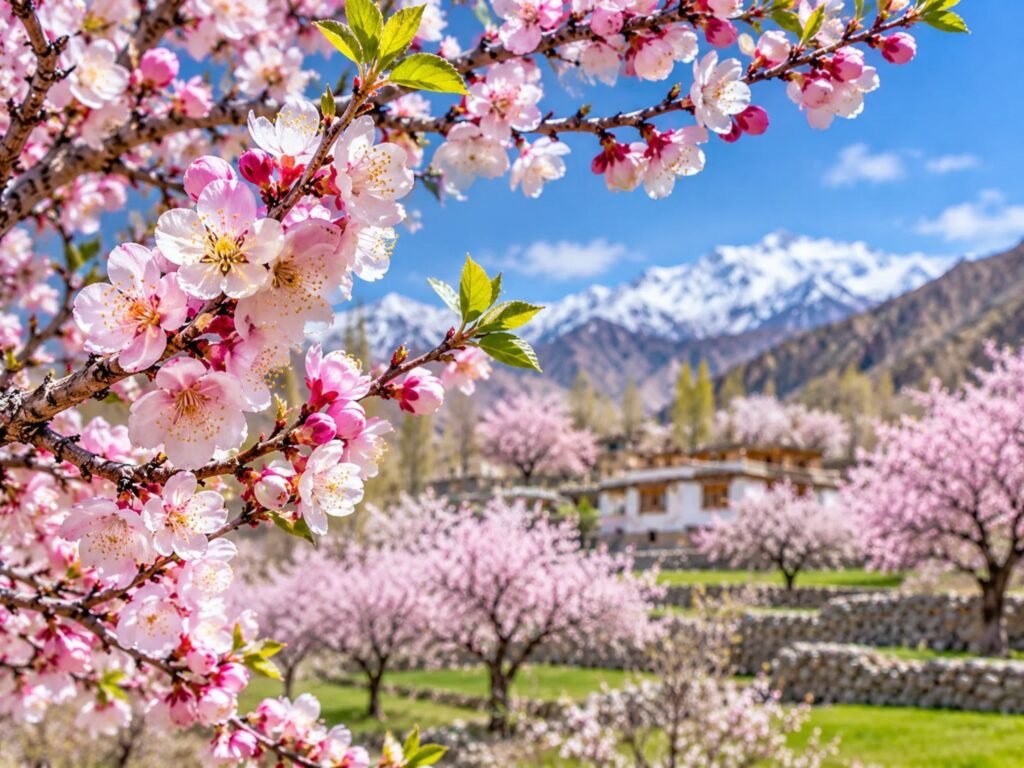
Did you know that apricot trees have been cultivated in Ladakh for centuries? Besides producing delicious fruit, these trees are an important part of the region’s traditional agriculture and village life. Their flowering marks the arrival of spring, transforming otherwise barren landscapes with delicate shades of pink and white.
Positioned at an average elevation of over 11,000 feet, Ladakh is a cold mountain desert renowned for its snow-clad peaks, vast plateaus, ancient monasteries and spectacular lakes. Beyond its iconic landscapes lies a fascinating cultural world shaped by centuries of Tibetan Buddhist traditions, the historic Silk Route and the diverse communities that call these mountains home.
Did you know that apricot flowering does not happen simultaneously across Ladakh? Depending on the weather, altitude and location, different villages begin to bloom at different times. This makes chasing the blossoms particularly special, as every valley offers a different possibility of discovering these beautiful flowers.
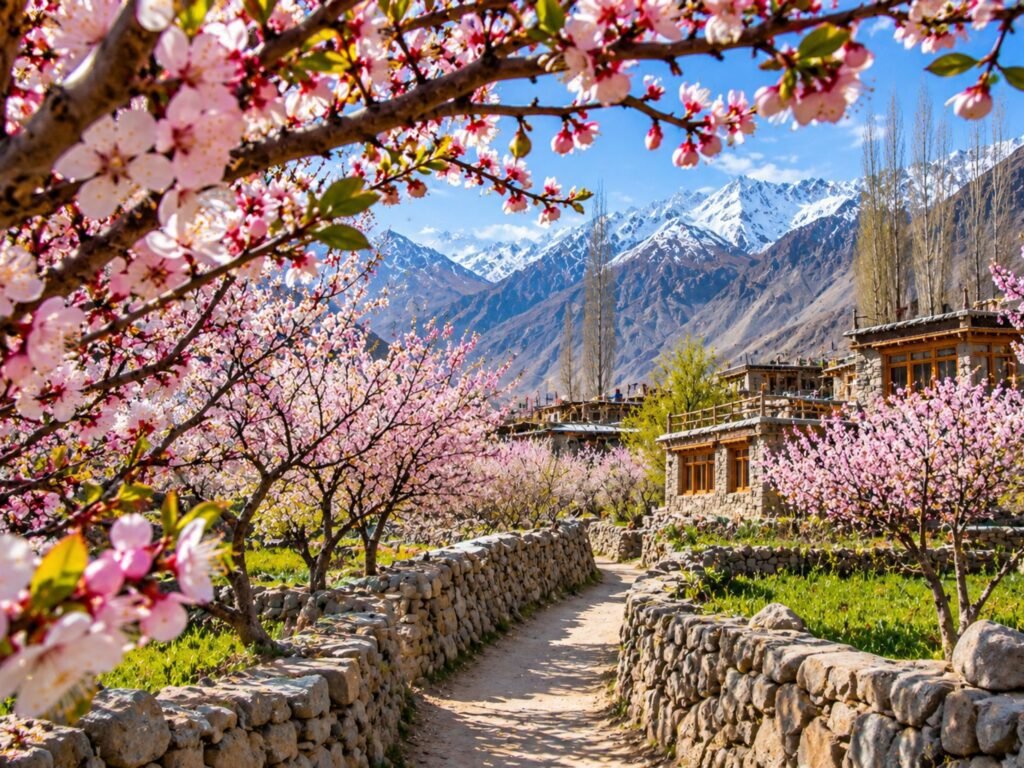
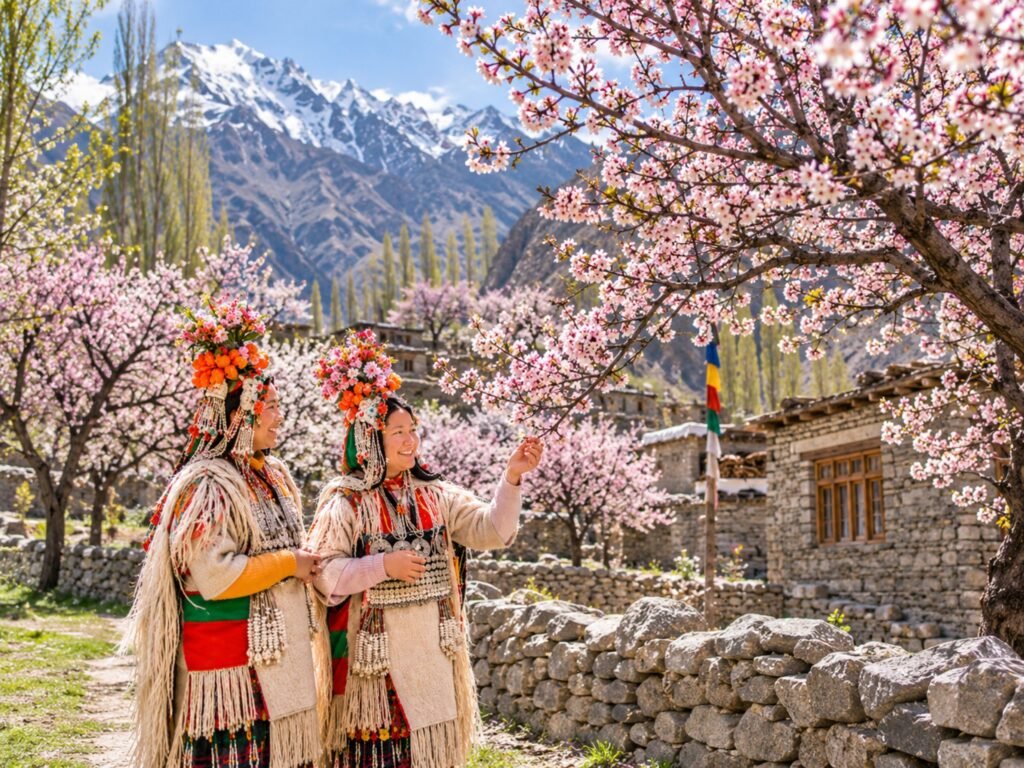
Our journey takes us through the enchanting Aryan Valley, particularly the villages of Dha and Hanu, home to the distinctive Brokpa community. Known for their unique cultural traditions and heritage, these villages offer a glimpse into a lesser-explored side of Ladakh. During the flowering season, apricot orchards create a beautiful contrast against rugged mountains and traditional village homes.
We also explore the picturesque Sham Valley, visit Gurudwara Pathar Sahib, experience the fascinating optical illusion at Magnetic Hill, and witness the spectacular confluence of the Indus and Zanskar rivers. Further along the route, discover Lamayuru Monastery, one of the region’s oldest monasteries, surrounded by extraordinary lunar-like formations popularly known as Moonland.
Did you know that Ladakh was once an important part of the ancient Silk Route?
Its strategic location connected Central Asia, Tibet, and the Indian subcontinent through centuries of trade, influencing the culture, architecture, and traditions of settlements across the region.
Our journey continues towards Kargil, a region steeped in history and surrounded by dramatic Himalayan landscapes. We then cross the legendary Khardung La, one of the world’s highest motorable mountain passes, to reach the magnificent Nubra Valley. Known for its contrasting landscapes, Nubra surprises visitors with vast sand dunes, green villages, winding rivers, and the famous double-humped Bactrian camels of Hunder.
We also venture to Turtuk, a charming Balti village near the India-Pakistan border, which became part of India following the 1971 war. Its distinctive architecture, stone pathways, apricot orchards, and rich cultural heritage make it one of Ladakh’s most fascinating destinations.
Did you know that the double-humped Bactrian camels of Nubra were historically used by traders travelling along the Silk Route? Today, they remain one of the most distinctive sights of the Hunder sand dunes, reminding visitors of the region’s fascinating trading history.
No journey to Ladakh is complete without experiencing Pangong Lake, the spectacular high-altitude lake situated at approximately 14,000 feet. Its mesmerizing shades of blue, framed by barren mountains, create a landscape that seems almost unreal. Interestingly, this transboundary lake extends across India and China, with only a portion lying within Indian territory. Our return journey takes us across Chang La, another spectacular high-altitude mountain pass, with an opportunity to visit the beautiful Thiksey Monastery, known for its impressive architecture and magnificent Maitreya Buddha statue.
Beyond its extraordinary landscapes, what makes Ladakh truly unforgettable is its people, their warmth and their deep connection with the mountains. From colorful prayer flags fluttering in the mountain breeze and the peaceful silence of ancient monasteries to charming villages, blooming apricot orchards and countless cups of traditional butter tea, every experience leaves a lasting impression.
Come, let’s chase spring through Ladakh’s apricot orchards, discover its hidden cultural treasures, and experience this Himalayan wonderland in one of its most enchanting seasons.
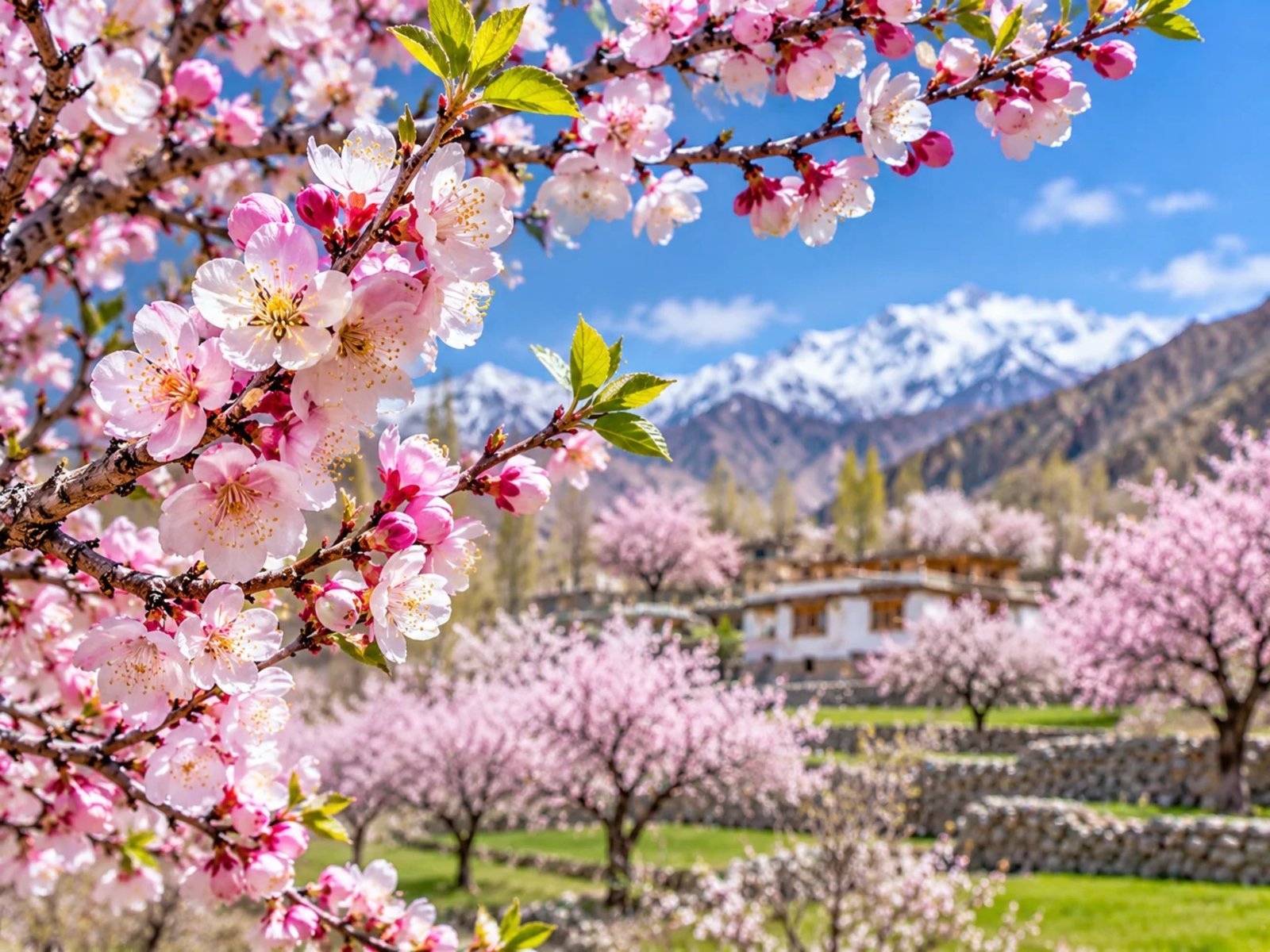
Thoughtfully designed to maximize apricot blossom sightings, this journey takes you through Ladakh’s picturesque villages, where orchards burst into delicate shades of pink and white. From Aryan Valley to Turtuk, meet local communities, discover beautiful landscapes, and chase the magic of spring in Ladakh’s countryside at its most enchanting time.
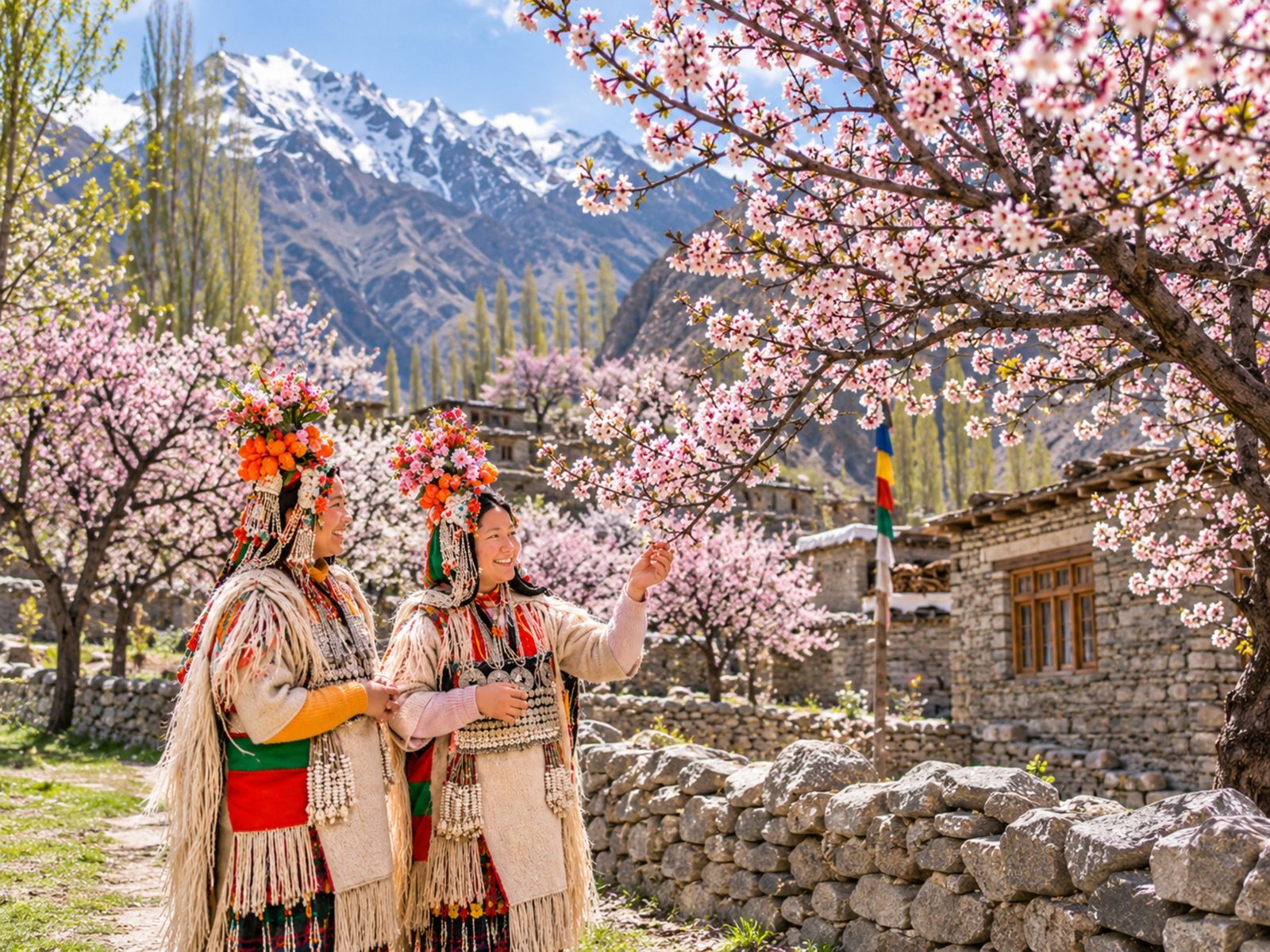
Explore Aryan Valley through its distinctive Dha and Hanu villages, where traditional stone homes, terraced fields, and apricot orchards reflect centuries-old mountain life. Meet the Brokpa community, discover their unique customs, colorful traditional attire, and cultural heritage, and experience a side of Ladakh that feels deeply rooted in its traditions.

Beautifully tucked between rugged and rustic terrains, Pathar Sahib Gurudwara was built in 1517 to commemorate the visit of Guru Nanak Dev to Ladakh region. It’s located at an altitude of 12000 feet, and 40 km from Leh city. The Pathar, translated to stone in English, has a legendary story behind it which we shall learn during our visit to the place.

Located at a distance of 30 km from Leh city, on Leh-Kargil highway, is a small stretch of road that is believed to be defying the concept of gravity. The magnetic hill seems to be pulling the stationary vehicles upwards. If one parks their vehicle in the designated area on the highway, it can be seen to be moving at 20 km per hour with engines being entirely off. Let’s unravel the mystery behind this – science or supernatural?

The confluence of Indus and Zanskar river is breathtaking beyond words. The muddy color of Zanskar can easily be distinguished from the emerald green Indus River at the even at the convergence point. One can overlook this magical beauty from the highway, and it’s a perfect place to sit, relax and click photos.
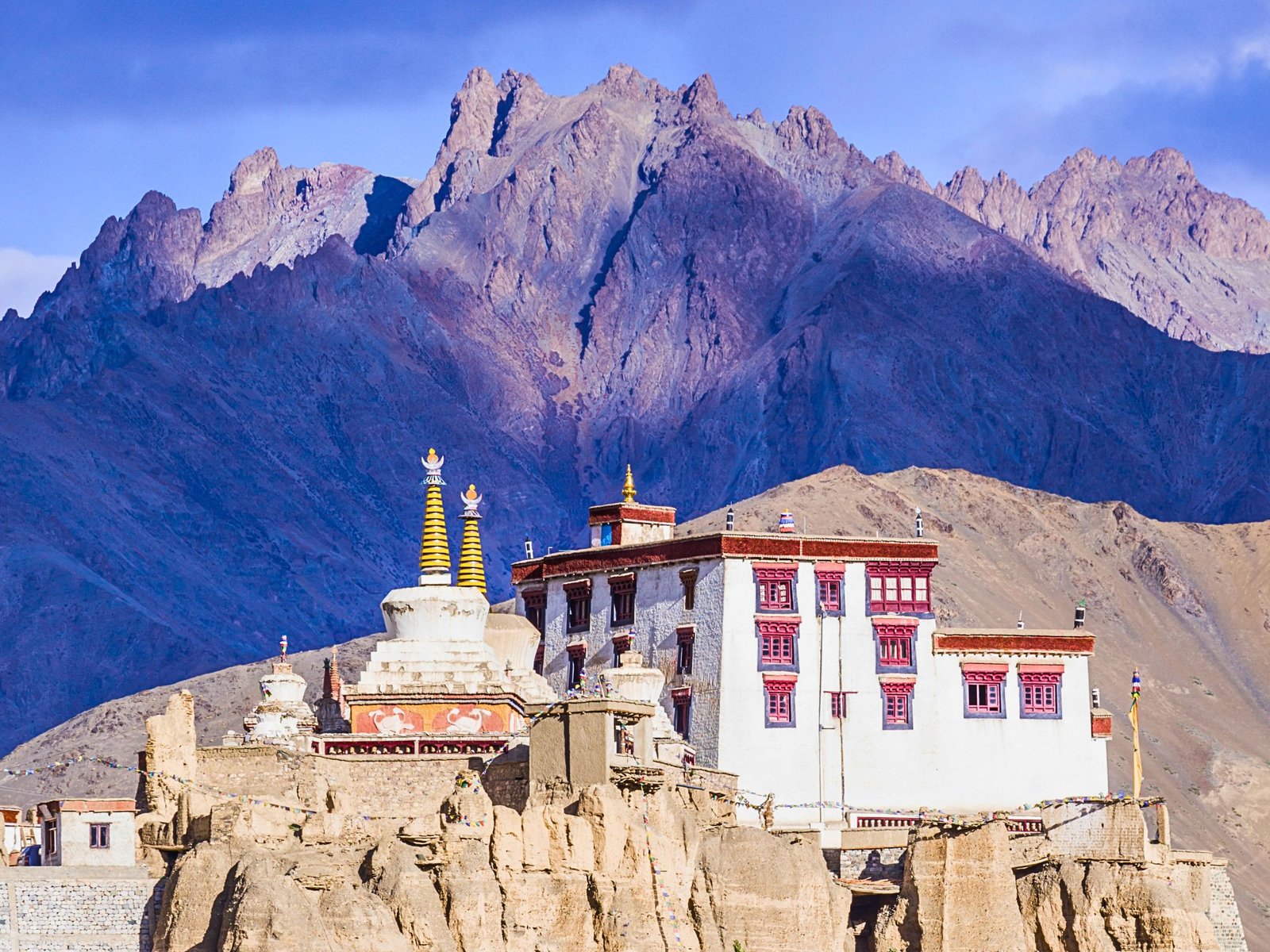
Discover Lamayuru Monastery, an ancient Buddhist institution traditionally associated with the 11th-century Indian sage Mahasiddha Naropa. Belonging to the Drikung Kagyu tradition, it preserves centuries of Buddhist heritage through sacred shrines, murals, thangkas, and prayer halls. Its meditation cave remains an important part of the monastery’s history.
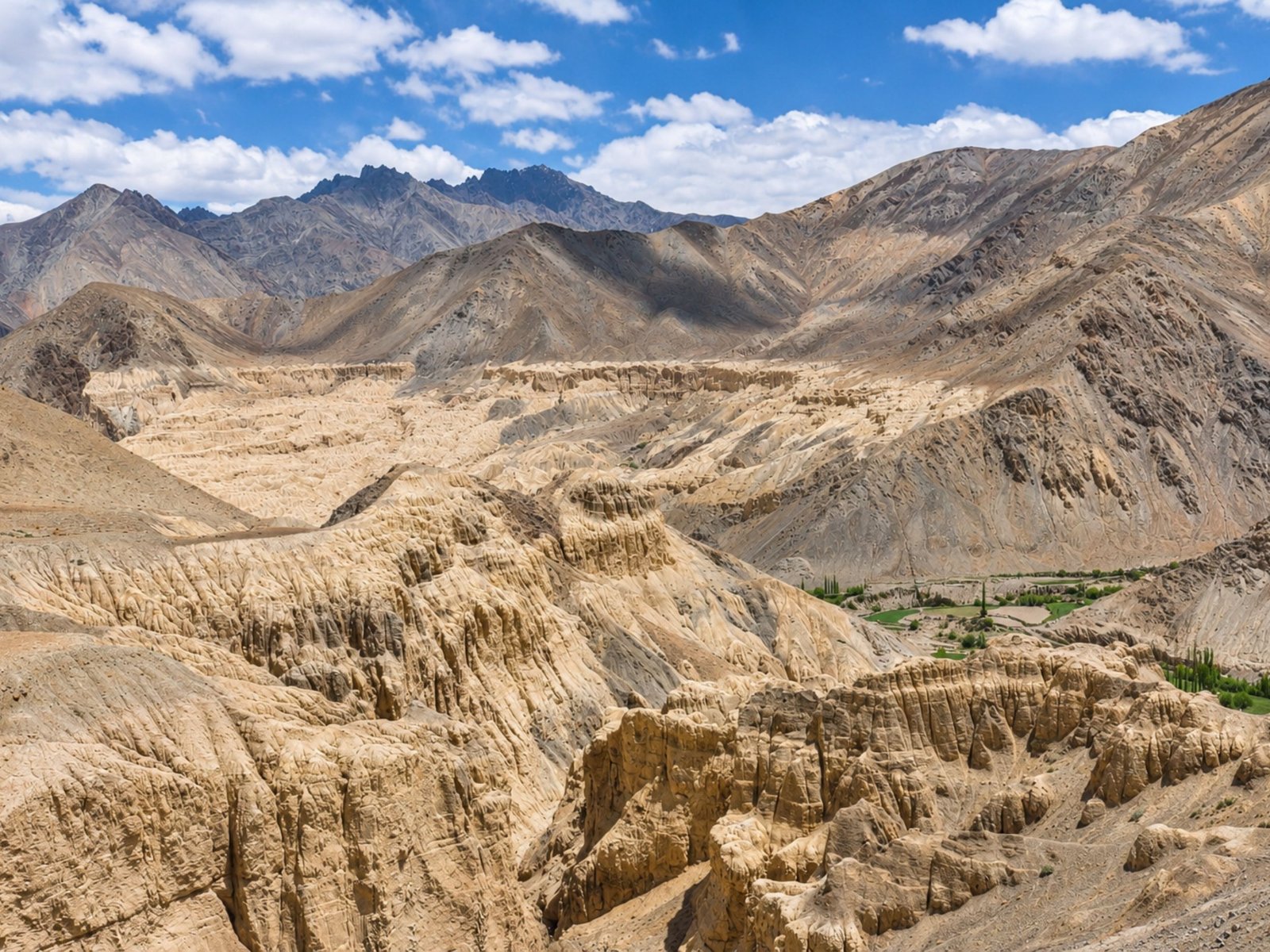
Lamayuru’s spectacular Moonland is a surreal landscape of sculpted hills, deep gullies, and unusual rock formations. Did you know this terrain was once the bed of an ancient lake, formed around 35,000–40,000 years ago? Over millennia, natural erosion shaped its exposed sediments into these extraordinary lunar-like formations, creating one of Ladakh’s most fascinating geological wonders.

Located at an altitude of 18380 feet, Khardung La is one of the highest motorable roads in the world. It’s also a high mountain pass (La in Tibetan stands for a pass) connecting Leh city to Nubra and Shyok valleys. It was built in 1976 but opened to general public in 1988. Riding Khardung La has been the dream of every Himalayan rider. Not to mention that this pass is crucial to India as it is used to carry supplies to the Siachen Glacier.

The almost 105 feet tall statue of Maitreya Buddha can be recognized as soon as we enter the campus of Diskit Monastery. It’s beautifully perched on a hilltop, and faces the Shyok river. It was built in 2006, but inaugurated in 2010 by Dalai Lama.

Built in 14th country, Diskit Monastery is the oldest surviving monastery in Nubra Valley. Beautifully tucked on a hilltop right above the floodplains of Shyok River, it can be easily recognized even from the far because of the stunning 106 feet tall statue of Maitreya Buddha. The monastery also runs a school for the Tibetan kids in the region.

A desert is probably incomplete it doesn’t have dunes, be it a cold mountain desert like Ladakh. Spread over an elevation of more than 13000 feet, the stunning sand dunes of Hunder look even more picturesque with the backdrop of snow-clad rugged mountain peaks. We will have an option to take a Bactrian Camel ride during our visit to Hundar Sand Dunes.

Bactrian Camel, mainly found in Central Asia, is one of the endangered camel species. These are double humped camels that make them unique, as compared to their single hump Arabian relatives. It’s is an incredible species as it can adapt to all kinds of harsh environments, from dense snowfall winters to scorching desert summers. Not to mention that Bactrian Camels were a lifeline of ancient silk route. We are going to have a close-up encounter with them during our visit to Nubra Valley.

Turtuk, a village divided by the border of India and Pakistan, was a part of Pakistan until 1971. It was opened to inquisitive tourists in 2010. Surrounded by the Karakoram range, it’s one of only four villages in India that lie in the Baltistan region. Turtuk gives visitors a great opportunity to experience the culture of Baltisan, which is a dream to many people. We will also visit Turtuk Gompa, hike towards border point, and interact with Balti folks.

Balti people, the residents of Turtuk, are rosy-cheeked beautiful looking people with very fair skin and features somewhat similar to Afghanis. Interacting with the residents of Turtuk village is the favorite part of the majority of travelers who visit here. The villagers are very friendly and shy as well.

Thang, perched on a hillock at the extreme edge of the Line of Control, is the northernmost village of India and was reclaimed from Pakistan during the 1971 war. Opened to travelers only recently, it offers a poignant and rare glimpse into a land frozen in time. As you stand amidst the rugged Karakoram peaks, you can clearly see the bunkers and Pakistani villages just across the fence, separated only by the winding Shyok River.

Balti Heritage House and Museum in Turtuk is a traditional 140 years old Balti house which has now been converted into a museum to provide an insight into the centuries old Balti lifestyle. The museum houses numerous artifacts including stone containers, utensils, farming tools, clothes made from yalk wool, traditional headgear, etc. The ancestral family which owns the museum, gives the guided tours of the place.

The villagers of Turtuk came up with an innovative solution to create natural cold storage. The natural cold storage is little stone rooms, also known as hollows or stone bunkers, where stones are arranged in such a manner that the gaps between them allow the cold air to creep inside. The underground glacial watercourse also adds to the cooling effect and keeps these stone quarters icy cold. Hence, perishable food items can easily be stored here.

Pangong Lake doesn’t need any introduction to someone who has been wanting to visit Ladakh. Shimmering at an altitude of 14270 feet, and 134 km in length the lake is completely frozen during winter. Not to mention that 60% of the length of the lake lies in China. It’s a saline water lake and is known to keep changing colors. Be ready to spend a fairytale (cold though) night at the lake.

Located at an elevation of 17590 feet, Chang La is one of the highest mountains passes and the highest motorable roads in the world. The mighty pass is guarded and maintained by Indian Army due to its proximity to Indo-China border. A drive through Chang La is going to give us an adrenaline rush. It’s covered with snow throughout the year.
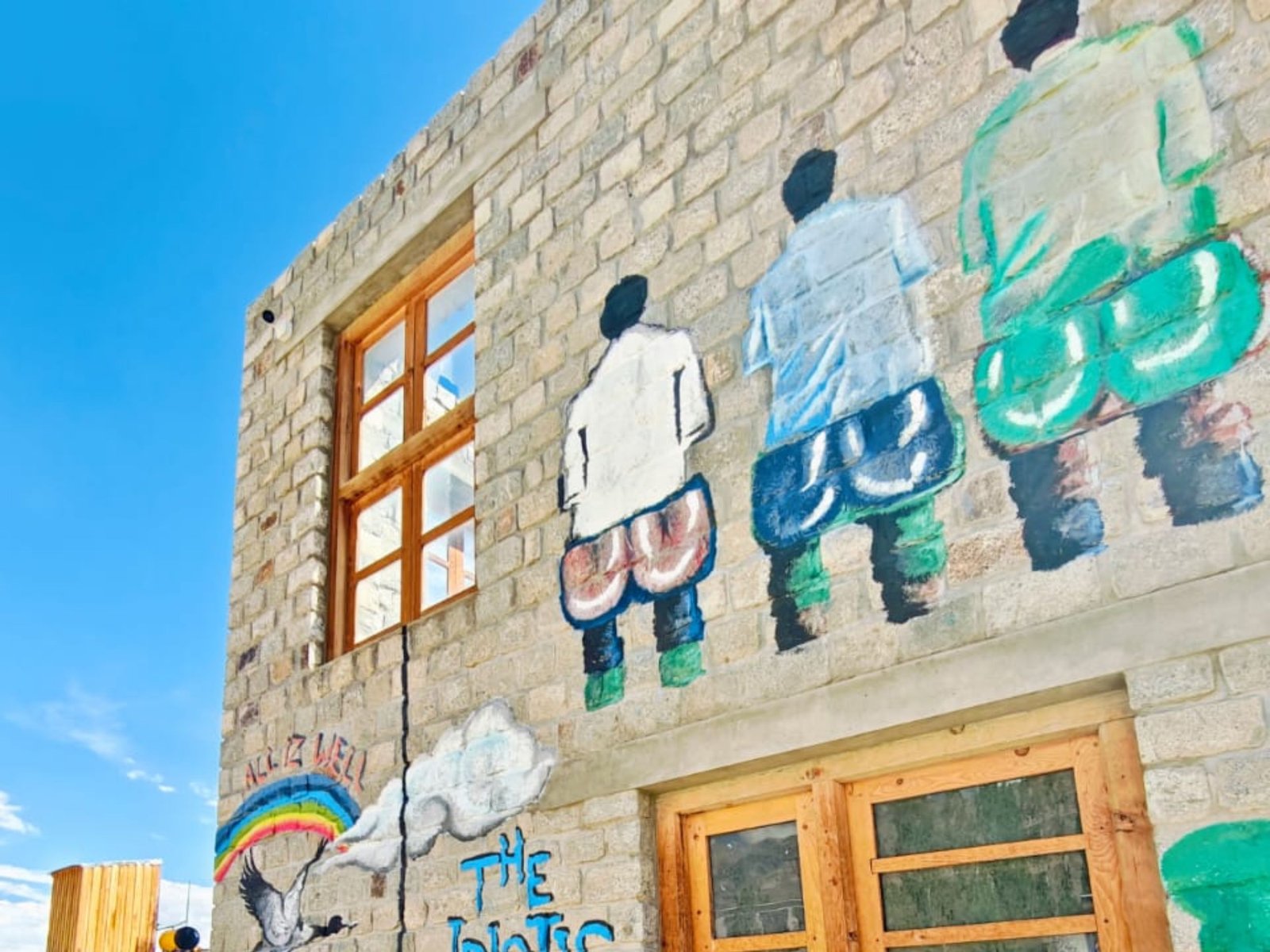
Visit Druk Padma Karpo School, popularly known as Rancho’s School, made famous by the Bollywood film 3 Idiots. Located in Shey, around 15 km from Leh, this award-winning campus blends traditional Ladakhi architecture with sustainable design. Did you know its buildings use passive solar heating to stay warm in Ladakh’s harsh winters?

Thiksey Monastery is located at an altitude of 11, 800 feet, on the top of a hill in the village of Thiksey, 19 km to the south of Leh. It bears a resemblance to Potala Palace in Tibet, which is the former residence of the Dalai Lama. It’s also the largest monastery in Central Ladakh housing stupas, statues, thangkas, wall paintings, weapons, etc. The most significant part of monastery is the Maitreya Temple which was built to commemorate the visit of 14th Dalai Lama to the monastery in 1970.

Our small group size ensure a personal touch, and our group leaders make sure to bond the entire group like long-lost friends. Hence, along with an amazing travel experience, you are in for a great of great social bonding.

To book this trip, please Call/ WhatsApp/ Email using the below-mentioned details.
If you have any questions or concerns, then please feel free to contact us using the below-mentioned details. Alternatively, fill this form and our team will get back to you at their earliest.


An old Tibetan saying translates to, “The

One…Two…Three – take a deep breath. A