


Northern Lights: Complete Guide to Aurora Borealis, Best Places to See It & Travel Tips (2026)
1. Introduction to the Northern Lights
The Northern Lights, or Aurora Borealis, are one of Earth’s most amazing natural phenomena. Millions of travelers flock to the Arctic every year, hoping to see the lights dancing in the night sky in bright, coloured green, purple, pink, and red. The aurora is a natural phenomenon, unlike the artificial light displays humans create. Therefore, each display is never exactly the same, and each sighting is unique.
While photos of the Northern Lights may seem like magic, witnessing them is an experience you won’t soon forget. The rapidly changing ribbons, arcs, and waves of light produce an amazing spectacle that has captivated explorers, scientists, and indigenous people for centuries. Plus, new forecasting tools have made it easier than ever to plan a successful aurora adventure.
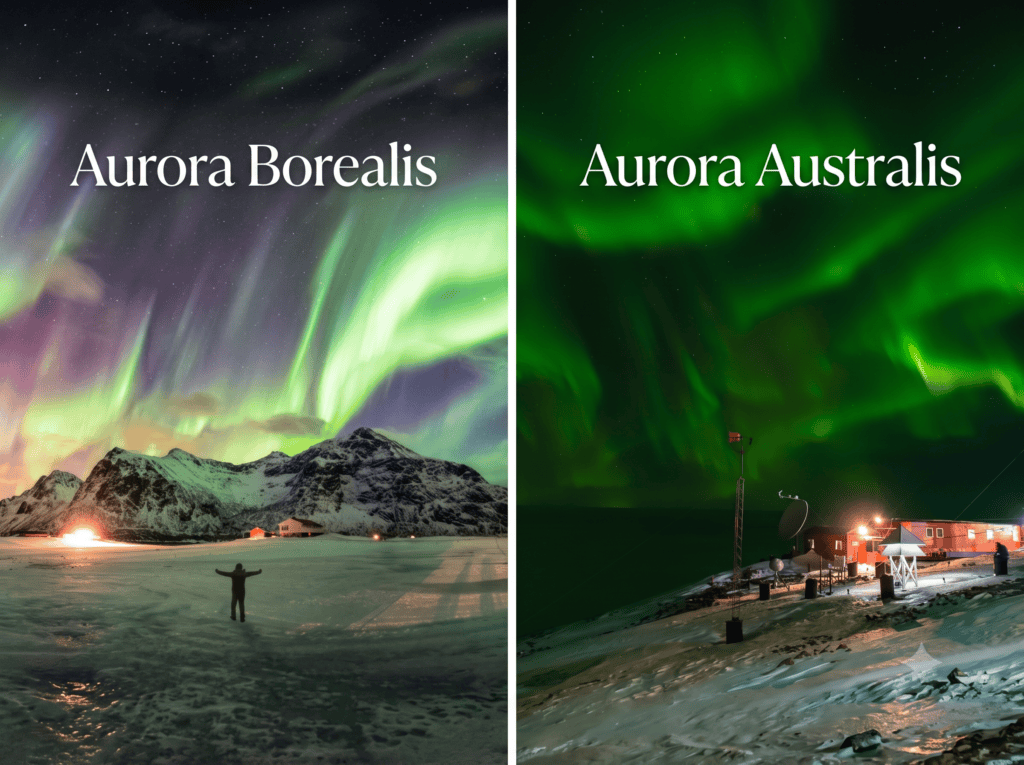
The scientific name of Aurora Borealis is derived from two Latin words. The name “Aurora” is from the Roman goddess of dawn, and “Borealis” is derived from the word “north. Together, they describe the glowing lights in the northern polar skies. In the Southern Hemisphere, a similar phenomenon is called the Aurora Australis, or Southern Lights.
The Northern Lights are a phenomenon you can enjoy in several destinations every year, particularly in areas located under the auroral oval, a region around the Earth’s magnetic poles where auroral activity is most common. Norway, Iceland, Finland, Sweden, Greenland, Canada, Alaska, and Russia are therefore among the most popular destinations for travelers hoping to witness this spectacular display. Moreover, each destination offers its own scenery, culture, and winter experiences, so every Aurora trip can feel completely different.

Quick Facts About the Northern Lights
| Fact | Details |
| Scientific Name | Aurora Borealis |
| Common Name | Northern Lights |
| Best Viewing Season | September to March |
| Best Viewing Time | 9 PM – 2 AM |
| Main Colors | Green, Purple, Pink, and Red |
| Visible In | Arctic and Sub-Arctic Regions |
| Southern Equivalent | Aurora Australis |
2. What Are the Northern Lights?
The Northern Lights are a natural phenomenon that occurs high above Earth’s surface. They look calm from the ground, but fast particles from the Sun hit gases in Earth’s atmosphere after traveling millions of kilometers. As a result, the sky shines in bright colors and changes shape and intensity.
Understanding Aurora Borealis
The Sun continually emits streams of electrically charged particles called solar wind. Earth’s magnetic field usually shields it from these particles by deflecting them. The high-energy particles hit oxygen and nitrogen atoms at altitudes of 80 to 500 kilometers above Earth, exciting the gases and causing them to emit visible light. This process creates the beautiful auroras seen from the ground.
Several factors influence every aurora display:
- Solar activity changes from day to day
- Earth’s magnetic field constantly shifts
- Atmospheric conditions vary throughout the night
Thus, each Northern Lights show is truly one-of-a-kind.
Why Northern Lights Change Color
The aurora is often thought of as glowing green lights. But there are several colors depending on altitude, atmospheric gases, and the energy of incoming particles.
Green Auroras
Green is the most common aurora color. It forms when particles from the Sun interact with oxygen atoms at altitudes of 100 to 250 km above Earth.
Purple Auroras
Active auroras typically have purple and violet colors along the bottom edge. These colors come primarily from excited nitrogen molecules.
Red Auroras
Red auroras are much less common than green auroras because they occur at much higher altitudes. At these heights, oxygen atoms can emit red light when they release energy, creating the rare red glow sometimes seen during strong auroral displays.
Rare Blue Auroras
Sometimes, when a nitrogen molecule is highly excited during a strong discharge, a blue color develops. Typically, these types of auroras are dimmer and harder to see with the unaided eye.
Why Are They Called the Aurora Borealis?
The name has historical and scientific significance.
- Aurora represents the Roman goddess of dawn.
- Borealis means “northern” in Latin.
- Together, the name literally translates to Northern Dawn.
The term was introduced during the early 17th century and has remained the scientific name ever since.
Featured Snippet: What Are the Northern Lights?
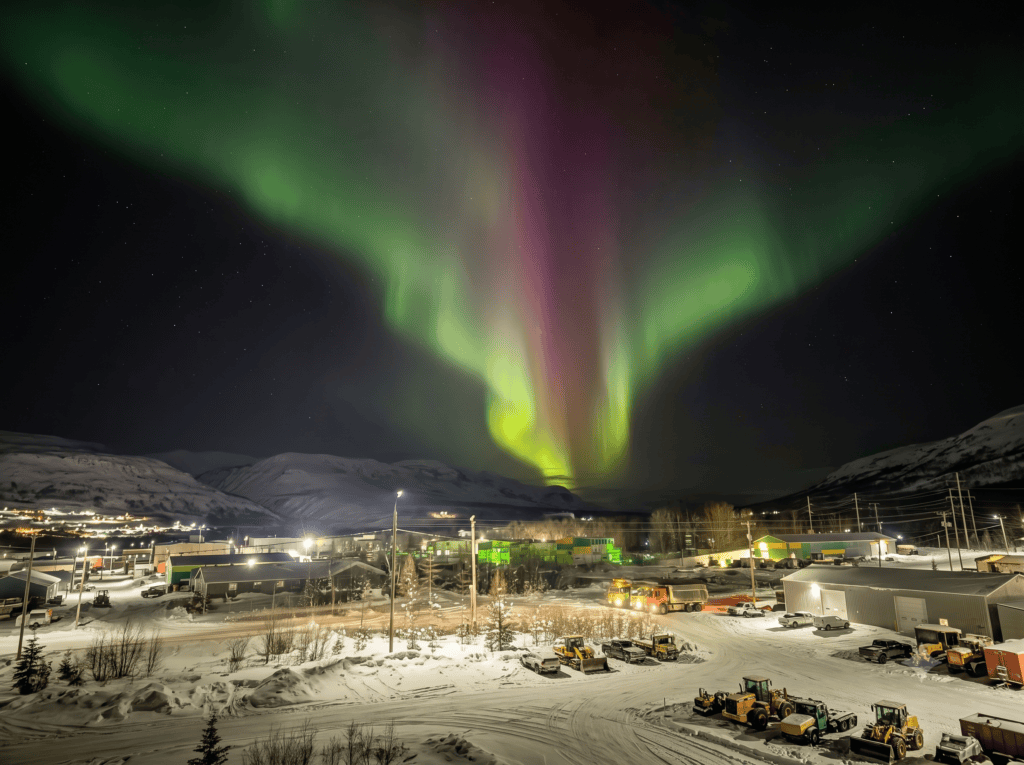
The Northern Lights, also known as the Aurora Borealis, are a natural light display that occurs when charged particles from the Sun collide with oxygen and nitrogen in Earth’s upper atmosphere. The collisions create a rainbow of light, visible mostly in Arctic and sub-Arctic areas on dark winter nights.
Interesting Facts
- The Northern Lights usually occur more than 100 kilometers above Earth’s surface.
- During powerful solar storms, auroras can become visible much farther south than usual, sometimes reaching regions that rarely experience them.
3. Best Places to See the Northern Lights
The biggest factor in seeing a spectacular aurora display is location. City lights, cloudiness, and lower latitudes can drastically reduce visibility, even when solar activity is high. It therefore becomes much easier to spot bright stars and constellations when traveling to destinations with dark skies, such as those near the Arctic Circle.
It is for this reason that many tourists also book Northern Lights tours, led by experienced local guides who often check weather conditions, cloud cover, and Northern Lights forecasts in real time. These specialized guides also monitor solar activity using aurora forecasting tools, apps, and their local knowledge of the sky. By combining this information with their understanding of weather patterns and local viewing conditions, they can identify the best viewing windows and determine where to travel for clearer skies and stronger aurora activity.
(A) Murmansk, Russia
Murmansk is one of the most accessible cities in Russia’s Arctic region and is located well above the Arctic Circle. As a result, it enjoys one of the longest Northern Lights viewing seasons in Europe, typically lasting from September to April. Moreover, its high latitude and relatively low light pollution make it one of the best places to witness the Aurora Borealis.
Visitors can also enjoy snowmobiling, husky sledding, frozen lakes, and cultural experiences with the Sami people of the Kola Peninsula, along with an aurora hunt. Guided excursions can offer great observing opportunities, as light pollution drops rapidly away from the city.
(B) Tromsø, Norway
Tromsø is now one of the world’s favorite places to watch the Aurora Borealis, also known as the Northern Lights.
The city is known for its dependable aurora displays and excellent tourism facilities. On the same excursion, visitors can also participate in whale-watching, fjord cruises, cultural activities with the Sami people, dog sledding, and even a cable car ride.
(C) Iceland
Iceland is one of the best places in the world to photograph the Northern Lights because it offers some of the most spectacular natural backdrops. Moreover, its dramatic landscapes, including volcanoes, waterfalls, glaciers, black-sand beaches, and vast lava fields, create breathtaking foregrounds that make every aurora photograph truly unforgettable.
Besides, visitors can travel to various parts of the country when the sky is clear, on both self-drive and guided tours.
For inspiration, the Transforming Travels Instagram page regularly posts highlights of destinations, travel stories, and seasonal experiences from around the world, including winter travel.
(D) Finnish Lapland
Finnish Lapland is a blend of luxury and nature. It is particularly popular with honeymooners and families and features glass igloos, cozy cabins, reindeer farms, and snowy forests.
In addition, this region offers dark skies for aurora viewing, and there are excellent tourism facilities.
(E) Swedish Lapland
For those looking for more peaceful destinations than the larger tourist crowds, Swedish Lapland is an option. Due to the low population density in many areas, light pollution is very low.
It’s also a region for exceptional photography, with its pristine forests, frozen rivers, and mountain scenery.
(F) Greenland
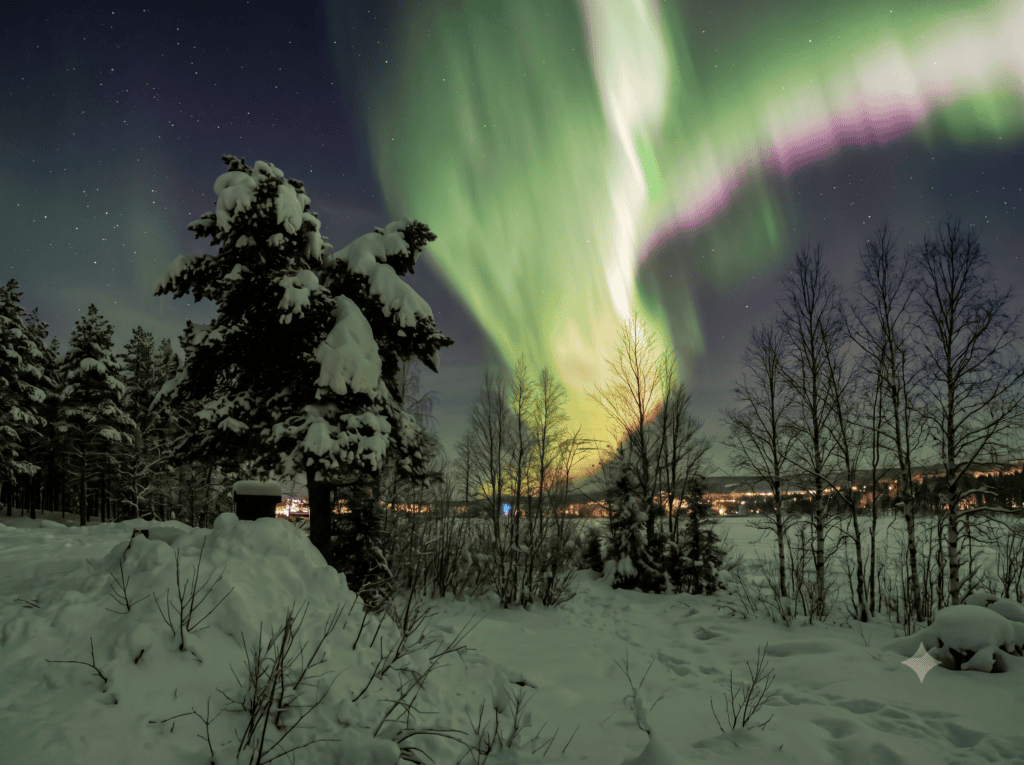
Greenland is still one of the least-visited places for Northern Lights viewing in the Arctic. Visitors experience very dark skies throughout most of the island because there is very little artificial lighting.
Besides, glaciers, icebergs, and stunning fjords provide outstanding backdrops for aurora watching.
(G) Canada and Alaska
The Northern Lights are often seen in the winter in the large wilderness areas of Canada and Alaska.
Favored viewing areas include the Yukon, the Northwest Territories, Fairbanks, and Denali. In addition to aurora chasing, visitors can enjoy ice fishing, snowshoeing, wildlife viewing, and winter photography.
Comparison: Best Northern Lights Destinations
| Destination | Aurora Reliability | Accessibility | Best For |
| Murmansk, Russia | Excellent | Medium | Arctic adventures |
| Tromsø, Norway | Excellent | High | First-time visitors |
| Iceland | Excellent | High | Scenic landscapes |
| Finnish Lapland | Excellent | Medium | Luxury experiences |
| Swedish Lapland | Very Good | Medium | Wilderness travel |
| Greenland | Excellent | Low | Remote Arctic experiences |
| Canada | Very Good | Medium | Nature lovers |
| Alaska | Very Good | Medium | Outdoor adventures |
Which Country Is Best for Seeing the Northern Lights?
Norway offers the best overall conditions, with strong infrastructure, plenty of tours, reliable aurora sightings, and convenient transportation. Finland, on the other hand, is known for its luxury glass igloos and family-friendly winter experiences. Meanwhile, Iceland is renowned for its dramatic volcanic landscapes, making it a paradise for photographers. Similarly, Russia is an excellent choice for travelers seeking authentic Arctic adventures without spending a bomb. In contrast, Sweden appeals to those looking for peaceful wilderness experiences with fewer crowds. Furthermore, Greenland is ideal for travelers who prefer remote Arctic landscapes and minimal light pollution. Finally, Canada and Alaska are perfect for visitors seeking extended Northern Lights adventures in vast, untouched natural environments.
4. Best Time to See the Northern Lights
Auroras are more likely to be seen on a particular day depending on the time of day. Solar activity can happen at any time of the year, but darkness is the most crucial.
Northern Lights Season Explained
Generally, the northern lights season is from September to March. Arctic nights are long enough for viewing the aurora during these months.
October and September are often pleasant and have a colorful autumn display. In the meantime, November, December, and January are the darkest times of year, providing travelers with more time to view. Lastly, March is a month of excellent auroral showiness and cooler conditions.
Between April and August, there is almost continuous daylight in much of the Arctic, so it is difficult to observe aurora.
Best Months for Aurora Viewing
Each month offers a slightly different experience.
- September–October: Mild weather and colorful landscapes
- November–February: Long polar nights and maximum darkness
- March: Excellent balance of aurora activity, snow, and improving weather
Best Time of Night to Watch the Aurora
The Northern Lights can appear at any time after dark, but they’re most likely to appear from 9 PM to 2 AM. However, displays may start earlier or run later, and some may last until dawn. So patience is the key to amazing shows for travelers.
How to Predict the Northern Lights
Aurora forecasting has become much more accurate over the past decade. Experts usually monitor:
- The KP Index, which measures geomagnetic activity
- Solar wind speed
- Space weather forecasts
- Cloud cover predictions
The KP Index, which measures the strength of geomagnetic activity on a scale from 0 to 9, helps indicate how far south the Northern Lights may be visible. Higher KP values generally indicate stronger auroral activity. However, clear skies remain equally important.
Factors Affecting Visibility
Even strong aurora activity does not guarantee visibility. Important factors include:
- Thick cloud cover
- Artificial light pollution
- Bright moonlight
- Local weather conditions
Quick Aurora Viewing Checklist
Before heading outside, confirm the following:
- Check the latest KP Index forecast
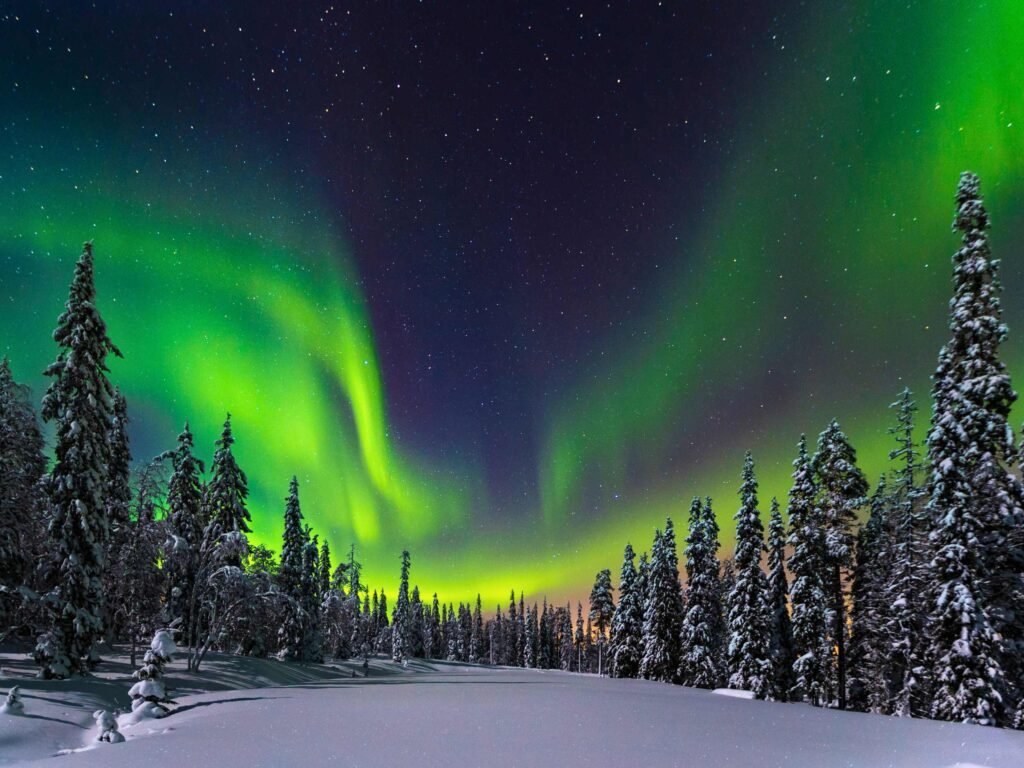
- Look for clear, dark skies
- Move away from city lights
- Dress warmly and allow enough time for the aurora to develop
5. Northern Lights Photography Tips
While it takes some preparation to capture the Northern Lights, these days it’s much easier than ever to photograph the lights of the northern sky.
Best Camera Settings
Manual settings produce the best results. A good starting point includes:
- ISO: 800–3200
- Aperture: f/2.8 or wider
- Shutter speed: 5–20 seconds depending on aurora movement
- Manual focus set to infinity
Small adjustments may be necessary depending on brightness and weather conditions.
Smartphone Photography Tips
Today’s flagship smartphones can produce surprisingly good aurora photographs. For the best results:
- Activate Night Mode
- Use a sturdy tripod
- Keep the phone completely still
- Use a timer or remote shutter whenever possible
However, cold Arctic weather can drain device batteries much faster than usual. If you are using a DSLR or mirrorless camera, always carry at least one spare battery and keep it fully charged. Smartphone users should consider carrying a second phone or a fast-charging power bank as a backup. It is also helpful to use a warm pouch or insulated case to protect your devices from extreme cold when they are not in use.
Aurora in the Sky vs Camera Photos
One of the biggest questions for first-time viewers is what the Northern Lights actually look like in the sky, especially after seeing countless vibrant aurora photos on social media, travel websites, and elsewhere online. In reality, the experience can look different from these photographs because cameras collect far more light than the human eye.
As a result, photographs often show brighter colors and more detail, while the aurora may appear softer and less vivid to the naked eye. However, seeing the lights move and sweep across the sky in real time creates a feeling that a photograph cannot fully capture. The atmosphere, excitement, and memory of witnessing the Aurora Borealis in person become part of the experience itself.
Different Shapes of Aurora Displays
Auroras constantly evolve into different formations. Common patterns include:
- Curtains that ripple across the horizon
- Arcs stretching from one side of the sky to the other
- Spirals created by shifting magnetic activity
- Corona formations, where light appears to explode outward from a single point directly overhead
Northern Lights Photography Checklist
Before leaving for an aurora session, pack:
- Tripod
- Fully charged camera batteries and spare batteries
- Wide-angle lens
- Manual camera settings enabled
- Warm clothing and gloves for long outdoor sessions
6. Northern Lights Travel Tips for First-Time Visitors
When it comes to planning a trip to see the Northern Lights, there are more things to take into account than just picking a place to go. The aurora is a product of weather, solar activity, and darkness, so careful preparation can greatly increase the likelihood of seeing this amazing natural phenomenon. Additionally, it is important to have the right gear and enough time to catch the aurora, making the trip much more pleasant.
What to Wear
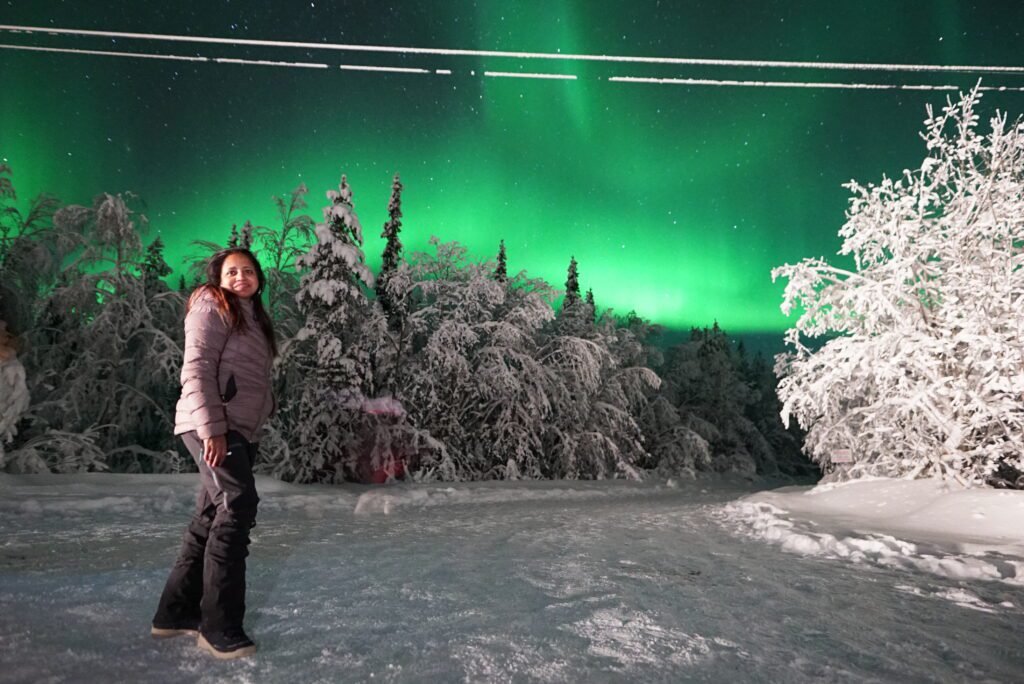
First-timers may find Arctic winters much colder than expected, especially when waiting outdoors for several hours. Therefore, wearing several layers is essential because you can add or remove a layer as temperatures change.
One important point is to avoid cotton as your thermal base layer. Cotton absorbs sweat and dries slowly, which can leave you feeling cold once the moisture cools against your skin. Instead, choose a polyester or merino-wool thermal layer, as these materials manage moisture better and dry more quickly.
Upper Body
For the upper body, start with a polyester thermal base layer, followed by a polyester sports T-shirt. Add a polar fleece for insulation and then a windproof and waterproof outer shell or winter jacket to protect you from cold winds, snow, and moisture.
If you are particularly sensitive to cold, you can also carry a heated jacket with built-in heating elements for additional warmth. This can be useful when spending several hours outdoors during an aurora hunt.
Lower Body
For the lower body, start with thermal leggings, followed by fleece pants for insulation and waterproof snow pants as the outer layer. This combination helps protect your legs from cold temperatures, wind, and snow.
Head, Hands and Feet
For your head, wear a thin liner or balaclava first, followed by a warm wool or merino-wool beanie that covers the ears. A neck gaiter can provide additional protection for your neck and lower face.
For your hands, use thin glove liners under thick insulated or wool gloves. For your feet, wear warm wool or synthetic socks with insulated, waterproof snow boots. If you tend to feel cold easily, carry heat patches or hand and toe warmers for additional warmth during long periods outside.
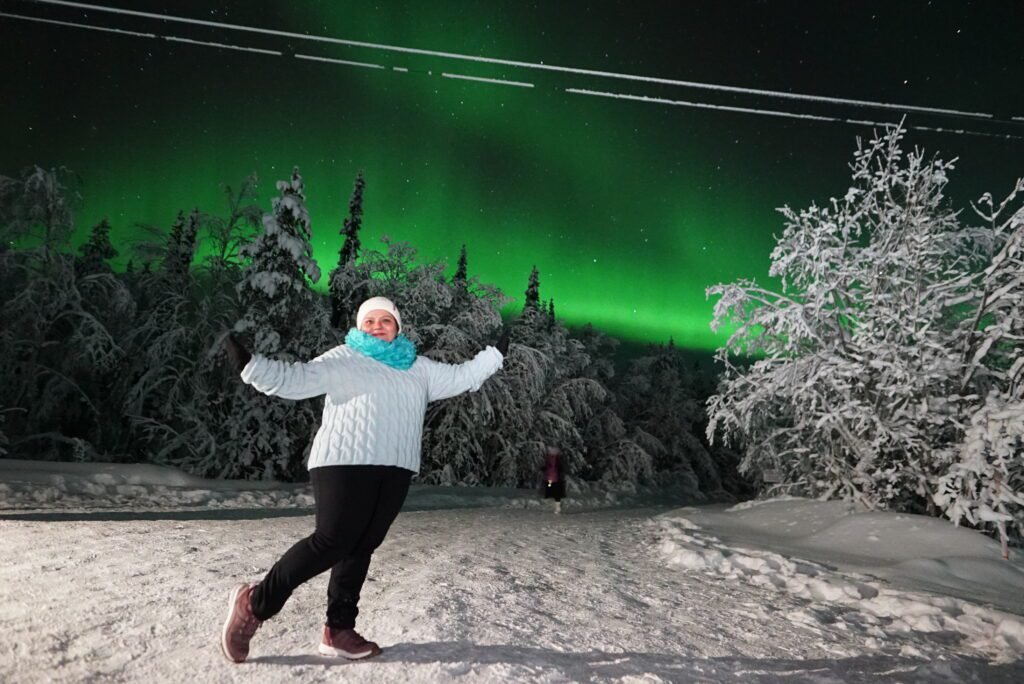
With the right layers, you can stay warm and comfortable while waiting for the Northern Lights to appear.
How Many Days Should You Stay?
For many travelers, the Northern Lights are a first-night dream. But Mother Nature can never be predicted. Cloud cover or low solar activity can significantly impact visibility.
If you want the best odds, you’ll want to spend at least three to five nights in an aurora destination. This additional time provides flexibility in case the weather changes. Also, it allows you to see more than one display with different colors and brightness.
When planning a longer Arctic holiday, it is useful to review the Transforming Travels Trip Calendar beforehand to see if any trips are planned in the near future that involve groups. Those who would like something a little more individual can even ask for a bespoke Northern Lights tour, tailored to the dates they wish to travel, what they want to see, and where.
Are Northern Lights Tours Worth It?
Guided Northern Lights tours are a great value for the first-time visitor. Local guides continually monitor weather conditions, cloud cover, and aurora forecasts throughout the day. This means they can move to other clear skies if conditions change.
Guided tours also provide several additional benefits:
- Access to remote dark-sky locations away from city lights
- Photography guidance for capturing the aurora successfully
- Local knowledge about weather patterns and safe winter travel
Private tours generally offer greater flexibility, while group tours remain a more affordable option for most travelers.
Common Mistakes to Avoid
Travelers sometimes make avoidable errors in planning the aurora trip that don’t let them make the most of their adventure.
The most common mistakes are failing to consider Arctic temperatures, assuming the night they see is the only night they’ll be outside, and not checking the weather forecast beforehand. Similarly, it’s less likely to see a mighty display if you don’t make the trip to the darker part of your Arctic city.
Budget Planning for a Northern Lights Trip
| Travel Style | Average Cost (INR) |
| Budget | ₹100,000 – ₹140,000 |
| Mid-Range | ₹1,40,000 – ₹2,80,000 |
| Luxury | ₹3,50,000+ |
The total cost of a Northern Lights trip depends on your destination, days, travel season, accommodation, flights, and the number of guided excursions you choose. Booking well in advance and traveling during the shoulder months of September, October, or March can often help reduce overall expenses.
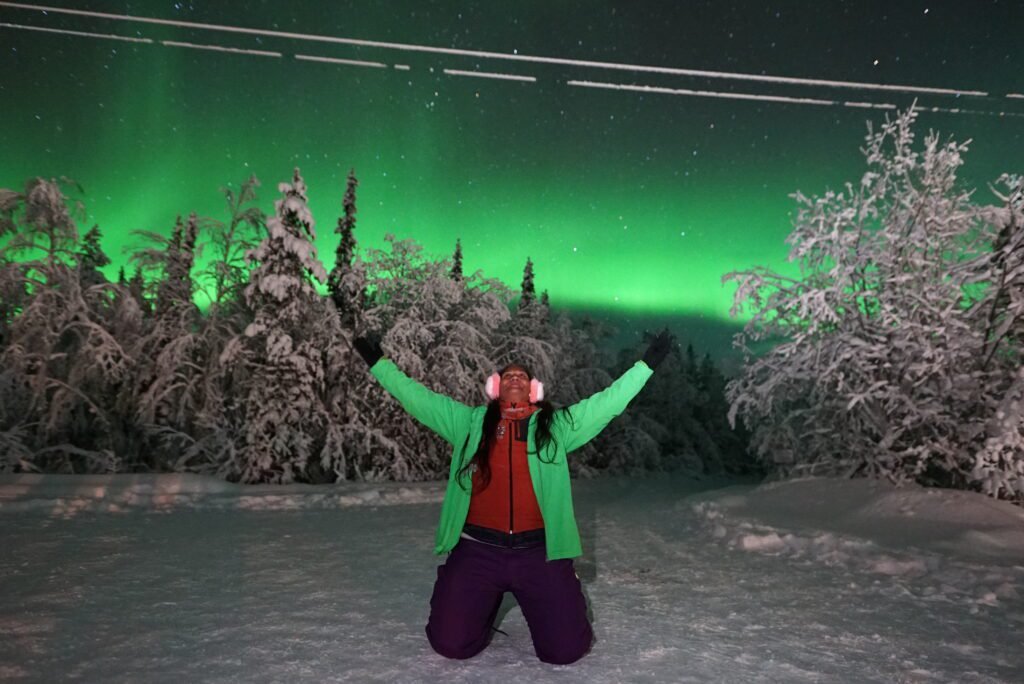
For travelers looking for a hassle-free Arctic adventure, we offer a carefully curated Russia Northern Lights group tour starting at just ₹1,80,500. The itinerary covers not only the spectacular Northern Lights in Murmansk but also the tours in Moscow and Saint Petersburg, offering a complete Arctic travel experience as well as a beautiful Russian tour. Travelers who prefer more flexibility can also request a customized Northern Lights itinerary based on their travel dates, budget, and interests.
7. Myths, Legends and Fascinating Aurora Facts
Many interesting stories were written before scientists could explain the aurora. As a result, the Northern Lights are tied to Arctic tales, spirits, and culture.
Aurora Meaning Across Different Cultures
The Northern Lights held very special significance for various civilizations.
The Norse believed that the glowing sky was a mirror of the Valkyries’ armor, leading the dead to Valhalla. In Finland, there are stories of magical foxes running across snow-blanketed hills, their tails shooting sparks into the air. The Finnish word ‘Revontulet’ is inspired by this story, which translates to ‘fox fires.’
The Inuit regarded the aurora as a way to communicate with the spirits of ancestors and/or celestial beings. Similarly, the Sami people saw the lights as sacred and treated them with reverence and respect, not to be ridiculed or disturbed.
Cultural Beliefs About the Aurora
| Culture | Traditional Belief |
| Norse | Reflections from the gods and Valkyries |
| Finnish | Magical foxfire lighting the sky |
| Inuit | Spirits of ancestors |
| Sami | Sacred celestial phenomenon deserving respect |
Fascinating Northern Lights Facts
The Northern Lights still have the power to delight scientists and travelers alike.
Faint crackling noises have been noted on occasion when auroras are particularly strong, but the nature of the sounds is still a subject for investigation. Astronauts on the International Space Station also often spot the auroras from above the atmosphere, capturing magnificent displays of vibrant ribbons of light enveloping the planet.
Auroras typically occur only near the poles, but extremely strong solar storms can push them far from the poles. Moreover, they have even been observed in regions of Europe and North America that do not normally experience such events. For example, the Carrington Event of 1859 produced one of the largest auroral displays ever recorded, with auroras observed at unusually low latitudes worldwide.
8. Northern Lights vs Aurora Australis
Contrary to popular belief, the Northern Lights are not the only displays visible from Earth; two almost identical displays exist.
What is Aurora Australis?
Auroras, or Southern Lights (the Aurora Australis), are produced in the same way as the Aurora Borealis. Over Earth’s Southern Hemisphere, charged particles from the sun interact with Earth’s magnetic field before colliding with the atmospheric gases.
But as most of the Southern Hemisphere is made up of oceans, opportunities to view the Southern Lights are quite limited.
Key Differences Between Aurora Borealis and Aurora Australis
| Feature | Aurora Borealis | Aurora Australis |
| Hemisphere | Northern | Southern |
| Common Name | Northern Lights | Southern Lights |
| Accessibility | Easier | More Difficult |
| Popular Destinations | Norway, Russia, Iceland, Finland | Antarctica, Tasmania, New Zealand |
Which Aurora is Easier to See?
The Northern countries are more likely to provide the tourism infrastructure, regular flights, comfortable hotels, and guided tours, making the Aurora Borealis more accessible.
In contrast, many destinations in the South remain inaccessible and remote. Although Antarctica is a great place to visit, the journey there is costly and time-consuming. So, it’s no wonder that most travelers first visit Northern Europe or the Arctic in North America for an aurora experience.
9. Frequently Asked Questions About the Northern Lights
Q1. What are the Northern Lights?
The Northern Lights are colorful natural light displays created when charged solar particles collide with gases in Earth’s upper atmosphere near the magnetic poles.
Q2. What causes the Aurora Borealis?
Solar wind particles interact with Earth’s magnetic field before colliding with oxygen and nitrogen atoms, producing glowing colors in the night sky.
Q3. What does “Aurora Borealis” mean?
Aurora Borealis translates to “Northern Dawn.” “Aurora” refers to the Roman goddess of dawn, while “Borealis” means northern.
Q4. Where can I see the Northern Lights?
Some of the best destinations include Norway, Iceland, Finland, Sweden, Greenland, Murmansk in Russia, Canada, and Alaska because these regions lie close to the Arctic Circle.
Q5. When is the best time to see the Northern Lights?
The ideal season runs from September through March, with the highest viewing opportunities typically occurring between 9 PM and 2 AM.
Q6. Are the Northern Lights visible every night?
No. Visibility depends on solar activity, clear skies, darkness, and local weather conditions.
Q7. Can you predict the Northern Lights?
Yes. Space weather agencies monitor solar activity and publish aurora forecasts using the KP Index, although forecasts cannot guarantee visibility.
Q8. Can I photograph the Northern Lights with a phone?
Yes. Modern smartphones equipped with Night Mode can capture impressive aurora images, especially when used with a tripod.
Q9. What colors can the Aurora be?
Green appears most frequently, while purple, pink, red, and occasionally blue may also occur depending on altitude and atmospheric conditions.
Q10. How long do the Northern Lights last?
Displays may last only a few minutes or continue for several hours. Activity often changes continuously throughout the night.
Q11. Is Russia a good destination for Northern Lights tours?
Yes. Murmansk offers fantastic aurora activity, relatively easy Arctic access, and a growing number of guided Northern Lights tours.
Q12. Is Iceland or Norway better for seeing the Northern Lights?
Both destinations offer excellent opportunities. Norway generally offers higher aurora reliability and extensive tourism infrastructure, while Iceland combines strong aurora activity with dramatic volcanic landscapes that especially appeal to photographers.
10. Conclusion
Witnessing the Northern Lights is a once-in-a-lifetime experience and a dream for many travelers. Those who see the Aurora Borealis in person often remember the experience for years. Every display is different, making the excitement of watching the lights appear across the Arctic sky truly special.
From Finnish Lapland and Iceland to Tromsø, Greenland, Canada, Alaska, and Russia, each destination offers its own landscapes, culture, and winter experiences. Murmansk, in particular, offers travelers the chance to combine Northern Lights viewing with a wider Arctic experience.
For travelers coming from India, joining a guided or group Northern Lights tour can often be more economical and convenient than planning everything independently. Shared transportation and other private resources can reduce costs, while experienced professionals provide support in extreme Arctic temperatures and help travelers make better use of their time and money. Russia Under the Northern Lights is one option for experiencing the aurora along with other destinations and winter experiences.
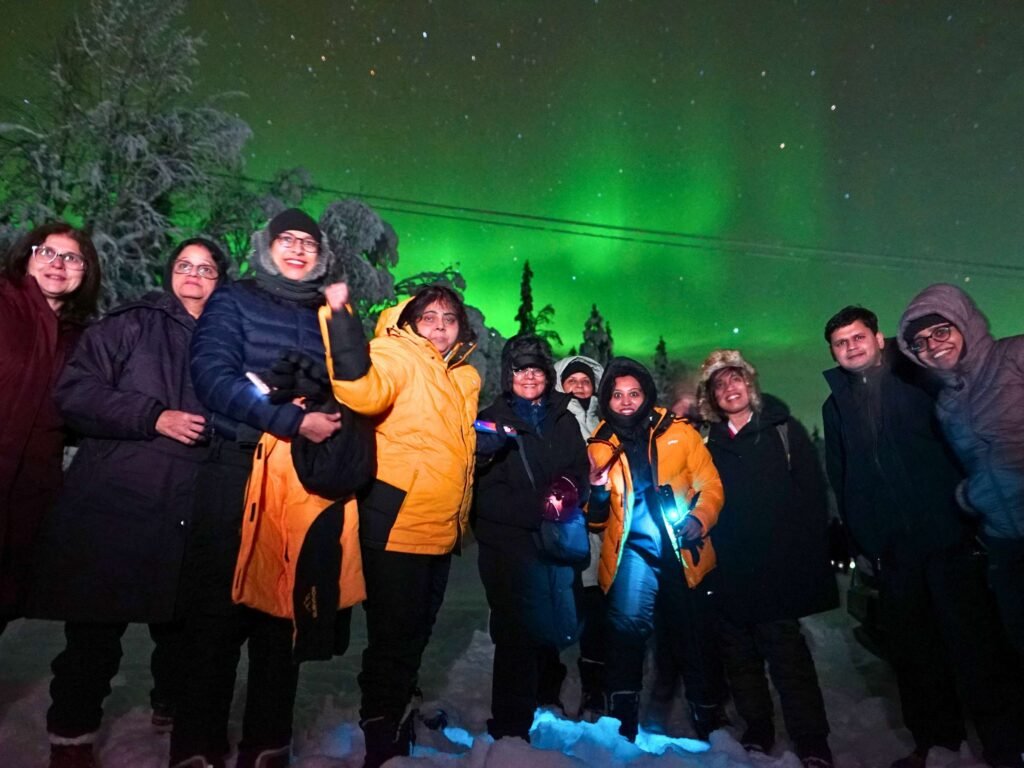
Guided tours can also improve the chances of seeing the Northern Lights, as experienced guides monitor solar activity, weather, cloud cover, and dark-sky conditions to find better viewing opportunities. They can also include snow and Arctic adventures beyond aurora hunting, making the overall journey more rewarding.
If you are also planning to explore Kazakhstan’s natural landscapes, check out our detailed guide, “Lakes in Kazakhstan: A Complete Guide to the Country’s Most Beautiful Lakes,” for more information on the country’s most scenic lakes and alpine destinations.
The Northern Lights may last only for a moment, but the memory of standing beneath them can last a lifetime.

