


Trimbakeshwar Temple – Complete Guide to Darshan, VIP Pass, Timings, Story & Travel Tips
1. Introduction – Why Trimbakeshwar Temple is One of the Most Sacred Jyotirlingas in India
Trimbakeshwar Temple is one of the most sacred Shiva temples in India, situated close to the peaceful Brahmagiri Hills in Maharashtra. Furthermore, devotees of Lord Shiva throughout the country visit this great shrine, one of the 12 Jyotirlingas. The temple is a popular tourist spot and a place of pilgrimage for those seeking spiritual solace, thanks to its quiet, contemplative ambience.
The Shri Trimbakeshwar temple is a rare blessing of a Shiva temple. Here, the Jyotirlinga is a sacred form of the presence of Brahma, Vishnu, and Mahesh. Therefore, it is believed that the Trimbakeshwar Shiva Temple is extremely potent for spiritual cleansing and ancestral worship.
Also, the temple is sacred because it is linked to the birthplace of the Godavari River, also known as the “Ganga of South India.” The nearby Brahmagiri Hills add even more to the divine ambience. The priests conduct Vedic chants, Rudrabhishek rituals, and pujas continuously within the temple complex. As a result, guests frequently say that it is spiritually uplifting and very relaxing.
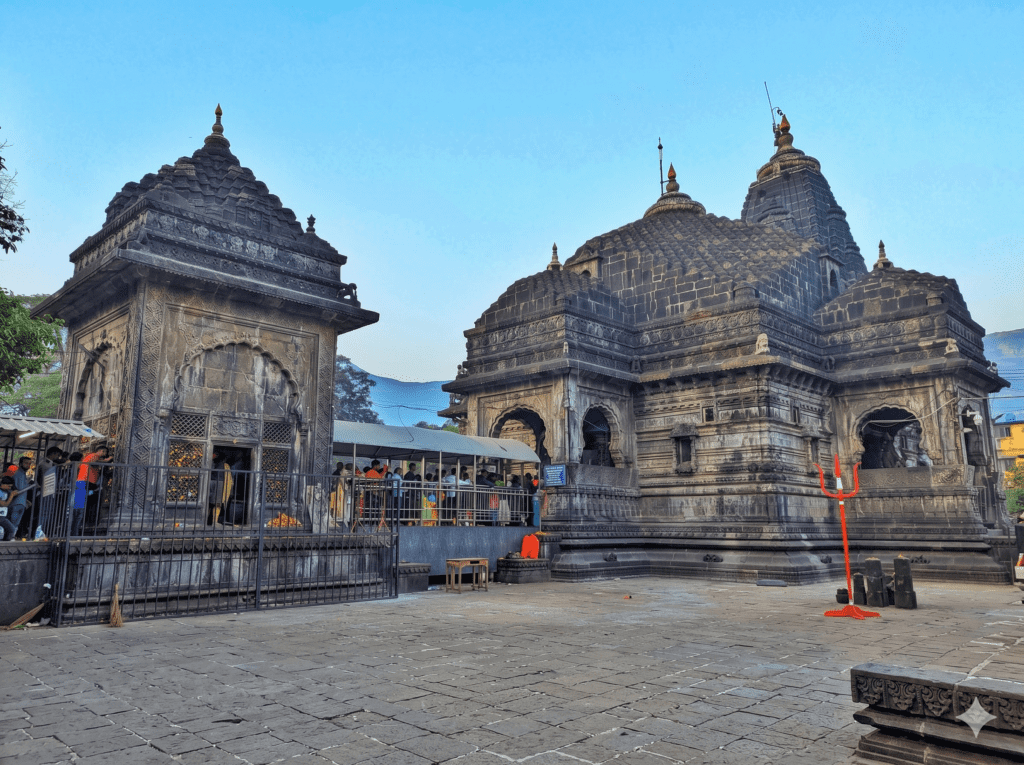
Quick Information About Trimbakeshwar Temple
| Details | Information |
| Location | Trimbak, Nashik, Maharashtra |
| Main Deity | Lord Shiva (Jyotirlinga) |
| Distance from Nashik | Approx. 30 km |
| Famous For | Rudrabhishek, Godavari origin, VIP Darshan |
| Best Time to Visit | July to March |
| Nearby Attraction | Brahmagiri Hills |
Travellers seeking a deeper spiritual journey across Maharashtra can also explore the Mystic Maharashtra tour by Transforming Travels, which combines Trimbakeshwar Temple with Shirdi, Ajanta–Ellora Caves, Jyotirlingas, vineyards, and other culturally significant destinations.
2. Where is Trimbakeshwar Temple Located?
Location and Geography
The temple is located in the town of Trimbak, near Nashik, in the state of Maharashtra. Furthermore, the sacred Brahmagiri Hills rise behind the temple and hold immense religious significance in Hindu mythology. Additionally, the Godavari River originates on the Brahmagiri Hills near the temple. Since devotees regard the Godavari as the “Ganga of South India,” they consider this region one of the holiest pilgrimage destinations in Maharashtra.
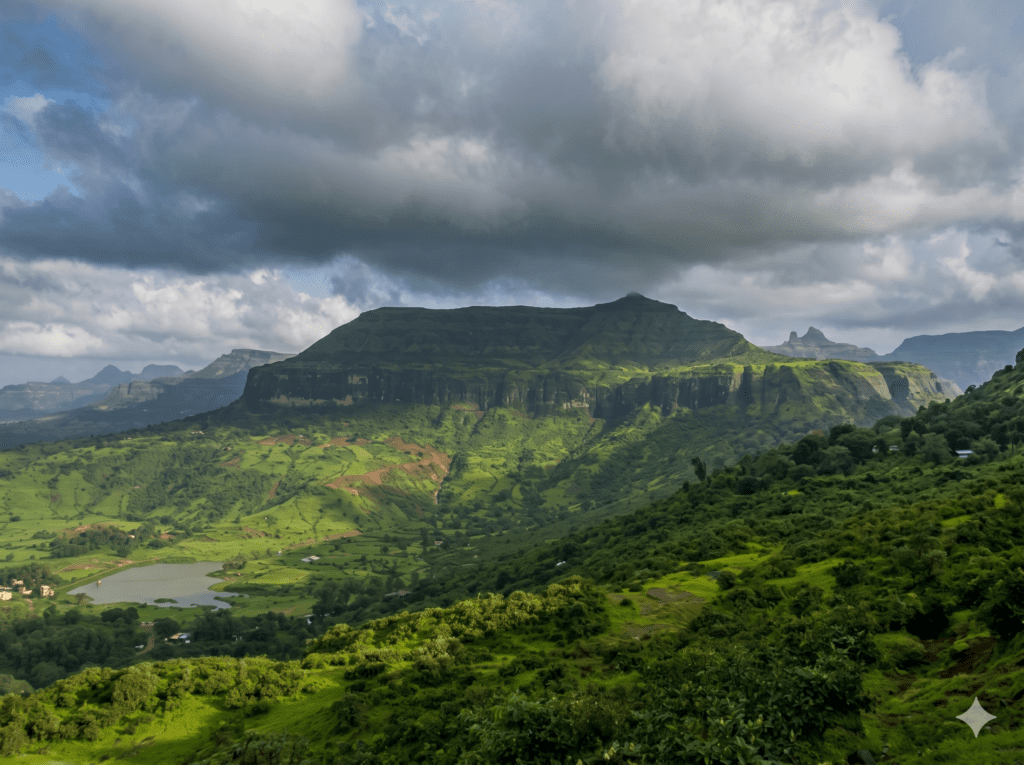
Moreover, during the monsoon and winter seasons, lush green hills, mist-covered mountains, and flowing streams transform the entire landscape into a breathtaking spiritual retreat. As a result, the natural beauty enhances the temple’s peaceful, devotional atmosphere, attracting both pilgrims and nature lovers year-round.
Although Trimbak receives large numbers of pilgrims, especially during festivals and the Shravan month, the surrounding Brahmagiri Hills still offer several peaceful spots for meditation, spiritual reflection, and short walks. Therefore, many visitors spend additional time exploring the sacred landscape beyond the main temple complex.
Distance and Connectivity
The distance between Nashik and Trimbakeshwar Temple is approximately 30 km. Therefore, visitors travelling by private car, taxi, or bus can usually reach the temple in 45 minutes to 1 hour, depending on traffic and road conditions.
Travel Connectivity from Nashik
- Regular buses operate from Nashik CBS to Trimbak
- Private taxis and shared cabs remain easily available
- Roads remain smooth and scenic throughout the route
Also, the road trip is scenic, particularly during the rainy season, and you’ll get to see the mountains.
3. Trimbakeshwar Temple Story – Mythology and Historical Significance
Mythological Story
The Trimbakeshwar Temple story revolves around Sage Gautama, his wife Ahalya, Lord Shiva, and the sacred origin of the Godavari River. According to Hindu mythology, Sage Gautama lived in an ashram on the Brahmagiri Hills and earned great respect for his wisdom, kindness, and devotion. During a severe drought, he performed intense penance to please Lord Varuna, who blessed him with an inexhaustible source of water. Consequently, Sage Gautama shared food and water with saints, sages, and villagers, which eventually made several jealous sages envious of his growing reverence.
Therefore, they created a plan to disgrace him. According to the legend, Lord Ganesha appeared as a weak cow and entered Sage Gautama’s field. When the sage gently tried to move the cow away with a bundle of grass, it suddenly collapsed and died. Although Sage Gautama had no intention of harming the cow, everyone believed that he had committed the grave sin of Gau Hatya (killing a cow). Deeply saddened, he sought forgiveness and performed rigorous penance to seek Lord Shiva’s blessings and bring the sacred River Ganga to earth for purification.
Finally, Lord Shiva appeared before Sage Gautama and pronounced him innocent because the incident had occurred through deception. Nevertheless, Shiva was deeply pleased by the sage’s unwavering devotion and humility. At Gautama’s request, Goddess Ganga descended from the Brahmagiri Hills as the Godavari River, while Lord Shiva agreed to remain there forever as the sacred Trimbakeshwar Jyotirlinga. Therefore, devotees believe that worshipping at Trimbakeshwar Temple and offering prayers with sincere faith helps remove sins, ancestral doshas, and spiritual obstacles.
Historical Background
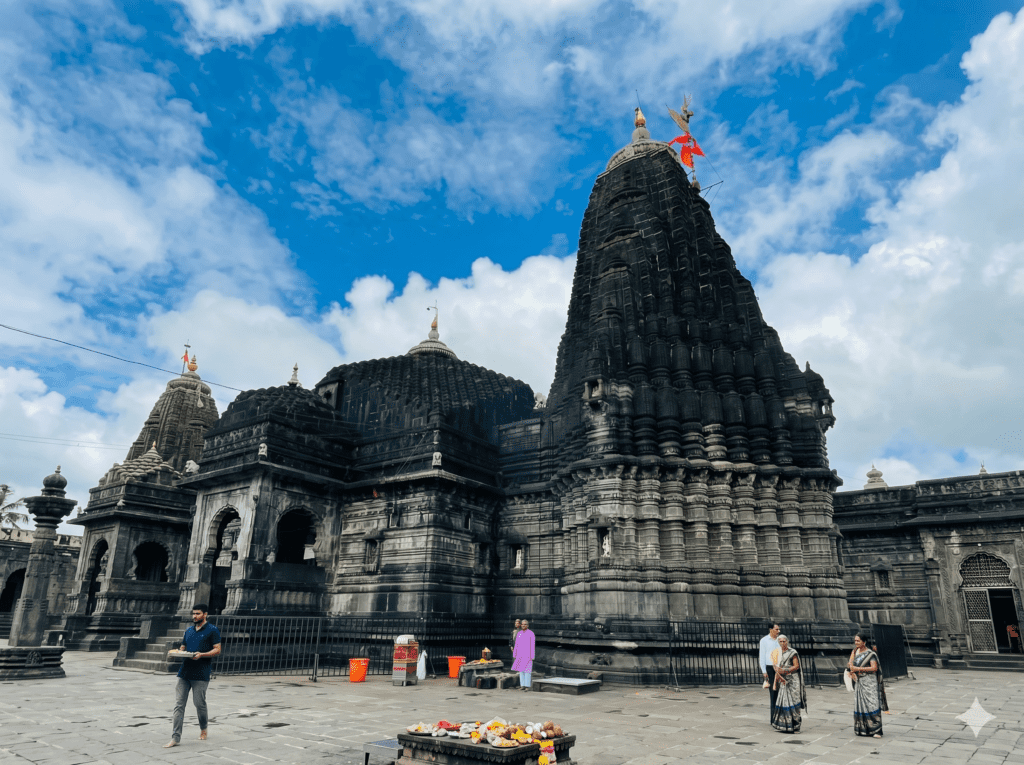
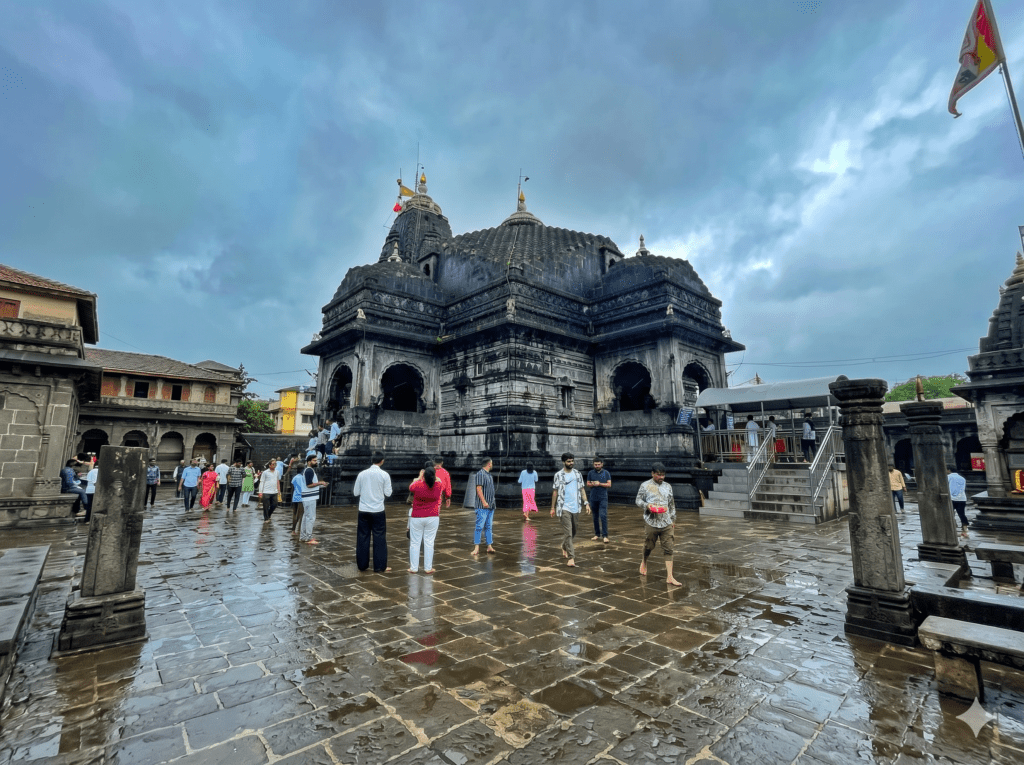
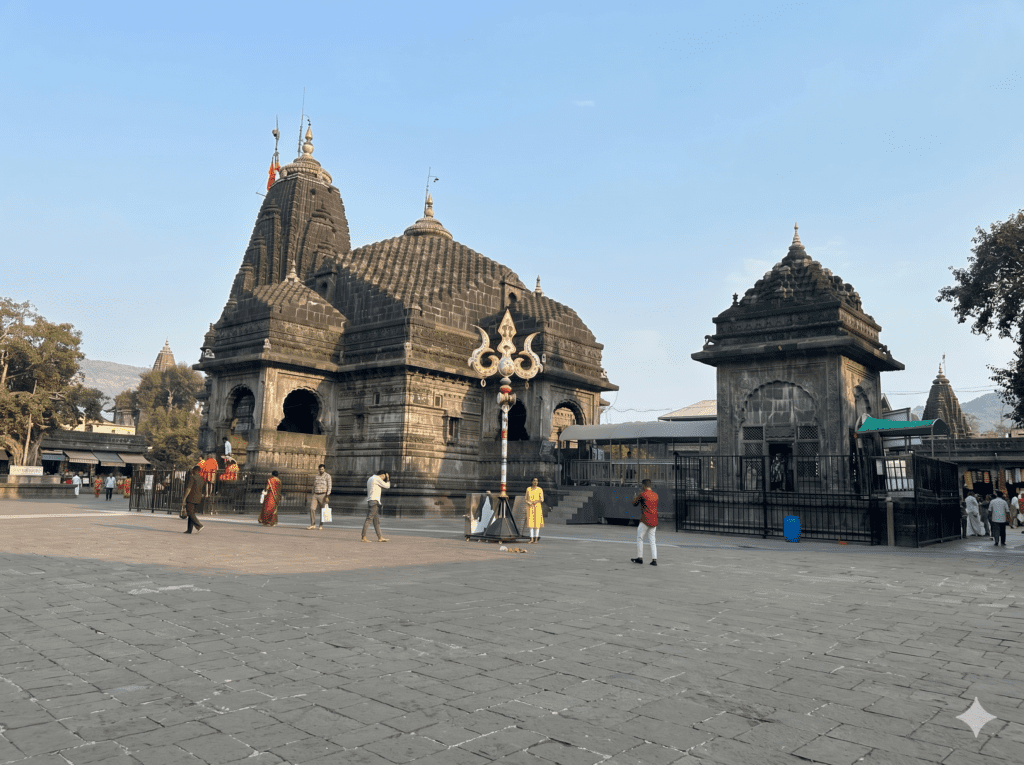
The temple has historical significance, but the present building dates primarily to the Peshwa era. Temple was reconstructed again with black stone architecture in the 18th century by Peshwa Balaji Baji Rao.
The temple features intricate carvings and sculptures, carved pillars, and architectural styles typical of the Hemadpanthi era. Besides, the artistic skill of medieval Maharashtra is reflected in the beautifully carved walls.
The temple is still one of the most revered pilgrimage sites in India today and continues to be a place of worship and pilgrimage.
4. What Makes Trimbakeshwar Temple Unique Among Jyotirlingas?
Many spiritual distinctions make Trimbakeshwar different from all the Jyotirlingas in India. More importantly, the temple is dedicated to the rare lingam with three faces representing Brahma, Vishnu and Mahesh. Thus, the devotees identify the shrine with creation, preservation and destruction in one.
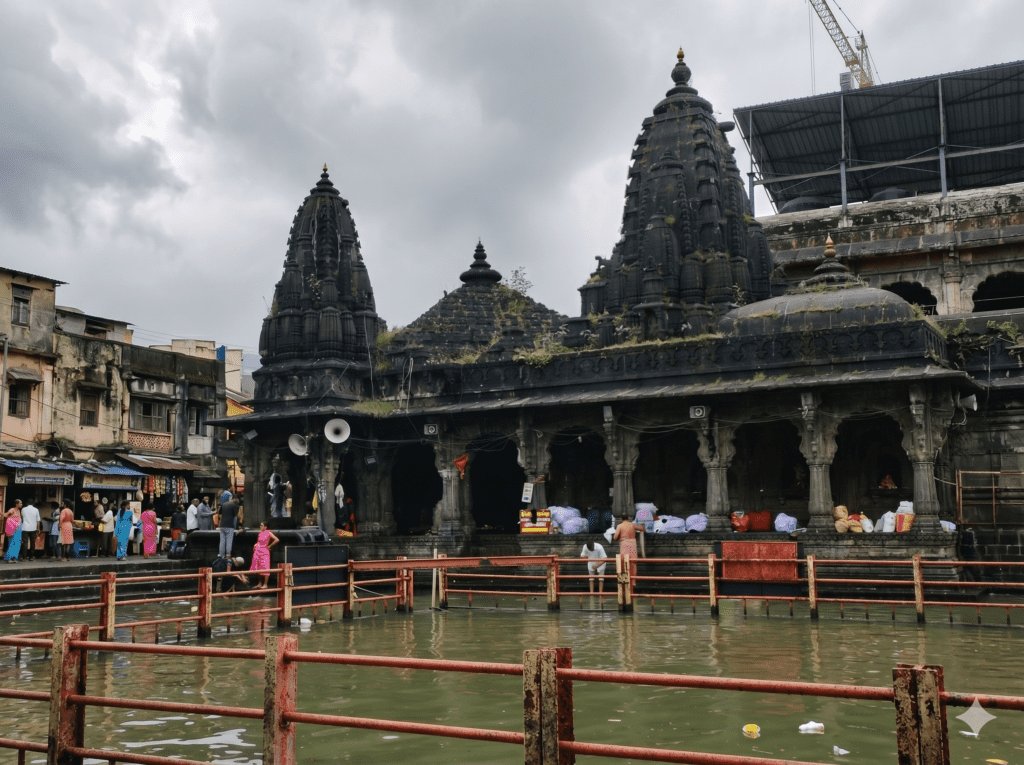
The unique feature is that water is always present over the Jyotirlinga. The constant dampness is of great holiness to priests and devotees. Furthermore, Kushavarta Kund near the temple holds great religious significance because devotees believe it marks the origin of the Godavari River. Additionally, many visitors take ritual baths in the sacred kund before entering the temple.
Additionally, Trimbakeshwar Temple serves as one of the four sacred locations where the Kumbh Mela is held on a rotational basis. Every twelve years, millions of pilgrims, saints, and sadhus gather in Trimbak and Nashik to take the holy dip in the Godavari River and participate in sacred rituals. Consequently, the temple becomes one of India’s most significant spiritual destinations during the Kumbh Mela.
5. Trimbakeshwar Temple Timings & Darshan Details
Temple Timings
To prevent unnecessary delays, visitors need to know the temple’s timings at Trimbakeshwar. Normally, the temple opens early in the morning and remains active all day, with various rituals and darshan sessions.
| Darshan Details | Timings |
| Temple Opening Time | Around 5:30 AM |
| General Darshan | Morning to Night |
| Evening Aarti | Around Sunset |
| Temple Closing | Around 9:00 PM |
Moreover, the timings of the Trimbakeshwar temple in Nashik may change during festivals and special events.
Rudrabhishek Timings
The Rudrabhishek celebration at the Trimbakeshwar temple is mostly held in the early morning hours, as the priests perform major Shiva rituals before the masses gather.
Devotees continue to flock to the morning puja slots for their peaceful spiritual experiences. Thus, on weekends and during the Shravan month, booking would be useful.
6. Trimbakeshwar VIP Darshan (Donation Darshan Pass) Guide
What is Donation Darshan Pass?
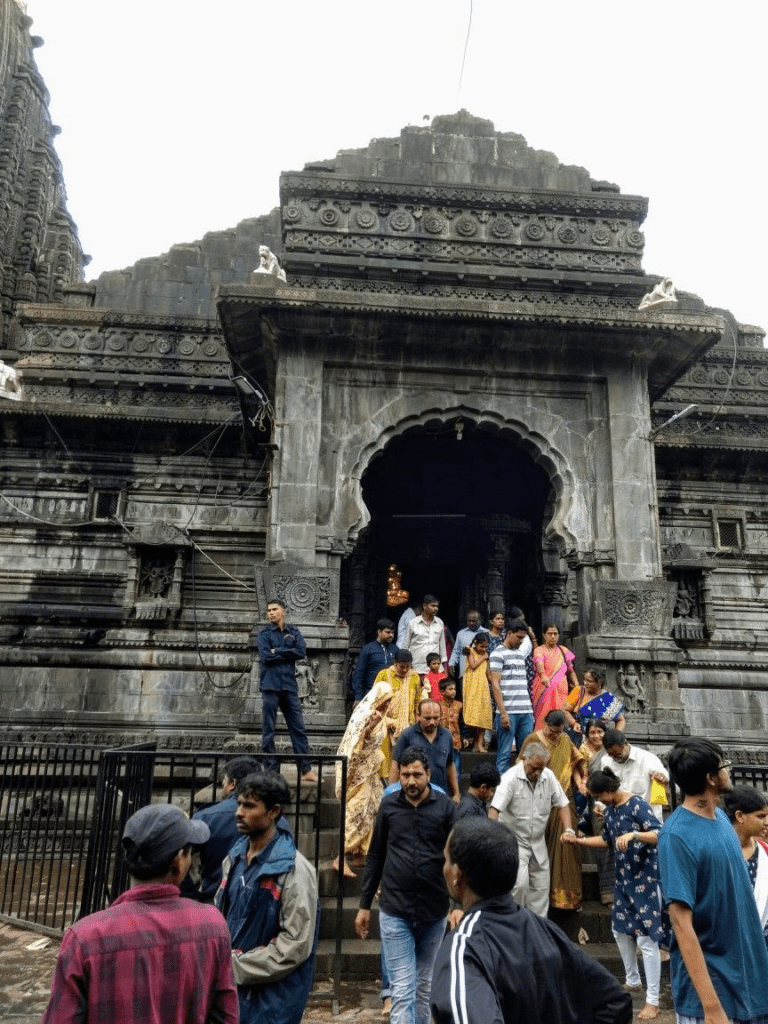
The Trimbakeshwar Donation Darshan Pass provides devotees with a separate entry route and a dedicated queue for faster access to the temple. Unlike the general darshan queue, devotees holding a Donation Darshan Pass enter through a different entrance after verification, making the overall darshan process more organized and convenient. Therefore, many pilgrims choose this option during weekends, holidays, and major festivals to reduce their waiting time.
The Donation Darshan Pass proves especially helpful during:
- Shravan month
- Maha Shivratri
- Weekends and public holidays
Additionally, elderly pilgrims, families, and devotees travelling from distant places often prefer this facility because it offers a more comfortable darshan experience.
Donation Darshan Pass Cost and Booking Process
Currently, the Trimbakeshwar Donation Darshan Pass costs ₹200 per person. Devotees can book the pass through the official temple trust website. The temple trust issues QR code-based passes, and devotees must carry both the QR pass and a valid government ID during verification.
However, devotees should note that the temple management occasionally suspends the Donation Darshan Pass facility during exceptional crowd conditions or special administrative requirements. Therefore, checking the latest updates before planning the visit is always advisable.
Donation Darshan Pass Timings
The temple generally opens for general darshan at around 5:30 AM, while Donation Darshan Pass holders enter through their separate queue according to the time slot allotted on their pass. Since the general and Donation Darshan Pass queues remain completely separate, devotees with a Donation Darshan Pass do not have to join the regular darshan line.
Visitors should still arrive early because pilgrim numbers can increase suddenly during peak seasons. Additionally, the Donation Darshan Pass usually reduces waiting time significantly, although crowd levels, festivals, and temple management arrangements may still affect the overall entry time.
Break (Priority) Darshan Pass
The Trimbakeshwar Temple Trust also offers a ₹2,500 Break (Priority) Darshan Pass for devotees seeking faster access to the temple. Compared to the ₹200 Donation Darshan Pass, this pass provides higher-priority entry and further reduces waiting time during busy periods.
However, the temple management may suspend the Break (Priority) Darshan Pass depending on crowd conditions and administrative requirements. Therefore, devotees should check its availability before planning their visit.
7. Rituals & Pujas – Rudrabhishek Cost and Pandit Booking Guide
Importance of Rudrabhishek
The ritual of Rudrabhishek is still one of the most significant ones conducted at the Temple of Trimbakeshwar. In this puja, the priests pour milk, honey, holy water and sacred mantras on Lord Shiva.
Devotees believe this ritual reduces negative energies, mental stress, and spiritual difficulties. Furthermore, many pilgrims perform Rudrabhishek to seek peace, prosperity, and ancestral blessings for their families.
Puja Cost and Booking Information
Often, people ask how many Rudrabhisheks are performed at the Trimbakeshwar Temple. The price is typically dependent on the type of ritual and the number of people attending.
The temple priests perform these rituals according to the prescribed Vedic rituals. Hence, visitors should not allow any unauthorised persons onto the temple premises.
In addition, pujas can be booked online and offline through the official temple management system. For a pilgrimage experience that is easy to plan and execute, you can also book customised pilgrim tours with Transforming Travel, where they can plan and visit the temples accordingly.
8. How to Reach Trimbakeshwar Temple
From Nashik
The journey from Nashik to Trimbakeshwar is both easy and convenient. Local buses, shared jeeps and taxis run throughout the day.
The one-hour drive is subject to traffic and weather conditions.
From Mumbai
If anyone is curious about how to reach the temple of Trimbakeshwar in Mumbai, their options are the road, rail, or a private taxi. The distance is about 170 km.
Nashik is the first place most visitors visit, which leads them to Trimbak by road. Further, there are direct buses from Mumbai that are available every day.
From Shirdi
Usually pilgrims take a tour to Shirdi alongside Trimbakeshwar. Hence, many travellers need to know how to reach the Trimbakeshwar temple from Shirdi.
It takes about 3-4 hours to get there by taxi. Besides, some tour companies offer combined tour packages to both holy sites.
By Train
A common question asked by visitors to the Trimbakeshwar Temple is which railway station is closest. The Nashik Road railway station is the nearest major station.
The distance between Nashik Road Railway Station and Trimbakeshwar Temple is around 39km. Once at the station, taxi and bus services are available to reach Trimbak easily.
9. Nearby Attractions to Visit Along with Trimbakeshwar Temple
The spiritual aura at Trimbakeshwar surpasses the temple complex itself. In fact, there are several religious, historical and scenic experiences within a short distance of the trip. So, an additional day is allotted to extra pilgrims to explore the sacred ambience of Trimbak.
Brahmagiri Hills
The majestic Brahmagiri Hills rise behind the temple and are of great significance in Hindu mythology. The ancients believed the sacred hills to be the birthplace of the Godavari River. Thus, it is considered to have spiritual significance.
Moreover, the route to Brahmagiri is a popular trekking and pilgrimage route, offering stunning views of the mountains and a peaceful atmosphere. Green valleys and misty peaks during the monsoons make it even more divine.
Travellers going on the pilgrimage in the morning are likely to enjoy a quiet morning on the trek. Furthermore, this area is a place of meditation and contemplation for many saints and spiritual seekers, thanks to its serene atmosphere.
Kushavarta Kund
Kushavarta Kund is one of the most sacred water tanks close to the temple. It is a sacred kund considered to be the symbolic source of the Godavari River.
Before entering the temple, many pilgrims take ritual baths to refine themselves spiritually. In addition, priests regularly conduct sacred activities around the kund, thereby increasing its religious value.
The time of the religious festival, the Kumbh Mela, also sees large crowds at the kund.
Anjaneri Fort
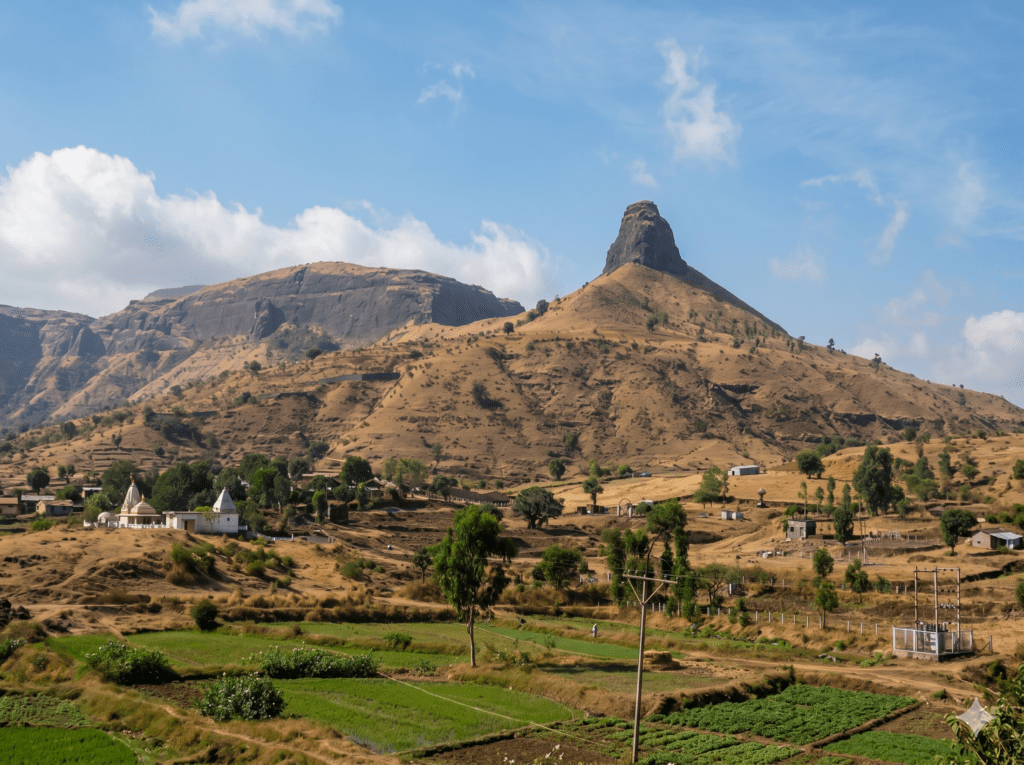
People who visit the fort often ask which fort is close to Trimbakeshwar Temple; the correct answer is Anjaneri Fort. This beautiful trekking destination is associated with Lord Hanuman, as many devotees believe it is his birthplace.
The journey provides stunning views of the mountains, abundant greenery, and ancient cave formations. Also, the nature lovers among them include Anjaneri Fort in their Trimbakeshwar pilgrimage, as the route is always scenic.
10. Best Time to Visit Trimbakeshwar Temple
Monsoon (July to September) – The Most Beautiful Season
The monsoon is undoubtedly the best time to visit Trimbakeshwar Temple. During this season, the entire Trimbak region transforms into a lush green paradise, creating a breathtaking backdrop for both pilgrimage and sightseeing. Consequently, many devotees prefer visiting the temple between July and September.
Moreover, rainfall covers the Brahmagiri Hills with vibrant greenery, while numerous seasonal waterfalls and cool mist enhance the region’s natural beauty. Additionally, the weather remains cool and pleasant, with frequent cloud cover that keeps the harsh sunlight away throughout most of the day. As a result, both the scenic surroundings and the comfortable climate make the spiritual experience even more memorable.
Furthermore, the pleasant weather allows visitors to comfortably explore nearby attractions such as Brahmagiri Hills and Kushavarta Kund. However, visitors should carry rain protection because sudden showers remain common throughout the season.
Winter (October to March) – A Comfortable Alternative
Winter is another good time to visit Trimbakeshwar Temple, especially for travellers who prefer cool and dry weather. The pleasant temperatures make darshan, rituals, and sightseeing comfortable throughout the day.
Furthermore, clear skies provide beautiful views of the Brahmagiri Hills, while the comfortable climate makes exploring nearby attractions easier. Additionally, several important Hindu festivals take place during this period, adding to the temple’s spiritual atmosphere.
Summer (April to June) – Less Recommended
Summer becomes extremely hot during daytime hours. Hence, lines to attend darshan during the day can be physically tiring.
Crowds are still relatively low, but high temperatures can make travelling less comfortable. So those visiting the temples should give priority to early morning visits during the summer holidays.
During this time of the year, hydration and light clothing go a long way.
11. Darshan Waiting Time, Crowd Levels & Best Visiting Hours
Weekday vs Weekend Crowd
Trimbakeshwar Temple receives a steady flow of devotees throughout the week because it is located close to Nashik and remains easily accessible by road. Therefore, visitors should expect crowds even on weekdays, especially after the early morning hours.
However, weekdays generally experience shorter queues than weekends. Pilgrims who arrive around the temple opening time (approximately 5:30 AM) can usually complete their darshan with comparatively less waiting. In contrast, Saturdays, Sundays, Mondays, and public holidays attract significantly larger crowds, which often result in much longer waiting times. Therefore, visitors seeking a smoother darshan experience should plan an early morning visit on a weekday whenever possible.
Festival Crowd Conditions
During the month of Shravan and on Maha Shivratri, huge numbers of people make a pilgrimage to the temple. Besides that, millions of pilgrims visit Nashik and Trimbak during the time of Kumbh Mela.
Temple authorities typically implement special crowd-management systems during such periods. However, large crowds still increase waiting times significantly.
Best Time for Faster Darshan
Peaceful darshan is possible early in the morning, when crowds are comparatively fewer. Also, there is a calmer spirit during sunrise rituals.
There’s a quicker entry timing strategy that visitors can use:
- Reach before 6:00 AM for shorter queues
- Prefer weekdays instead of weekends
- Use VIP Darshan during festival periods
If you are travelling on pilgrimage, you can also find information on upcoming travel dates and group tours in the Transforming Travel Trip Calendar, which is regularly updated.
12. Comparison Table – Trimbakeshwar Temple vs Other Jyotirlingas
| Feature | Trimbakeshwar Temple | Kashi Vishwanath Temple | Somnath Temple |
| Location | Nashik | Varanasi | Gujarat |
| Unique Feature | Three-faced lingam | Connection with the River Ganga | Arabian Sea-facing temple |
| Crowd Level | High | Very High | Moderate |
| Spiritual Setting | Mountain surroundings | Ancient spiritual city | Coastal atmosphere |
| Famous Ritual | Rudrabhishek | Ganga Aarti | Evening Aarti |
Although all Jyotirlingas hold immense spiritual importance, Trimbakeshwar offers a rare combination of mountain scenery, Vedic rituals, and sacred river mythology.
13. Important Travel Tips for Visiting Trimbakeshwar Temple
Darshan Tips
With careful, wise planning, it is possible to make the Pilgrimage experience much better. Thus, before visiting, visitors should bear the following practical considerations in mind.
Darshan is generally smoother and less “crowded” in the early morning. Likewise, it is preferable to visit the temple on weekdays for peaceful visits.
Dress Code and Restrictions
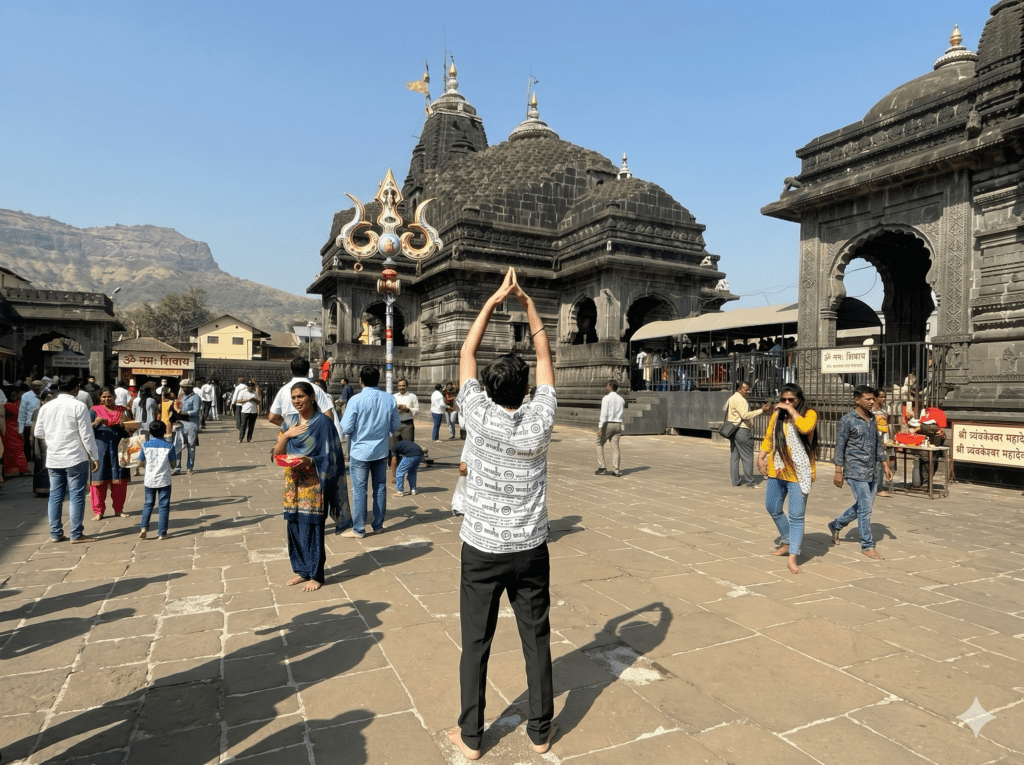
Visitors should wear conservative and modest clothing while visiting Trimbakeshwar Temple to maintain the sanctity of this sacred pilgrimage site. Although the temple does not enforce a strict dress code, respectful attire is appropriate for darshan and religious rituals.
Additionally, visitors should follow these important temple guidelines:
- Mobile phones are allowed inside the temple complex. However, visitors should not use them inside the prayer hall or the Garbhagriha (inner sanctum). Photography and videography are strictly prohibited in these areas.
- Visitors must leave their footwear outside the temple premises before entering.
- Visitors should follow the instructions given by the temple authorities and priests throughout their visit.
Practical Visitor Tips
It is essential to have a valid government ID with you, particularly for VIP Darshan verification. In addition, pilgrims visiting during the hot season should stay hydrated throughout the day.
Visitors should use official parking areas and avoid unauthorised agents near the temple entrance.
Before embarking on their spiritual journey, travellers can visit the Transforming Travel Instagram Page for travel inspiration, pilgrimage visuals and destination updates.
14. FAQs – Trimbakeshwar Temple
Q1. How to reach Trimbakeshwar Temple?
Visitors can reach the temple easily from Nashik by bus, taxi, or private vehicle. Additionally, Mumbai and Shirdi are well connected by road.
Q2. Which railway station is near Trimbakeshwar Temple?
Nashik Road Railway Station serves as the nearest major railway station.
Q3. What are Trimbakeshwar Temple timings?
The temple generally opens early in the morning, around 5:30 AM, and closes at night after evening rituals.
Q4. How much does Rudrabhishek cost in the Trimbakeshwar Temple?
Rudrabhishek charges vary depending on the ritual type and the arrangements for the priest.
Q5. What is the story of Trimbakeshwar Temple?
The temple story connects with Sage Gautama, Lord Shiva, and the sacred origin of the Godavari River.
Q6. Is Darshan allowed in Trimbakeshwar Temple?
Yes, general and VIP darshan remain available for devotees under temple regulations.
Q7. What is the distance between Nashik and Trimbakeshwar Temple?
The distance is approximately 30 km by road.
Q8. How much does VIP Darshan (Donation Darshan Pass) cost at Trimbakeshwar Temple?
The VIP Darshan (Donation Darshan Pass) generally costs ₹200 per person. Additionally, devotees can also opt for the ₹2,500 Break (Priority) Darshan Pass for faster entry, subject to availability.
Q9. Is monsoon a good time to visit Trimbakeshwar Temple?
Yes, the monsoon is one of the best times to visit Trimbakeshwar Temple because it offers pleasant weather, lush greenery, mist-covered Brahmagiri Hills, and beautiful mountain scenery, making the pilgrimage both comfortable and spiritually enriching.
15. Conclusion – Plan Your Visit to Trimbakeshwar Temple
A visit to the Trimbakeshwar Temple is no ordinary temple visit. Combined with the power of Vedic rituals, the antiquity of the mythological tales and the peaceful surroundings of Brahmagiri, this can be a very spiritual experience.
Furthermore, the temple shares a sacred connection with the Godavari River, and its rare three-faced lingam makes it different from other Jyotirlingas in India. The Pilgrims also enjoy organised VIP Darshan, hassle-free travel and significant puja traditions. Nearby attractions such as Brahmagiri Hills, Kushavarta Kund, and Anjaneri Fort also add a soothing and spiritual element to the journey. So, tourists should visit Trimbakeshwar and go beyond temple darshan.
If you wish to extend your pilgrimage beyond Trimbakeshwar Temple, consider exploring Mystic Maharashtra: Jyotirlingas, Shirdi, Vineyards, Ajanta & Ellora. This thoughtfully curated journey combines some of Maharashtra’s most revered spiritual sites with its rich cultural and historical landmarks, making it an excellent option for travellers seeking a deeper and more comprehensive experience of the state.
For readers interested in exploring another important pilgrimage destination in Maharashtra, check out Shani Shingnapur Temple – Complete Darshan, Timings, History & Travel Guide (2026) for detailed information on its history, darshan, timings, rituals, and travel tips.
May your visit to Trimbakeshwar Temple bring peace, devotion, and a memorable spiritual experience.

