


Grishneshwar Temple: Complete Travel Guide, History, Timings, and How to Reach
1. Introduction to Grishneshwar Temple
The Grishneshwar Temple is one of the holiest shrines of Lord Shiva, situated near the world-famous Ellora Caves in Maharashtra. Furthermore, this sacred temple holds a significant place in Hinduism as one of the 12 Jyotirlingas of Lord Shiva, revered by people from all around India. The temple is a place of worship visited year-round by pilgrims, historians, photographers, and cultural tourists for its spiritual atmosphere, historical significance, and remarkable architecture.
The temple is located near Aurangabad and is also a significant part of Maharashtra’s spiritual tourism circuit. In addition, numerous tourists visit the sites near the Grishneshwar Jyotirlinga, including the Ellora Caves, Daultabad Fort, and Bibi Ka Maqbara. Thus, both pilgrims and history buffs flock to the place.
You can check out curated Maharashtra spiritual tours that combine Grishneshwar Temple with destinations such as Trimbakeshwar Temple, Bhimashankar, Shirdi, Ellora Caves, Ajanta Caves, and Nashik vineyards for a deeper cultural and pilgrimage experience.
Quick Facts About Grishneshwar Temple
| Details | Information |
| Location | Near Ellora, Aurangabad, Maharashtra |
| Significance | One of the 12 Jyotirlingas of Lord Shiva |
| Nearest Railway Station | Aurangabad Railway Station |
| Distance from Aurangabad | Approximately 30 km |
| Best Time to Visit | October to March and July to September |
| Temple Timings | Early morning to evening |

Location Advantage Near Ellora Caves
The Ellora Caves, a UNESCO World Heritage Site, are among the main attractions near Grishneshwar Temple. Both attractions are close by, and people often visit both. Also, this area is ideal for a combination of spirituality, architecture, and history, making the whole experience even more memorable.
This combination attracts visitors to the temple from both religious and international tourism. Therefore, the local tourism infrastructure has also greatly developed over the years.
2. Why the Grishneshwar Temple is Famous
The Grishneshwar Jyotirlinga Temple has great religious significance in Hinduism. It is the 12th and last Jyotirlinga, and devotees believe that by visiting the temple, the pilgrimage to the sacred Jyotirlinga is completed. So, hundreds of thousands of pilgrims come here annually to seek Lord Shiva’s blessings.
Religious Importance of Grishneshwar Jyotirlinga
The Hindu faith believes that the Jyotirlingas are the infinite form of Lord Shiva. Of these sacred shrines, Grishneshwar holds a unique position, representing devotion, faith, and divine power. Moreover, many believers believe that prayers offered here eliminate obstacles and lead to spiritual peace.
Grishneshwar is a very intimate spiritual space, unlike many big temple complexes. Hence, devotees feel more attached to Lord Shiva during the darshan and the rituals.
Cultural and Spiritual Significance
The temple is also a symbol of Maharashtra’s rich cultural heritage and religious identity. The carvings, ceremonies, and architecture reflect a long history of art and religion. Furthermore, the temple complex comes alive during local festivals and celebrations, featuring devotional music, chants, and ceremonies.
The temple attracts a large number of devotees during Mahashivratri. Meanwhile, the entire atmosphere is filled with vibrancy and spirit.
Why Pilgrims Visit Throughout the Year
The temple is becoming popular for several reasons:
- Devotees seek blessings at the sacred Jyotirlinga shrine
- Travelers combine the temple visit with the Ellora Caves exploration
- Spiritual seekers appreciate the peaceful temple environment
Moreover, this temple is included in most cultural tours of Maharashtra due to its historical and architectural significance.
If you are looking for a spiritual and heritage tour to Grishneshwar and other interesting places in India, Transforming Travels can also arrange custom tours. This personalized service enables visitors to navigate through temples, caves, and cultural sites with ease and efficiency.
3. Grishneshwar Temple History
The history of the Grishneshwar Temple is intertwined with mythological, devotional, destructive, and reconstructive aspects. As a result of this multistoried history, the temple is not only a place of historical importance but also a place of spiritual importance.
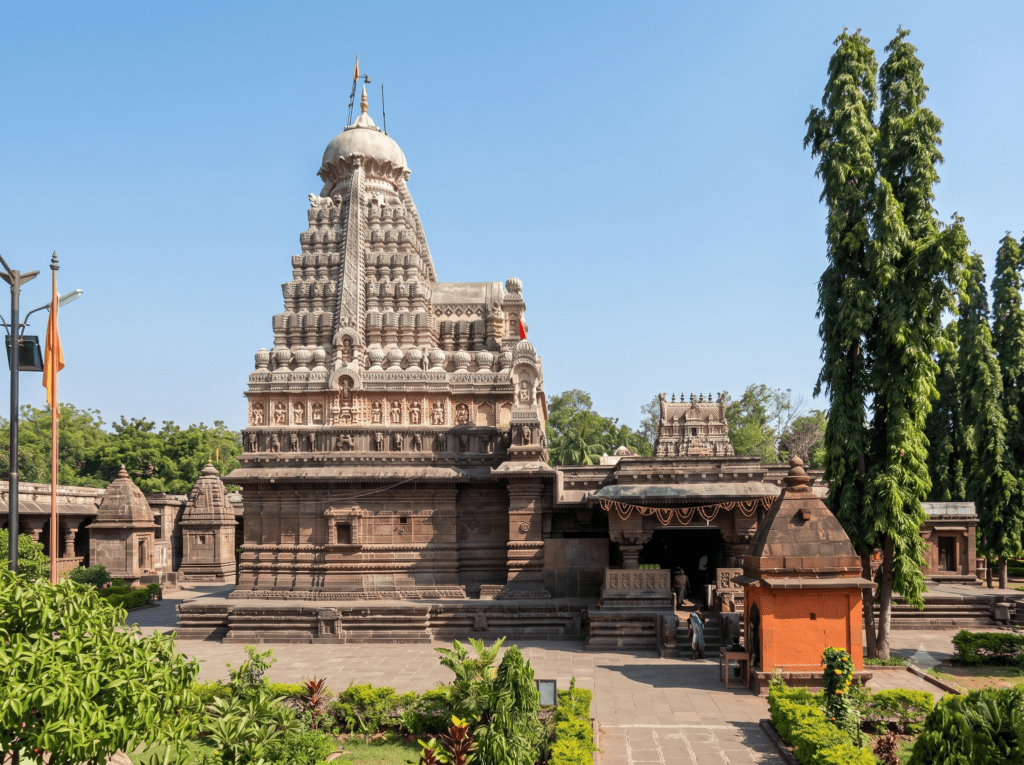
Mythological Origin of the Temple
In Hindu mythology, a pious woman named Kusuma devoutly worshipped Lord Shiva. She would place a Shiva Lingam in any water body in the vicinity each day after making the prayers. But it was a tragedy when her son died from jealousy and a family feud.
Though grieved, Kusuma never stopped her devotion, neither with anger nor hatred. Lord Shiva admired her faith, revived her son, and appeared before her in divine form. Then, Shiva manifested himself as a Jyotirlinga at this holy place and gave it the name Grishneshwar.
The legend of Kusuma forms the spiritual foundation of Grishneshwar Temple and continues to inspire devotees who visit this sacred shrine. It highlights the virtues of unwavering faith, patience, and devotion, even in the face of adversity. According to tradition, Lord Shiva’s appearance as a Jyotirlinga at this site transformed it into one of Hinduism’s most revered pilgrimage destinations, attracting worshippers seeking spiritual blessings and inner peace.
Restoration by Ahilyabai Holkar
The temple has been destroyed several times over the centuries by the Delhi Sultanate and Mughal invasions. But the shrine has survived due to constant tending and rebuilding by devotees. The temple then came under the ownership of the great Maratha queen Ahilyabai Holkar in the 18th century and was restored to its current state.
Ahilyabai Holkar also renovated many significant Hindu temples in India, including Kashi Vishwanath. Hence, her role in maintaining Indian Spirituality is exceptional.
The reconstructed building shows both the traditional temple architecture and the skills of the Maratha period.
4. Architecture of Grishneshwar Jyotirlinga Temple
The Grishneshwar Temple is a beautiful blend of devotion and architectural artistry. This temple is notable for retaining traditional craftsmanship in remarkably good condition, compared to many modern temple structures.
Red Basalt Stone Construction
One of the defining architectural features of Grishneshwar Temple is its construction using red basalt stone, a durable volcanic rock that, notably, gives the shrine its distinctive appearance. Furthermore, the rich reddish hue of the stone creates a striking visual contrast against the surrounding landscape and, consequently, enhances the temple’s grandeur. During sunrise and sunset, the temple walls often glow with warm tones, making the structure particularly captivating for visitors and photographers.
Beyond its aesthetic appeal, red basalt was chosen for its strength and longevity. Moreover, the stone has enabled the temple to withstand centuries of natural weathering, changing climatic conditions, and historical upheavals. Consequently, it has played a crucial role in preserving the temple’s structure and heritage over time. Its durability has played a significant role in preserving many of the temple’s original architectural elements, including intricate carvings, decorative panels, and sculptural details.
The use of locally available basalt also reflects the practical building techniques of the period, where artisans combined functionality with artistic excellence. Even today, the well-preserved stonework stands as a testament to the engineering skills and craftsmanship of the builders. As a result, the red basalt structure is not only an important architectural feature but also a symbol of the temple’s resilience and enduring spiritual legacy.
Intricate Carvings and Sculptures
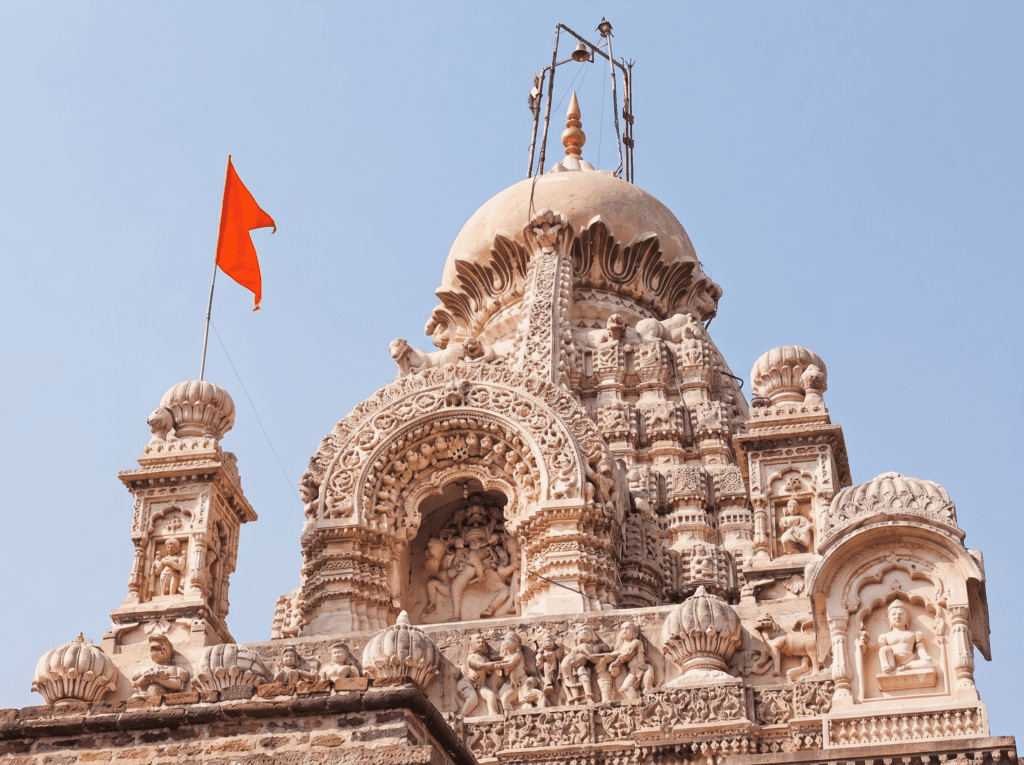
One of the most remarkable features of Grishneshwar Temple is its exquisite stone carvings and sculptures, which, notably, showcase the exceptional craftsmanship of medieval Indian artisans. Furthermore, the temple walls, pillars, and exterior surfaces are adorned with detailed depictions of Hindu gods and goddesses, celestial beings, floral motifs, and scenes from ancient scriptures. These carvings not only enhance the temple’s architectural beauty but also reflect the rich cultural and religious traditions of the period.
Notably, the red basalt stone used in the temple has been skillfully sculpted to create intricate patterns and lifelike figures. Furthermore, visitors can observe beautifully carved images of Lord Shiva, Lord Vishnu, Goddess Parvati, and various mythological characters that narrate stories from Hindu epics and Puranas. In addition, the pillars and decorative panels feature geometric designs, ornamental motifs, and artistic details that demonstrate the high level of precision achieved by the craftsmen.
As devotees and tourists walk through the temple complex, the carvings serve as a visual representation of faith, devotion, and mythology. Each sculpture contributes to the spiritual atmosphere of the shrine, allowing visitors to appreciate both its religious significance and its architectural grandeur. These artistic elements make Grishneshwar Temple not only an important pilgrimage destination but also a valuable example of India’s rich temple heritage.
Unique Access to the Sanctum
One of the most distinctive aspects of Grishneshwar Temple is the opportunity it offers devotees to have a close and personal darshan of the sacred Jyotirlinga. Unlike many prominent temples in India, where worshippers can only view the deity from a distance due to large crowds or restricted access, Grishneshwar allows devotees to approach the sanctum and offer prayers more intimately, subject to temple regulations and crowd conditions.
As a result, this direct access creates a deeper spiritual connection between devotees and Lord Shiva, making the worship experience more meaningful and memorable. Furthermore, pilgrims often consider this proximity to the Jyotirlinga one of the temple’s most cherished features, as it allows them to perform prayers with a greater sense of devotion and reverence. During quieter hours, visitors can spend a few moments in peaceful contemplation, enhancing the overall spiritual atmosphere of the shrine.
The tradition of allowing closer access to the deity has made Grishneshwar Temple particularly special among the twelve Jyotirlingas. For many devotees, the opportunity to stand near the sacred Shiva Lingam and seek blessings firsthand adds a unique dimension to their pilgrimage, leaving them with a profound sense of peace and spiritual fulfillment.
5. Significant Structures Inside Grishneshwar Temple
The temple complex has several important sections that contribute to the spiritual and architectural experience.
Garbhagriha (Sanctum)
The Garbhagriha is the most sacred area of the temple, where devotees come to pray, offer, and perform rituals.
The sanctum is extremely calm and devotional throughout the day. In addition, priests conduct regular Puja and aarti in accordance with the traditional pattern.
Sabha Mandap
The Sabha Mandap is the central prayer hall of the devotees. Large stone pillars support this section; many of them have detailed carvings.
In addition, devotees usually sit here to meditate or reflect on their spiritual situation before entering the sanctum.
Nandi Mandap
Like most Shiva temples, there is also a Nandi statue in front of the main shrine of Grishneshwar. Nandi is the vehicle and keeper of Lord Shiva in Hindu mythology.
Therefore, the devotees pray to Nandi before approaching the Jyotirlinga.
Entrance Gates and Temple Layout
The temple is a four-entry structure, the main entrance being on the south. In addition, the overall layout adheres to the traditional layout of a Hindu temple.
The symmetrical design ensures that movements within the complex are organized and balanced spiritually.
Shikhara and Sculptures
The towering Shikhara stands out among the temple’s structures. It is adorned with carvings and decorative elements, enhancing the shrine’s grandeur.
Also, the sculptural details show considerable influence from Deccan medieval temples.
6. Grishneshwar Jyotirlinga Temple Timings
Knowing the Grishneshwar Jyotirlinga Temple timings in advance can help devotees plan their visit efficiently and enjoy a smoother darshan experience. The temple opens early in the morning, allowing pilgrims to participate in the first aarti and seek blessings before the crowds build up. Throughout the day, devotees can attend various rituals and pujas, making the temple visit both spiritually enriching and well-organised.
Darshan Timings
| Activity | Timings |
|---|---|
| Temple Opening | 05:30 AM |
| Afternoon Break | 12:00 PM – 01:00 PM |
| Temple Closing | 09:00 PM |
Aarti Timings
| Aarti | Timings |
|---|---|
| Morning Aarti | 05:00 AM |
| Bhog Aarti | 12:00 PM |
| Evening Aarti | 08:00 PM |
Puja Timings
| Puja Session | Timings |
|---|---|
| Morning Puja | 06:00 AM – 11:30 AM |
| Afternoon & Evening Puja | 02:00 PM – 07:00 PM |
Best Time for Darshan
For a peaceful darshan experience, it is advisable to visit between 5:30 AM and 8:00 AM, when the temple is comparatively less crowded. Early morning visits not only offer shorter waiting times but also provide a serene atmosphere for prayer and worship.
On regular weekdays, devotees can generally expect a waiting time of 1 to 1.5 hours, although this may vary depending on the season and visitor turnout. Weekends usually witness higher footfall, leading to longer queues.
During Shravan (Sawan), Maha Shivaratri, and other major Shiva festivals, the temple experiences a significant influx of pilgrims from across the country. During these peak periods, waiting times can extend to 2–3 hours or more, especially on Mondays and festival days. Therefore, visitors planning a trip during these occasions should arrive early and allow extra time for darshan.
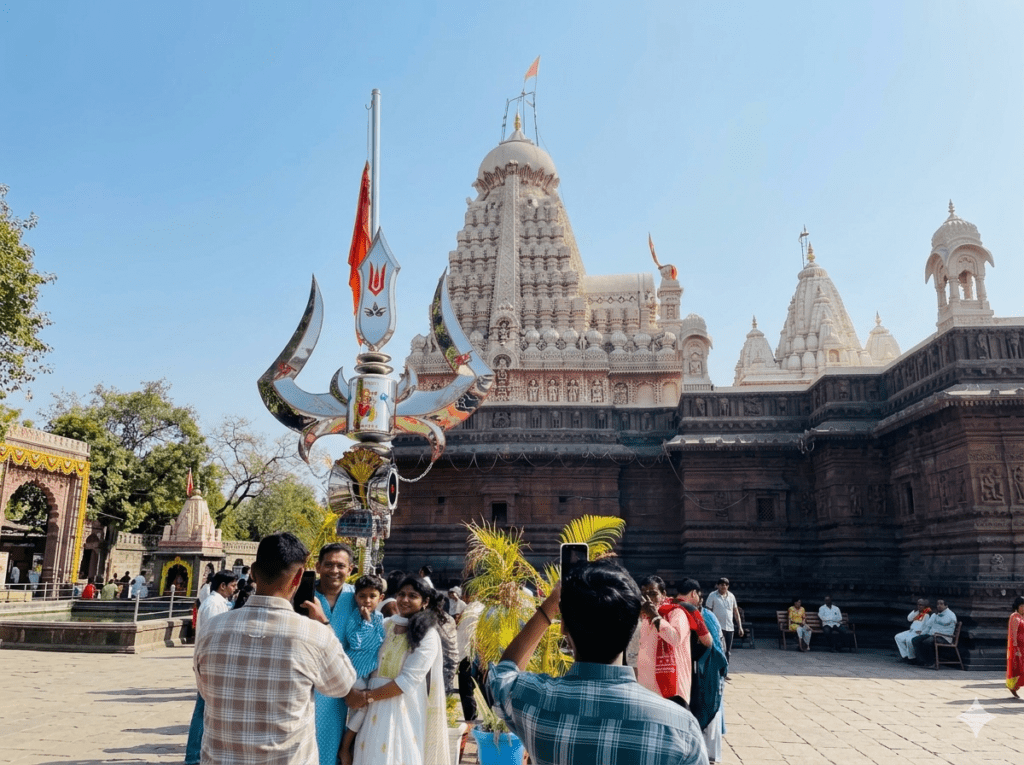
For more spiritual travel inspiration, temple journeys, and curated heritage experiences across India, you can also check the latest updates on Transforming Travels’ Instagram page.
7. Best Time to Visit Grishneshwar Temple and Darshan Tips
The best time to visit Grishneshwar Temple is between July and March. Because of the year-round pilgrimage to the temple, weather conditions and the timing of the festivals significantly influence the number of pilgrims and their darshan times.
Best Time to Visit Grishneshwar Temple
July to March is the best time to visit the temples and sightseeing. April to June should be avoided because of heat. Between October to March, the weather is clear and pleasant, and visitors can enjoy nearby attractions such as Ellora Caves and Daulatabad Fort without the heat. Moreover, the temple complex has a serene ambiance in the winter mornings.
In contrast, the surrounding area becomes very green in July-September due to the monsoons. This is the time of year that many photographers and nature enthusiasts prefer. A moderate crowd can be expected during the month of Shravan, though it should be expected of devotees.
Crowd and Festival Analysis
The temple has different numbers of visitors in different seasons. Knowing peak periods is important for visitors planning to use the site effectively.
| Period | Crowd Level | Experience |
| Regular Weekdays | Moderate | Comfortable darshan |
| Mondays | High | Longer waiting time |
| Weekends | High | Increased footfall |
| Shravan Month | Very High | Heavy pilgrimage rush |
| Maha Shivaratri | Peak Crowd | Extremely long queues |
Devotees from various parts of Maharashtra and adjoining states come in droves to seek blessings from Shiva during Shravan. As a result, the queues grow significantly, particularly on Mondays. Likewise, one of the biggest congregations of the year is at Maha Shivaratri.
Darshan Queue Timing Expectations
Patience is advised for visitors, especially during festivals and on weekends.
- Normal weekdays usually require around 1 to 1.5 hours for darshan
- Weekends generally increase the waiting time to nearly 2 hours
- Festival days may extend the queue beyond 3 hours
Also, a few people do not arrive at the site before sunrise, so there is less crowd during the early morning hours.
Quick Darshan Tips
The temple is still busy with many festivals and events; however, with proper planning, the visit can be smoother.
- Visit around 5:30 AM for shorter queues and peaceful darshan
- Avoid afternoon peak hours whenever possible
- Prefer weekdays instead of weekends for manageable crowds
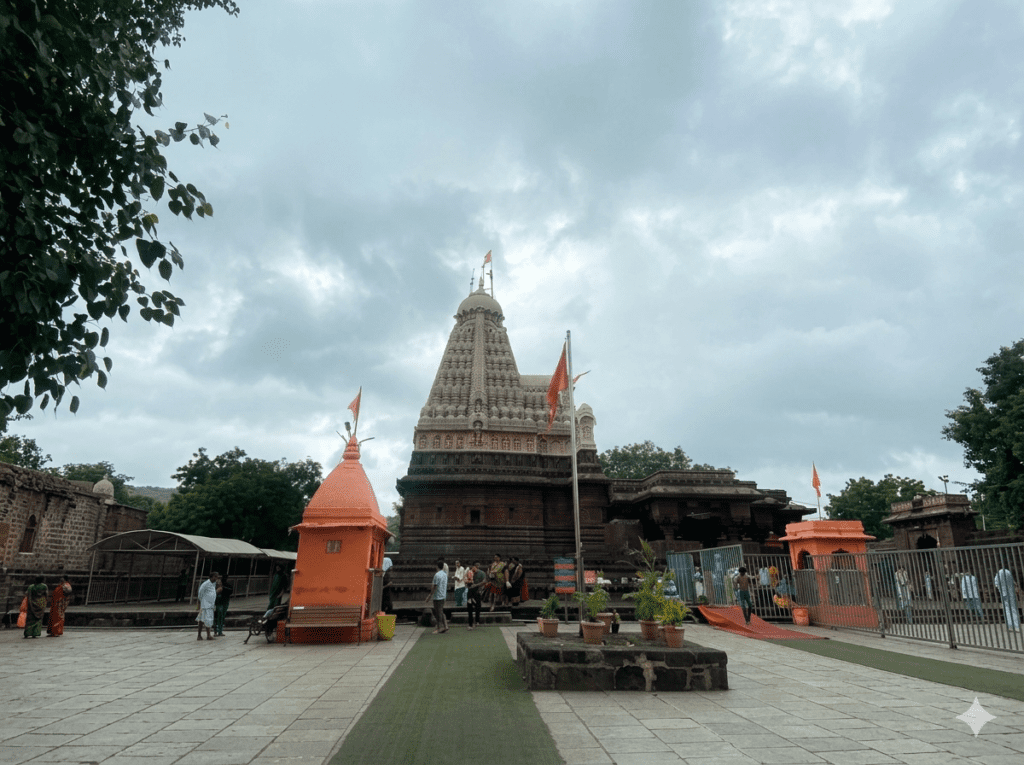
Besides, travellers who want a more organized Spiritual tour can also refer to the Transforming Travels trip calendar, which is updated regularly with travel schedules and seasonal suggestions for upcoming Maharashtra group tours and pilgrimage tours.
8. How to Reach Grishneshwar Temple
Pilgrims from different parts of India visit the Grishneshwar shrine and search for information on how to reach the Grishneshwar Temple. Fortunately, air, rail, and road networks connect the temple efficiently.
By Air
The closest airport to Grishneshwar Temple is Aurangabad Airport. The airport also links with other major cities in India, including Mumbai, New Delhi, Hyderabad, and Bengaluru, making air travel easier for long-distance travelers.
Once visitors arrive at the airport, they can conveniently hire a taxi or a private car to reach the temple comfortably. Furthermore, the road journey usually takes around 45 minutes to 1 hour, depending on traffic conditions.
By Train
The train service is also convenient. Aurangabad Railway Station is the nearest railway station and a connecting point for several important cities in India.
Moreover, any person arriving by train can avail of buses, taxis, and autorickshaws outside the station premises. This means that transportation to the next phase is seldom challenging.
By Road
Maharashtra’s road network also efficiently connects the temple. Travellers from Pune, Nashik, Mumbai, and nearby regions prefer road trips because authorities maintain the roads well.
Also, during the same tour to Grishneshwar Temple, many people visit the Ellora Caves.
Transport Options Available
There are a few ways to get to the temple area from Aurangabad.
| Transport Mode | Cost | Comfort | Best For |
| Taxi | Higher | Excellent | Families |
| Bus | Budget-friendly | Moderate | Solo travelers |
| Private Vehicle | Flexible | High | Group trips |
Private Vehicle Flexible High Group trips
Buses are always the preferred option for cheap travel, while private taxis are more popular among families and senior citizens.
9. How to Reach from Aurangabad and Pune
How to Reach Grishneshwar Temple from Aurangabad Railway Station
There are numerous pilgrims interested in how to reach the Grishneshwar Temple from Aurangabad Railway Station, as it is the primary arrival point.
The temple is around 30 km from the train station. For this reason, visitors can easily complete the trip in an hour.
Available transport options include:
- Private taxis
- Shared cabs
- Maharashtra state buses
- Auto-rickshaws for shorter connectivity
In this regard, the fastest and most convenient option for the pilgrims is the taxi service, which is also useful for families and older people.
How to Reach Grishneshwar Temple from Pune
Additionally, one of the most common queries for people planning to visit Grishneshwar Temple is “How to reach Grishneshwar Temple from Pune?” Another popular search is “How to reach Grishneshwar Temple from Pune,” as Pune is a big urban center in Maharashtra.
The distance between Pune and Grishneshwar Temple is approximately 230 km, and road travel is one of the most favored modes of transportation.
Visitors can choose:
| Mode | Approximate Time | Convenience |
| Road Trip | 5–6 Hours | Highly flexible |
| Train + Taxi | Moderate | Comfortable |
| Bus Services | Economical | Budget-friendly |
Further, many tourists enjoy customized spiritual tours to temples in Maharashtra, including Jyotirlinga temples, Ellora Caves, Aurangabad, and Pune. Transforming Travels can also create vacation packages for travelers who want to create their own trip and activities based on a heritage theme.
10. Hotels Near Grishneshwar Temple and Travel Planning
There are several options for staying close to the temple and in Aurangabad city. As a key tourist destination, hotels cater to a range of budgets, from budget to heritage.
Best Areas to Stay
People who choose to stay in Aurangabad find it to be the best option, as it provides the following:
- Better hotel availability
- Easier transportation access
- Restaurants and travel facilities
- Connectivity to Ellora and Daulatabad
But many smaller guesthouses and local accommodations around Ellora want to stay near the temple.
Travel Planning Tips
The well-planned itinerary enables visitors to connect various attractions efficiently. Thus, many travelers visit the Grishneshwar Temple, the Ellora Caves, Ajanta Caves, the Daulatabad Fort, and the Bibi Ka Maqbara in 2-3 days.
11. Nearby Attractions and Conclusion
Moreover, numerous tourist attractions surround Grishneshwar Temple and further enhance the travel experience. Additionally, travelers can explore several historical and cultural sites located near the temple complex.
Furthermore, the temple’s strategic location allows visitors to conveniently discover many important heritage destinations in the surrounding region.
Ellora Caves
Ellora Caves, located just a few kilometers from Grishneshwar Temple, represent one of India’s greatest architectural and cultural treasures. Moreover, the UNESCO World Heritage Site features beautifully carved Buddhist, Hindu, and Jain caves that date back several centuries. Additionally, the famous Kailasa Temple, carved entirely from a single rock, showcases extraordinary engineering and artistic brilliance. Intricate sculptures, prayer halls, pillars, and mythological carvings further highlight the craftsmanship of ancient Indian artisans. Consequently, travelers often combine Grishneshwar Temple and Ellora Caves in the same spiritual and heritage journey.

Daulatabad Fort
Daulatabad Fort attracts history enthusiasts because of its powerful defensive design and impressive medieval architecture. Originally known as Devagiri Fort, rulers strategically built the fort on a hill to strengthen protection against invasions. Moreover, the fort features massive gates, underground passages, watchtowers, and complex defense systems that demonstrate remarkable military planning. Visitors also admire the panoramic views of the surrounding landscape from the top of the fort. Consequently, Daulatabad Fort remains one of the most fascinating historical attractions near Grishneshwar Temple.
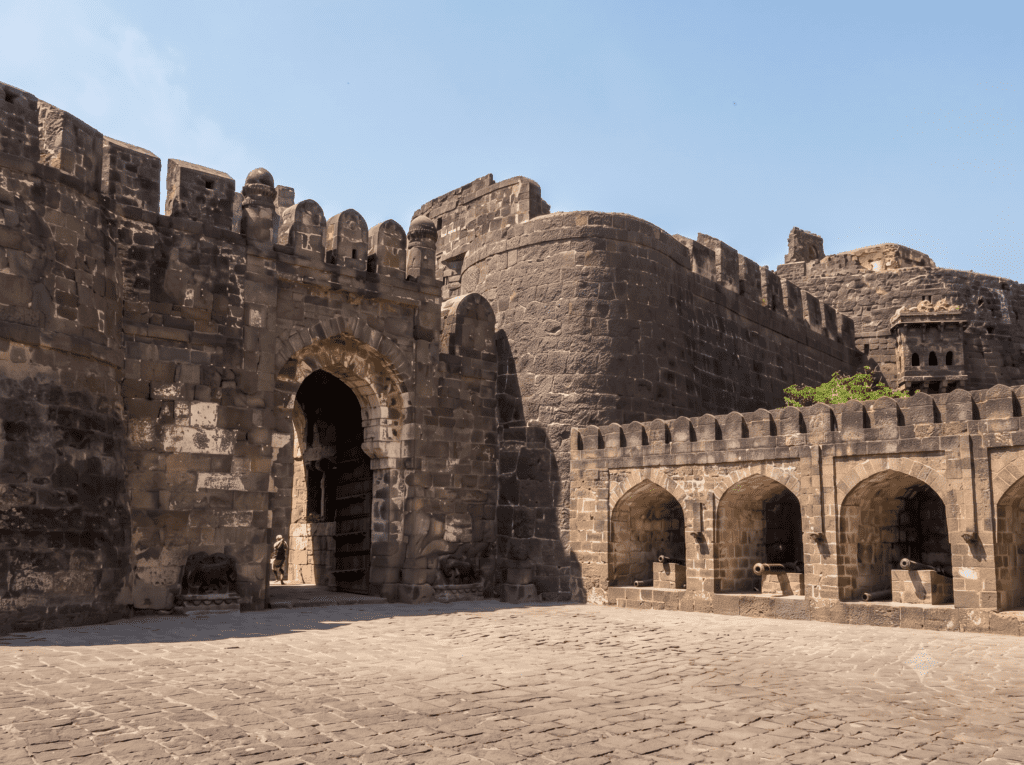
Bibi Ka Maqbara
Bibi Ka Maqbara stands as one of Aurangabad’s most famous historical landmarks and beautifully reflects Mughal architectural elegance. Built in the 17th century, the monument closely resembles the Taj Mahal, and therefore many travelers call it the “Mini Taj of the Deccan.” Moreover, the structure features elegant domes, intricate carvings, symmetrical gardens, and impressive marble detailing that further enhance its beauty. Additionally, visitors enjoy the peaceful atmosphere and scenic photography opportunities throughout the monument complex. Consequently, Bibi Ka Maqbara continues to attract history lovers, architecture enthusiasts, and cultural travelers throughout the year.

Ajanta Caves
Ajanta Caves, located a few hours from Grishneshwar Temple, rank among India’s most important Buddhist heritage sites and offer a deeper cultural extension to the journey. Moreover, these rock-cut caves are famous for their ancient murals, intricate sculptures, prayer halls, and monasteries that date back to the 2nd century BCE. The caves beautifully reflect the artistic and spiritual legacy of Buddhist traditions in India. Consequently, travelers interested in history, art, and archaeology often combine Ajanta Caves with Grishneshwar Temple and Ellora Caves in the same itinerary.

Conclusion
Grishneshwar Temple is a beautiful blend of spirituality, history, and architecture. The temple is still easily accessible from Aurangabad and Pune, and pilgrims can make comfortable trips throughout the year. Moreover, nearby places of interest, such as the Ellora Caves and Daulatabad Fort, add significant cultural value to the trip.
If you are planning a broader Jyotirlinga pilgrimage across India, you can also check “Nageshwar Temple – Complete Guide, Timings, Distance & Travel Info” for detailed information on temple timings, distance, darshan tips, and how to plan a visit to the sacred Nageshwar Jyotirlinga in Gujarat.
Whether one is looking for a spiritual experience, historical exploration, or a heritage tour through Maharashtra, Grishneshwar Jyotirlinga promises to be enriching.
12. Frequently Asked Questions About Grishneshwar Temple
Q1. What are the timings of the Grishneshwar Temple?
The temple generally opens around 5:30 AM and closes around 9:30 PM.
Q2. How to reach Grishneshwar Temple from Aurangabad railway station?
Travelers can hire taxis, buses, or shared cabs from Aurangabad Railway Station to reach the temple.
Q3. What is the distance from Aurangabad to Grishneshwar Temple?
The distance is approximately 30 km.
Q4. Is there a bus from Aurangabad to Grishneshwar Temple?
Yes, Maharashtra state buses and local transport services regularly operate on this route.
Q5. What is the nearest railway station to Grishneshwar Temple?
Aurangabad Railway Station serves as the nearest major railway station.
Q6. How to reach Grishneshwar Temple from Pune?
Travelers can reach it via road, train, or bus. Road trips remain the most preferred option.
Q7. Are there hotels near Grishneshwar Temple in Aurangabad?
Yes, Aurangabad offers budget, mid-range, and premium accommodation options near the temple circuit.
Q8. What is the history of the Grishneshwar Temple?
The temple traces its origins to Hindu mythology and was later restored by Queen Ahilyabai Holkar in the 18th century.

