


Nageshwar Temple – Complete Guide, Timings, Distance & Travel Info
1. Nageshwar Temple – One of the 12 Sacred Jyotirlingas
One of the most vital spiritual places in Hinduism is the Nageshwar Temple, one of the 12 sacred Jyotirlingas of Lord Shiva. The temple is situated near Dwarka, Gujarat, and hundreds of thousands of devotees visit it each year. In addition, it offers a serene, spiritually enriching setting, making it an ideal place for pilgrimage and reflection.
Besides, the temple is known for its large Shiva image and serene oceanic environment. Thus, visitors can come not only to seek darshan but also to feel a profound sense of tranquility. This makes Nageshwar Jyotirlinga a significant destination in the Dwarka pilgrimage circuit.
️Quick Info Snippet
- Name of Temple: Nageshwar Temple
- Location: Near Dwarka
- State: Gujarat
- Distance from Dwarka: ~16 km
- Deity: Lord Shiva (Nageshwar Jyotirlinga)
- Best Time to visit: From October to March
- Famous For: It is one of the 12 Jyotirlingas
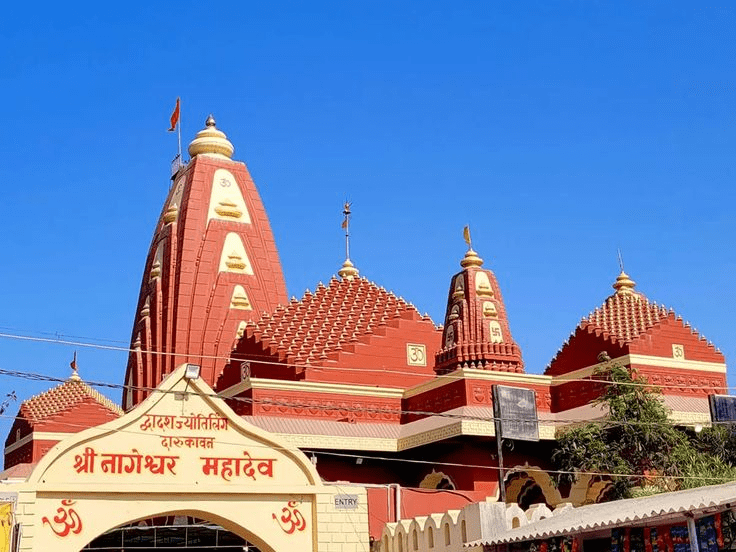
2. Story of Nageshwar Temple
The story of Nageshwar Temple highlights the power of devotion and divine protection. It clearly shows how faith can overcome even the darkest situations.
Demon Daruka and His Terror
According to Hindu mythology, a powerful demon named Daruka ruled a vast forest region near the western coast. Empowered by a boon, he became increasingly arrogant and began misusing his strength. Gradually, he and his followers started harassing sages, saints, and devotees who worshipped Lord Shiva. They disrupted religious practices, attacked innocent people, and spread fear throughout the region. As their cruelty increased, many devotees found it difficult to practice their faith freely. Consequently, the area became known for suffering and oppression, and people desperately prayed for divine intervention.
Devotee Supriya’s Prayers
Among the people imprisoned by Daruka was a devoted Shiva worshipper named Supriya. Despite facing severe hardships and constant fear, he never abandoned his faith. Instead, he continued to chant the sacred name of Lord Shiva and encouraged fellow prisoners to do the same. Gradually, the prison transformed into a place of collective devotion as more captives joined in prayer. Their unwavering faith gave them hope and strength during a time of great suffering.
Lord Shiva Protecting Devotees
Deeply moved by the sincere prayers of Supriya and the other devotees, Lord Shiva appeared before them in a radiant form. The divine presence filled the prisoners with courage, dispelling their fear. Lord Shiva then confronted the demon Daruka and defeated him, bringing an end to his tyranny. Through this act, he restored peace to the region and protected his devotees from further suffering. Consequently, the story became a powerful symbol of divine protection and the triumph of devotion over evil.
Origin of Jyotirlinga
After liberating the devotees, Lord Shiva chose to remain at the sacred site as a Jyotirlinga so that future generations could continue to worship him. According to tradition, the divine light of Shiva manifested here as the Nageshwar Jyotirlinga, making the location one of the holiest Shiva shrines in India. Since then, devotees have visited the temple to seek blessings, protection, spiritual strength, and freedom from fear and negativity. As a result, Nageshwar Temple continues to hold immense religious significance in Hinduism.
The temple is still a place of pilgrimage for pilgrims from around the country. Periodic updates on Transforming Travels’ Instagram page keep visitors well-informed before they plan their trip.
3. History and Mythology of Nageshwar Temple
The temple’s historical and mythological significance is strong, making it one of the most revered Jyotirlingas in India.
Mentioned in the Shiva Purana
The Nageshwar Temple holds a special place in Hindu scriptures, particularly in the Shiva Purana. The sacred text describes Nageshwar as one of the revered Jyotirlingas, where Lord Shiva manifested in the form of divine light. According to tradition, this manifestation occurred to protect his devotees from evil forces and restore righteousness. Because of its association with the Shiva Purana, the temple has become an important pilgrimage destination for Shiva devotees across India. Furthermore, many pilgrims consider a visit to this Jyotirlinga an opportunity to strengthen their spiritual connection with Lord Shiva.
Religious Significance
The Nageshwar Temple is regarded as a powerful center of faith and devotion. Devotees believe that worshipping at this sacred shrine helps remove fear, negativity, and obstacles from life. Moreover, the name “Nageshwar” means “Lord of the Serpents,” which symbolizes protection, strength, and victory over harmful influences. As a result, many devotees visit the temple to seek spiritual guidance, inner peace, and divine blessings. In addition, pilgrims often perform prayers and rituals here, believing that Lord Shiva will safeguard them from difficulties and guide them toward a more positive path.
Temple Evolution
Over the centuries, the Nageshwar Temple has witnessed several phases of development and restoration. While the temple has been renovated to accommodate the growing number of pilgrims, its spiritual essence has remained unchanged. The present-day complex offers improved facilities and accessibility for visitors while preserving the sacred atmosphere that attracts devotees. Furthermore, the temple’s simple architectural style reflects the importance of devotion over grandeur. Consequently, visitors can focus on prayer, meditation, and spiritual reflection without distractions, creating an experience that is both peaceful and meaningful.
4. Location and Importance of Nageshwar Temple
Exact Location Near Dwarka
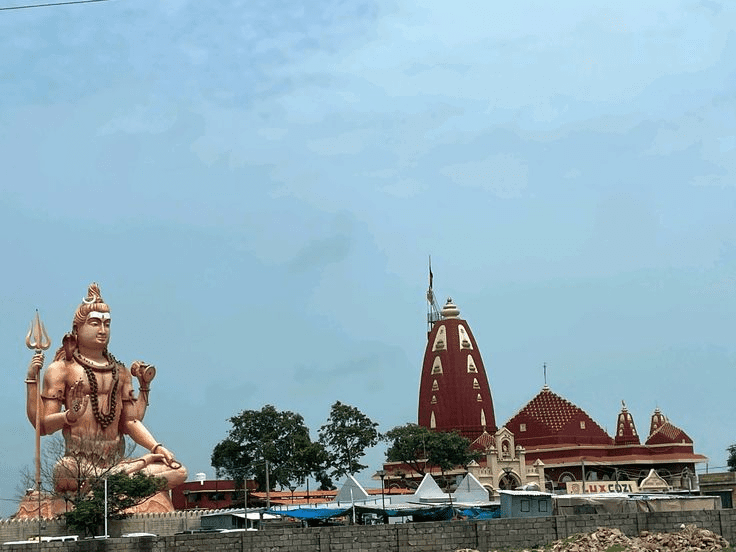
The temple is situated approximately 16 kilometers away from Dwarka and on the way to Beyt Dwarka. Thus, it can be conveniently located as a destination for pilgrims visiting this area.
Coastal Surroundings
The temple is set in an open area, with winds blowing along the coast, making it peaceful and refreshing. This usually makes visitors relax even before they enter the temple premises.
Importance of the Pilgrimage Circuit
Nageshwar Jyotirlinga forms an important part of the famous Dwarka pilgrimage circuit and attracts devotees from across India throughout the year. Most pilgrims combine their visit to Nageshwar Temple with the revered Dwarkadhish Temple, which is located in Dwarka, about 16 km away. Dedicated to Lord Krishna, the Dwarkadhish Temple is one of the four sacred Char Dham pilgrimage sites and holds immense religious significance in Hinduism.
In addition, many devotees extend their spiritual journey to the Somnath Temple, located in Prabhas Patan near Veraval, approximately 230 km from Nageshwar Temple. Somnath is one of the 12 Jyotirlingas and is regarded as one of the most sacred Shiva temples in India. As a result, pilgrims often include both Nageshwar and Somnath in the same itinerary to seek blessings at two revered Jyotirlingas.
Furthermore, travelers often visit other important sites, such as Bet Dwarka and the Rukmini Devi Temple, while exploring the region. Consequently, the combination of these sacred destinations creates a comprehensive pilgrimage experience that blends devotion, history, and spirituality, making the journey more meaningful and fulfilling.
5. Nageshwar Temple Timings and Aarti
It is imperative to know the temple timings to ensure a smooth darshan experience. Thus, scheduling the visit at the right time may help avoid crowds and long lines.
Darshan Timings
- Morning: 6:00 AM – 12:30 PM
- Evening: 5:00 PM – 9:30 PM
The most appropriate times for a peaceful darshan are in the morning (6:00 AM – 9:00 AM). The crowd is also not too high, and the atmosphere is more peaceful and spiritual. As a matter of fact, Nageshwar Jyotirlinga Temple is not very crowded, unlike other Jyotirlinga Temples.
Aarti Timings
- Morning Abhishek: The followers perform some rituals and offer milk to the Shiva Lingam
- Sandhya Aarti: Evening prayers with recitations and religious vibrations
Each aarti offers a different experience. Although the morning is more settled and meditative, the evening is more lively and energetic.

Best Time to Visit & Crowd Comparison
| Feature | Morning (6:00 AM – 9:00 AM) | Evening (5:00 PM – 9:30 PM) |
| Crowd Level | Low; ideal for seniors & families | Moderate to High |
| Primary Activity | Milk Abhishek & prayers | Sandhya Aarti & statue viewing |
| Waiting Time | ~20 minutes (weekdays) | 40–50+ minutes (weekends) |
| Top Highlight | Calm, meditative peace | Sunset views of the Shiva statue |
Planning the visit at the right time becomes even more important during peak seasons. You can also join one of the group tours for stress-free travel. Transforming Travels’ Trip Calendar lists upcoming group tours with start dates, helping travelers plan more efficiently.
7. Distance and How to Reach Nageshwar Temple
Accessing the Nageshwar Temple is not a problem at all, especially since it is close to Dwarka. Thus, it is an essential part of most travelers’ Gujarat pilgrimage itinerary. In addition, road, rail, and air connectivity have made the journey convenient for all kinds of visitors.
Distance from Dwarka
It is roughly 16 km from Dwarka. As a result, it takes around 20–30 minutes by road. Taxis, auto-rickshaws, and local buses are readily accessible.
Distance from Somnath
Somnath is approximately 230 km away, so the journey to escape to Somnath takes 4 to 5 hours by road. Numerous pilgrims visit Somnath and Nageshwar as part of a single spiritual circuit.
How to Reach Nageshwar Temple
By Road:
It is the easiest mode of transportation. Dwarka has regular taxis and buses. Additionally, the roads are in excellent condition, ensuring a comfortable ride.
By Train:
The closest railroad station is Dwarka Railway Station. It is in proximity to large cities such as Ahmedabad and Rajkot. Once visitors reach Dwarka, they can easily get local transport.
By Air:
The closest airport is Jamnagar Airport, which is approximately 130 km away. There is a taxi service that can take you to Dwarka and then to Nageshwar Temple.
Transport may be planned to save time. Hence, planned tours can help tourists visit various places effectively. The Transforming Travels Trip Calendar provides comprehensive details on upcoming group tours, including their start dates, making travel planning easier.
8. Nageshwar Temple vs Maharashtra Nageshwar
It has been confused with the Nageshwar Jyotirlinga near Dwarka and with a different temple of the same name in Maharashtra. Thus, it becomes significant to learn the distinction for the pilgrims.
| Feature | Nageshwar (Dwarka) | Nageshwar (Maharashtra) |
| Location | Gujarat | Maharashtra |
| Jyotirlinga Status | Widely accepted | Debated |
| Popularity | High | Moderate |
One of the 12 Jyotirlingas, the Dwarka Nageshwar Jyotirlinga, is highly regarded as a temple of religious importance. Consequently, it attracts more devotees year-round.
9. Architecture and Temple Experience
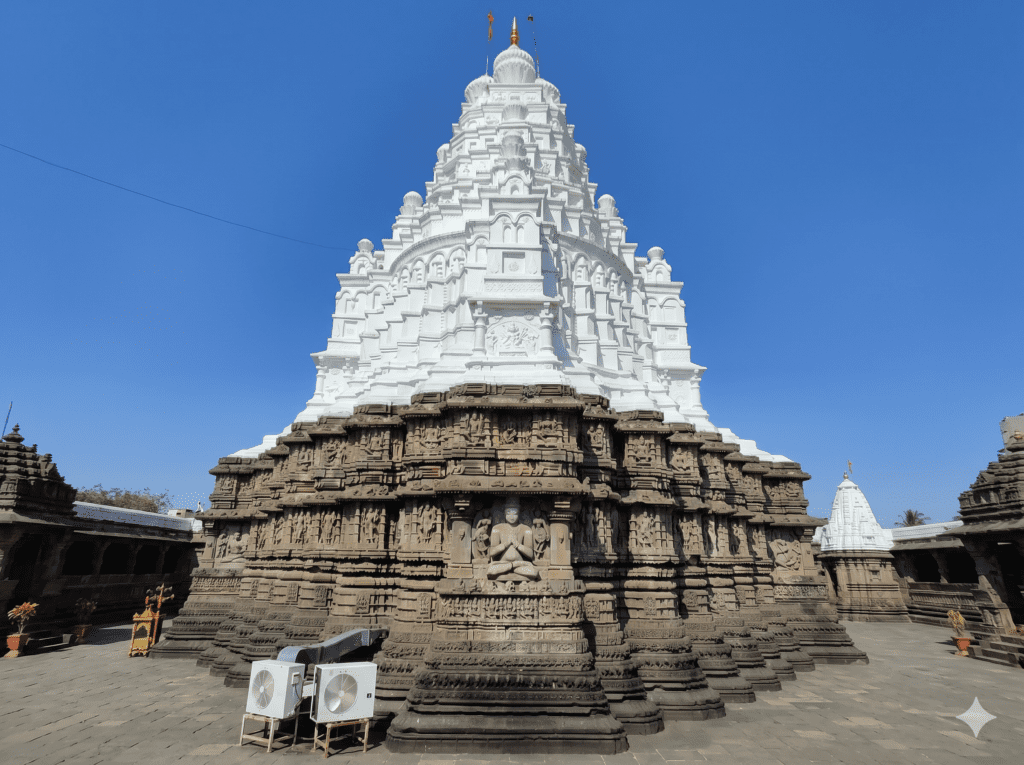
The architecture of Nageshwar Temple is simple yet powerful, leaving a lasting spiritual impact on every visitor. Unlike many temples that emphasize intricate carvings and grand ornamentation, Nageshwar focuses on devotion, serenity, and the sacred presence of the Jyotirlinga. As a result, devotees often find the atmosphere deeply calming and spiritually uplifting.
Simple Yet Spiritual Design
The temple features a clean and uncomplicated design that allows visitors to focus entirely on worship. Although the structure is not heavily decorated, its spiritual significance attracts thousands of pilgrims every year. Moreover, the peaceful environment encourages prayer, meditation, and self-reflection, which enhances the overall temple experience.
Large Shiva Statue (~25m)
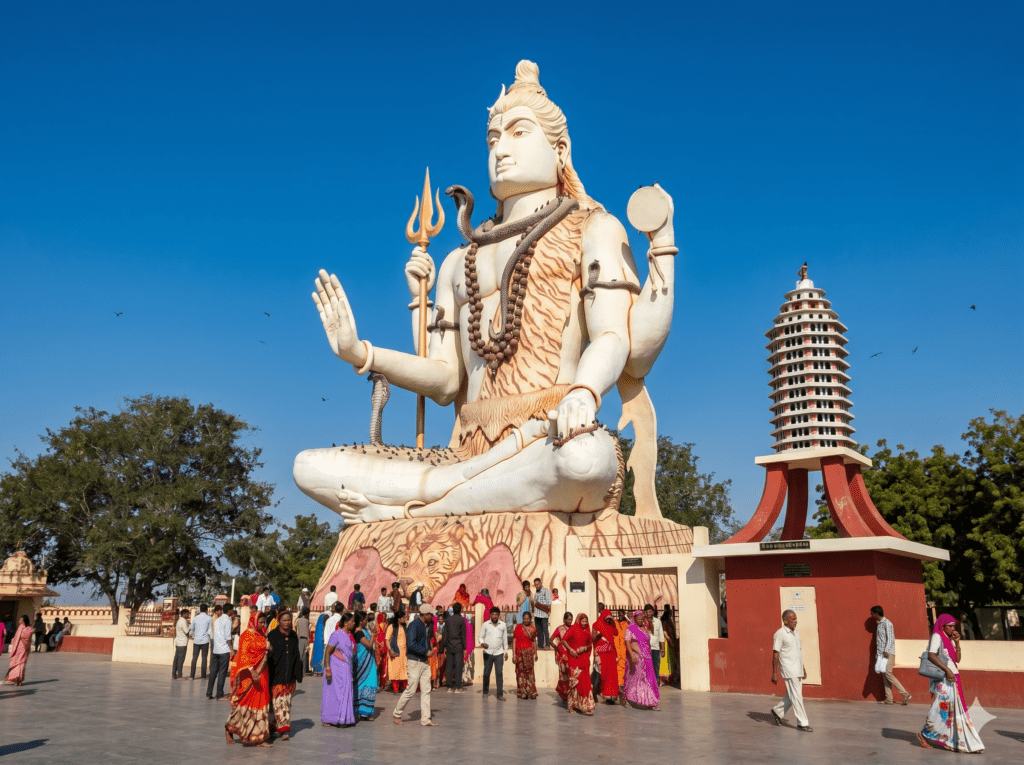
One of the most striking features of the temple complex is the massive seated statue of Lord Shiva located outside the main shrine. Standing approximately 25 meters tall, the statue is visible from a considerable distance and serves as a landmark for pilgrims approaching the temple. Furthermore, its serene expression and majestic presence create a strong spiritual impression. Consequently, many visitors spend time near the statue for prayer, photography, and quiet contemplation before entering the temple.
Sanctum (Garbhagriha) + Hall
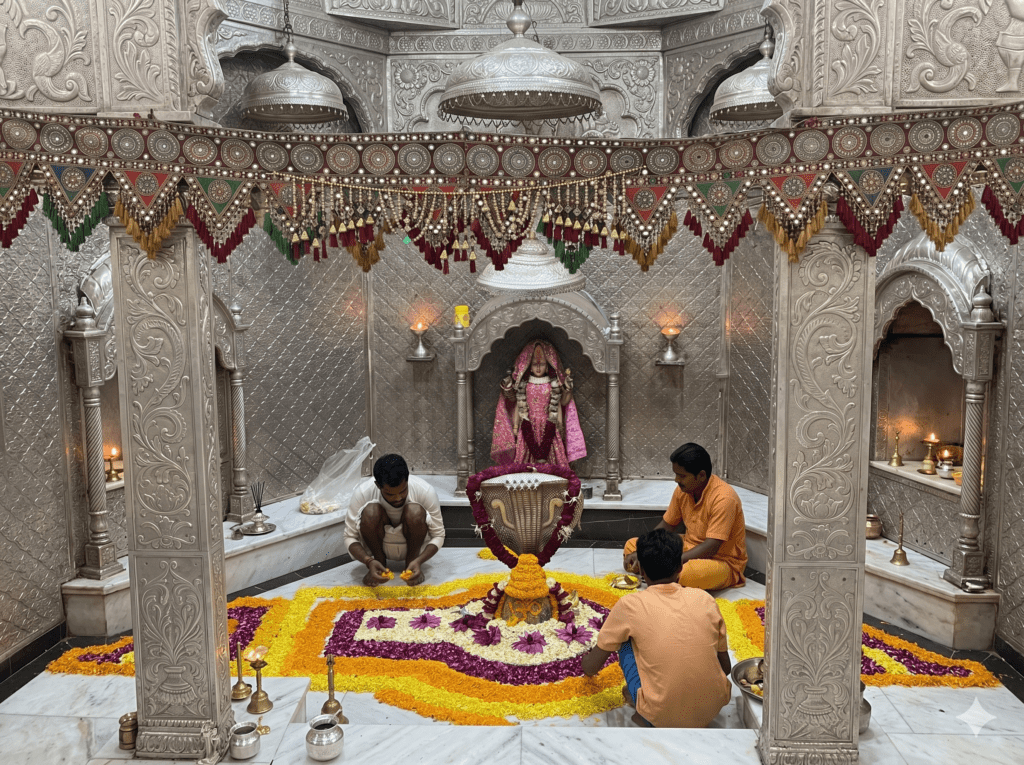
The sacred Jyotirlinga is enshrined in the Garbhagriha, located below the main temple level. General devotees are allowed to enter the main prayer hall and have darshan of the Jyotirlinga from a short distance through the regular queue system. This free darshan allows visitors to offer prayers while maintaining an orderly flow of devotees.
However, those who wish to perform special rituals, such as Abhishek, can enter the inner sanctum after paying a nominal fee. During this ritual, devotees receive the opportunity to offer prayers more closely and, subject to temple regulations, may also touch the Shivlinga. Since the Garbhagriha resembles a cave-like underground chamber with a narrow passage, temple authorities carefully manage visitor movement to ensure safety and maintain the shrine’s sanctity. As a result, the darshan process remains organized even during peak pilgrimage seasons.
Calm, Open Surroundings
The temple is surrounded by vast open land, which contributes significantly to its peaceful atmosphere. Unlike crowded urban temples, Nageshwar offers a sense of openness and tranquility that many devotees appreciate. Additionally, the coastal breeze and relatively quiet surroundings create an ideal setting for meditation and spiritual reflection. Therefore, visitors often spend time sitting within the temple premises, absorbing the temple’s calm energy and enjoying a moment of peace before continuing their pilgrimage.
10. Best Time to Visit Nageshwar Temple
The timing of the visit is an important choice that can enhance the experience. So, it is important to understand seasonal conditions.
Ideally, visit between October and March. The weather during these months is favorable, so traveling is not difficult. Moreover, the temperate climate will enable visitors to visit the surrounding areas without struggle.
Mahashivratri
One of the most significant festivals that is celebrated in the temple is Mahashivratri. In the process, thousands of religious followers come to pray. But the crowd is growing so big. Therefore, visitors should plan their visit to the festival if they want to take part.
11. Nearby Places to Visit Around Nageshwar Temple and Travel Tips
Visiting the area’s sites of interest enhances the overall travel experience. Thus, the vast majority of visitors can visit several destinations during a single visit.
Nearby Places
- Bet Dwarka: A holy island that is related to Lord Krishna
- Rukmini Devi Temple: It is a temple of Goddess Rukmini, which is situated near Dwarka
- Dwarkadhish Temple: It is one of the pilgrimage sites that is a part of Char Dham
- Shivrajpur Beach: A nice and Calm beach that is perfect to relax on
Visitors can find these places within a short distance and cover them in one or two days. For a more comprehensive exploration, you can check out our Gujarat Trails group tour.
Travel Tips
A little preparation can make the visit to Nageshwar Temple more comfortable and enjoyable. Therefore, keeping a few practical tips in mind can help ensure a smooth darshan experience.
- Visit early in the morning (6:00 AM–9:00 AM) or soon after the temple reopens in the evening (around 5:00 PM) for a calmer atmosphere, shorter queues, and a more peaceful darshan.
- Wear modest, comfortable clothing suitable for a religious place, and that allows easy movement during the visit.
- Avoid weekends and major holidays if you prefer smaller crowds and shorter wait times.
- Carry only essential items to speed up security checks and entry procedures.
- Avoid wearing heavy jewelry and carrying large amounts of cash, especially during busy periods when the temple receives thousands of devotees. Instead, carry only the valuables and cash necessary for the visit.
- Follow temple rules and instructions to maintain the shrine’s sanctity and ensure a smooth experience for all visitors.
Following these simple tips can help visitors enjoy a more comfortable, safe, and hassle-free pilgrimage experience.
12. FAQs and Travel Summary of Nageshwar Temple
FAQs About Nageshwar Temple
Q1. What are the temple timings?
The temple opens from 6:00 AM to 12:30 PM and again from 5:00 PM to 9:30 PM.
Q2. What is the distance from Dwarka?
It is about 16 km.
Q3. Is it a real Jyotirlinga?
Yes, it is one of the 12 Jyotirlingas.
Q4. Is photography allowed?
Photography can be performed outside the temple, but not inside the sanctum.
Q5. What is the best time to visit?
The most favorable weather conditions are from October to March.
Q6. What is the contact number of Nageshwar Temple?
Temple contact details might differ. It is therefore recommended to confirm official sources for the country before traveling.
Final Summary
Nageshwar Temple stands as one of the most revered Shiva shrines in India and holds a special place among the sacred Jyotirlingas. Deeply rooted in Hindu mythology and spiritual tradition, the temple attracts devotees seeking blessings, inner peace, and a stronger connection with Lord Shiva. Moreover, its serene surroundings, sacred atmosphere, and religious significance make it an essential stop on the Dwarka pilgrimage circuit.
Whether visitors come to explore its rich history, witness the magnificent Shiva statue, or participate in the daily rituals, the temple offers a truly meaningful spiritual experience. Furthermore, its convenient location near Dwarka and other important pilgrimage sites makes it an ideal destination for a well-rounded religious journey.
With proper planning, the right timing, and an understanding of the temple’s traditions, visitors can make the most of their pilgrimage. As a result, Nageshwar Temple continues to inspire faith and devotion, leaving pilgrims with lasting memories and a profound sense of spiritual fulfillment.
If you want to include Dwarka, consider exploring the detailed Dwarkadhish Temple guide to learn about its history, darshan timings, significance, and travel tips. Since the Dwarkadhish Temple forms an important part of the Dwarka pilgrimage circuit, visiting both temples can make the spiritual journey more meaningful and complete.
You can also join the Gujarat Trails group tour with Transforming Travels to visit the Nageshwar Jyotirlinga Temple while completing the circuit in great detail.

