


1. Introduction to Chitai Golu Devta Temple
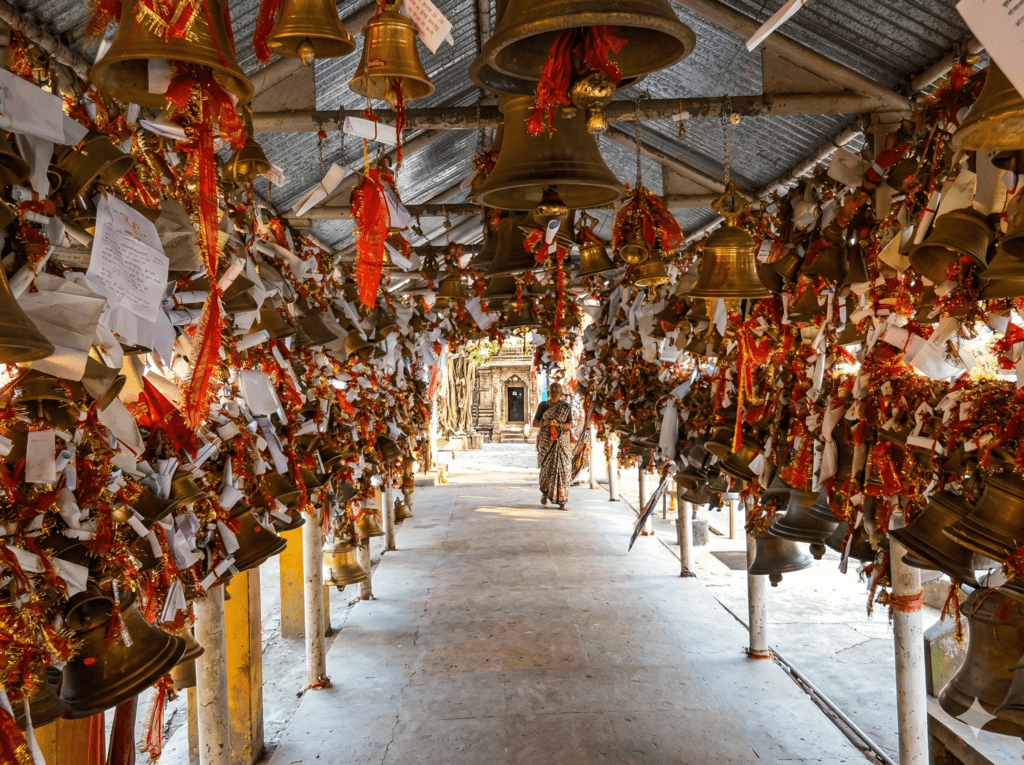
One of the most exclusive holy places in the Kumaon region of Uttarakhand is the Chitai Golu Devta Temple. In this case, faith does not stay silent. Rather, it has a written, visible form in the form of letters and bells.
At Chitai Golu Devta Temple, devotees do not always express prayers verbally; instead, they write them as letters and submit them as petitions. Moreover, people frequently arrive with problems that they cannot resolve anywhere else. Consequently, over time and through deep faith, this place has come to symbolize justice.
In addition, the chant of ‘Jai Golu Devta’ resonates in the temple premises. Devotees use it to manifest the belief in the justice-granting power of the deity. This place, unlike most temples, is heavily concerned with justice rather than prosperity.
Notably, this temple is culturally very significant to the Kumaon region. Local people visit this temple regularly, particularly when there are disagreements or challenging life issues. The presence of this temple in the region, over centuries, has built its belief system around faith in divine justice.
You can also visit this temple with us by joining our Almora and Kausani group tour or write to us for a customized tour package.
2. Who Is Golu Devta: The God of Justice
Historical and Cultural Identity of Chitai Golu Devta
Golu Devta, or Goljyu, is a local saint in Kumaon. He is the deity of Justice, revered by people. This is based on the tradition and folklore of the regions.
Golu Devta is the embodiment of justice and honesty, unlike most deities, who are associated with prosperity or strength. Hence, worshippers resort to him in case they need Justice.
The Legend of Golu Devta
Golu Devta is a tale with many versions. Nonetheless, most versions have a similar structure based on the Katyuri dynasty.
Story Timeline of Chitai Golu Devta
- Birth as a Prince
It was believed that Golu Devta was born as a prince of the Katyuri family. This was a dynasty that existed in ancient times in Kumaon.
- Injustice and Betrayal
Legal injustice against him is believed to have been caused by a palace conspiracy, according to local legends. There are narrations that he was not given his rightful place.
- Death and Transformation
His death was a tragic event after being subjected to injustice. His life did not end with his story being complete.
- Deification by People
As time went by, individuals began feeling his divine presence. Slowly, they came to worship him as a God of Justice.
- Temple Establishment
Temples dedicated to him are spread throughout Kumaon. One of them, Chitai, is considered to be the most important.
Such details are common across numerous variants of the Golu Devta tale in Hindi, though the deeper details may vary slightly.
Why Devotees Write Petitions at Chitai Golu Devta Temple?
Letter-writing, in fact, forms the very core tradition of this temple. As a result, devotees place deep faith in these petitions and submit them with strong hope and devotion.
They usually proceed in the following way:
- First, they write applications on plain paper or stamped paper
- Then, they explain their problems in detail
- Next, they demand justice or a fair settlement
- Finally, they promise offerings after justice is granted
Consequently, this ritual strongly reflects the belief that Golu Devta serves as a divine judge who dispenses justice.
Significance of “Jai Golu Devta”
Moreover, “Jai Golu Devta” is a chant that carries deep emotional meaning. In fact, devotees use it to express faith, surrender, and devotion during their prayers. Devotees chant it during visits and prayers.
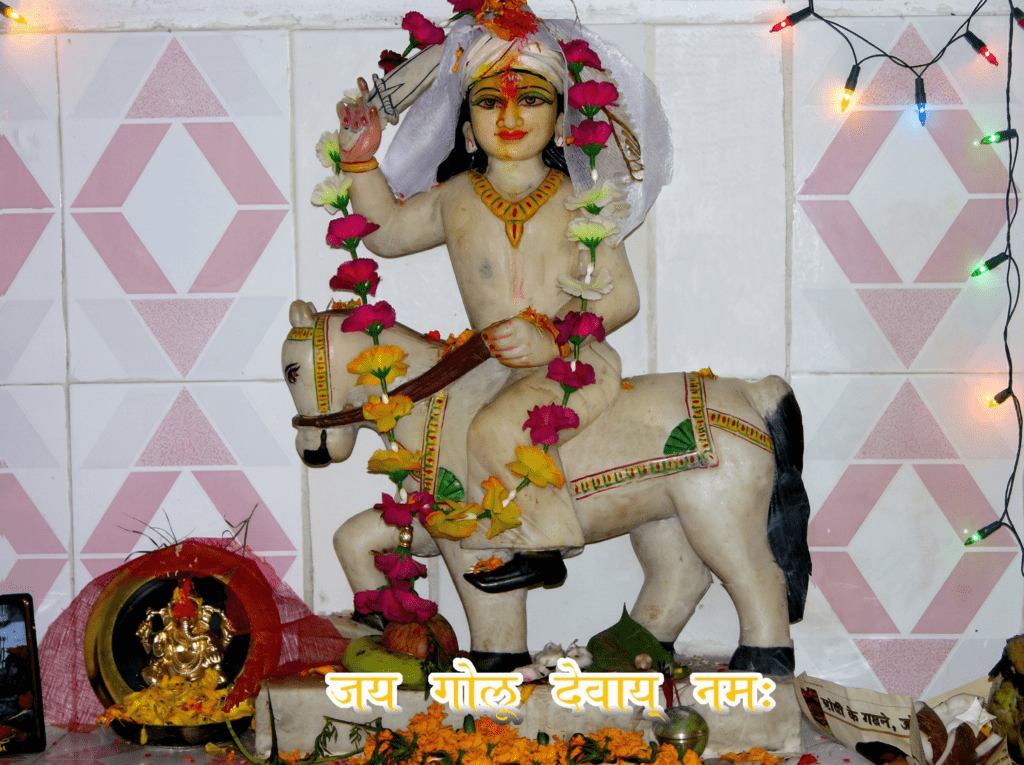
It represents:
- Trust in justice
- Surrender oneself to divine power
- Shared faith amongst believers
Consequently, this chant enhances the temple’s religious ambiance.
3. Location of Chitai Golu Mandir, Almora, and Comparison with Ghorakhal
Exact Location and Accessibility
The temple of Chitai Golu Devta is located on the Almora-Pithoragarh highway in Uttarakhand. Hence, it has easy road access from Almora town.
Pine forests surround the temple. This natural environment creates a peaceful yet strong spiritual atmosphere. It is a part of the Kumaon itinerary for travelers.
Chitai Golu Devta Temple vs Ghorakhal Temple
There is another great temple dedicated to Golu Devta at Ghorakhal, near Nainital, in addition to Chitai. The temples are of the same deity. Nevertheless, their setting and culture are different.
Key Differences Between the Two Temples
| Temple | Location | Distinct Feature | Visitor Footfall |
| Chitai Golu Devta Temple | Near Almora | Thousands of bells and written petitions | Very high |
| Golu Devta Mandir Ghorakhal | Near Nainital | Popular among students and locals | High |
What Makes Chitai More Prominent
- It is characterized by a large number of bells presented by worshippers
- It exhibits thousands of written petitions in public
- It receives tourists from all over India
- It holds a stronger sense of devotion and intensity
Ghorakhal, on the contrary, is more localized and less hectic.
4. The Temple Structure and Visual Experience
Thousands of Bells as a Sign of Faith
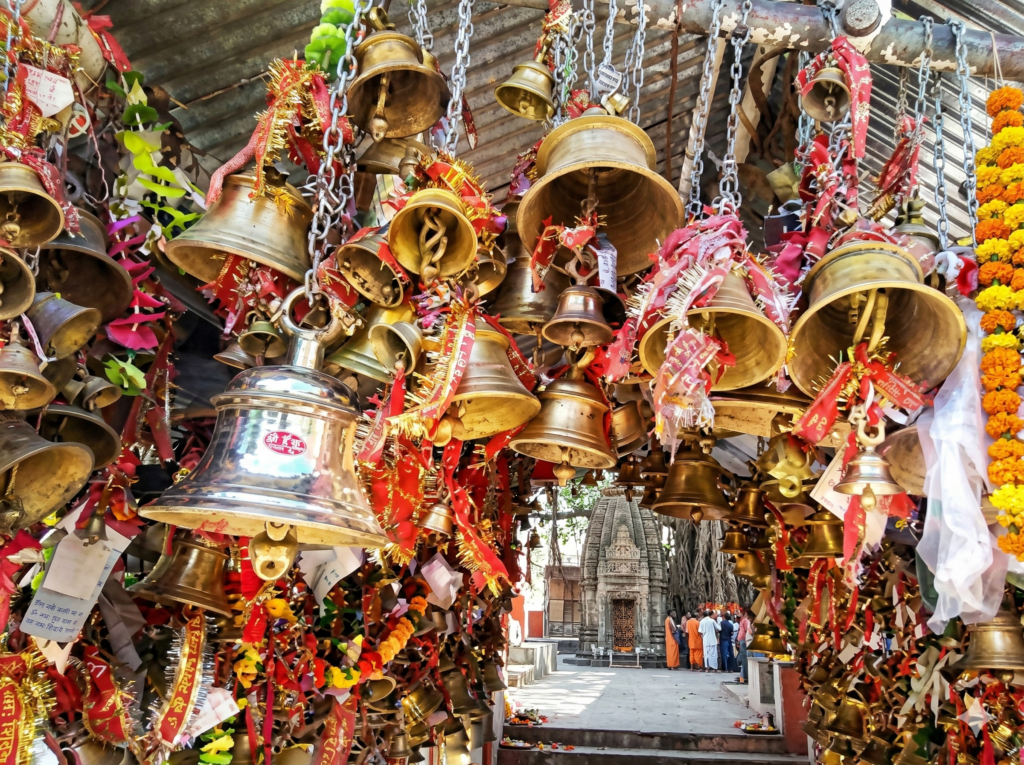
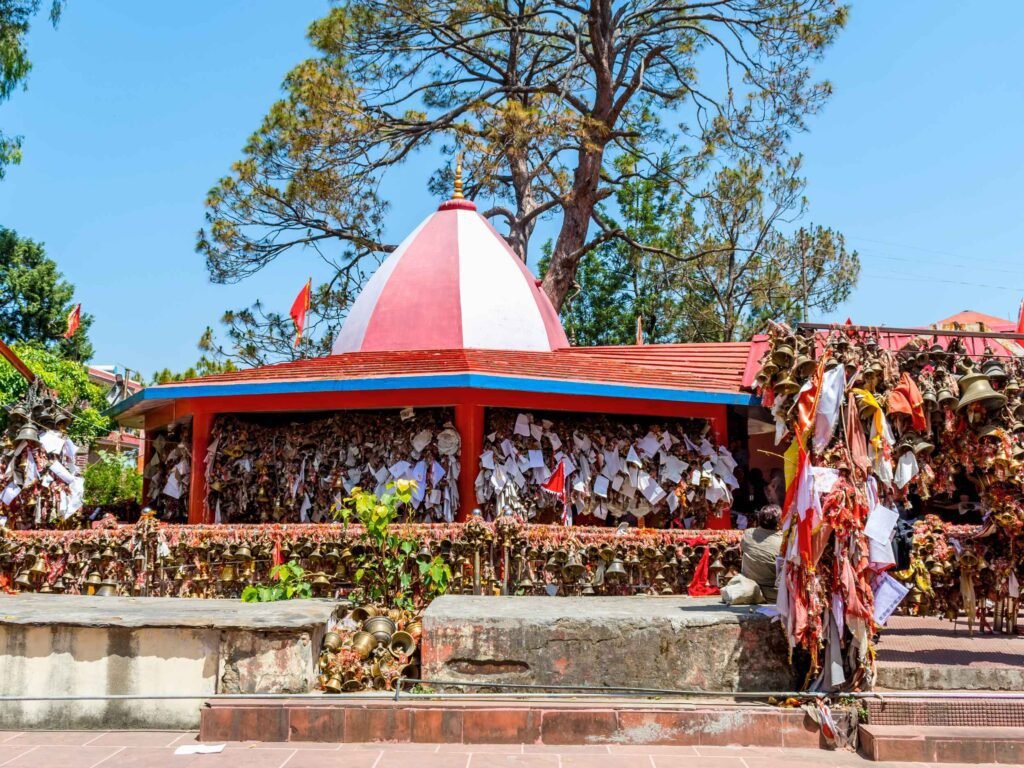
The most vivid aspect of the temple is the myriad bells. These bells are suspended over gates, railings, and the temple premises
Every bell is a wish that has come true. Thus, the temple itself symbolizes the effectiveness of numerous prayers.
Walls Covered with Written Petitions
The other characteristic is the use of letters. These petitions are fastened on railings and walls of temples by the devotees.
These are the real-life issues that are mentioned in these letters:
- Legal disputes
- Family conflicts
- Financial issues
- Personal struggles
Consequently, the temple becomes a living document of human beings’ emotions and beliefs.
Sensory Atmosphere of the Temple
The temple is a potent experience of the senses. Visitors immediately notice:
- Sound: Constant ringing of bells
- Odor: Lingering scent of incense and camphor
- Visage: Layers of paper petitions and bells
The combination of these factors creates a very intense spiritual atmosphere.
Visual Appeal and Devotional Imagery
Visitors to the Chitai Golu Devta temple often have photo moments because of its distinct nature. And many of these images become devotional wallpapers.
There is a physical and artistic expression of devotion in the visual identity of the temple.
5. Rituals and Practices at Chitai Golu Devta Temple
Writing Petitions for Justice
The most important ritual is writing letters to Golu Devta. The followers adopt a systematic method in the process.
They usually:
- State their problem
- Provide detailed explanations
- Request for justice
Some followers even submit legal documents. This custom emphasizes their belief in divine justice.
Offering Bells After Fulfillment
Devotees come back to the temple when their wishes are fulfilled. They offer bells to the deity as a sign of gratitude.
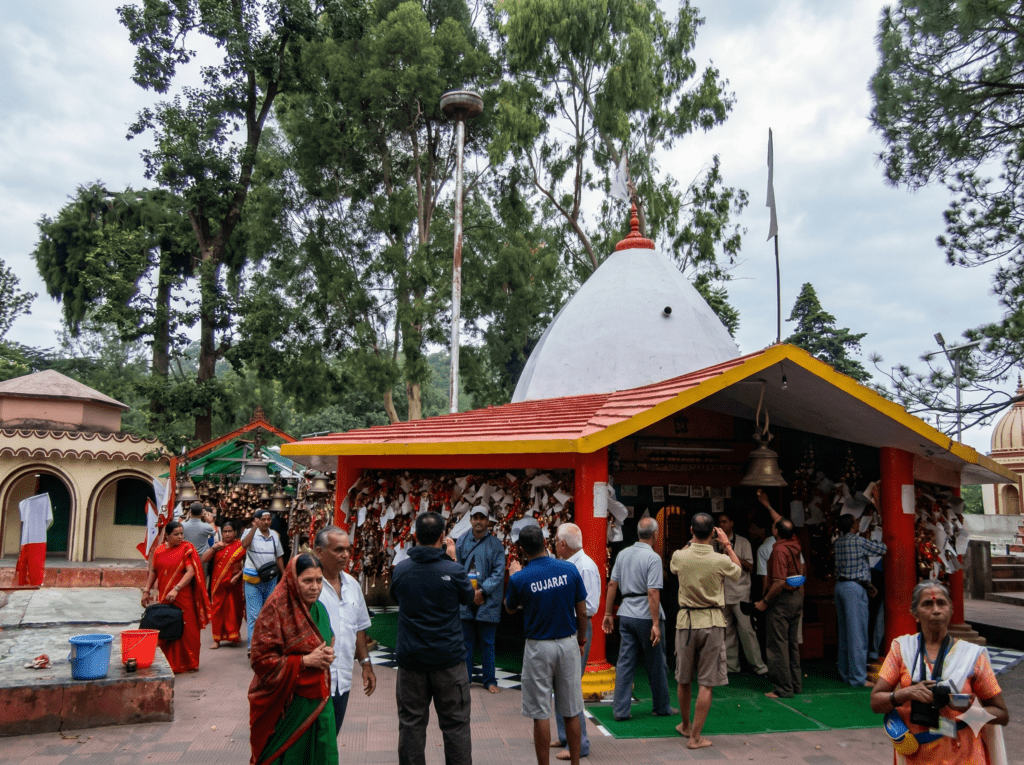
Over the years, this tradition has led to the hanging of thousands of bells in the temple complex.
Reciting the Golu Devta Mantra
Devotees also recite the Golu Devta mantra during their visits. The mantra varies from place to place. Nevertheless, its aim is the same.
It helps devotees:
- center their thoughts
- strengthen their faith
- seek business protection and justice.
Continuity of Tradition in Modern Times
These practices are still very strong even in the wake of modernization. The devotees continue to use handwritten petitions rather than the internet.
Meanwhile, you can also follow Transforming Travel’s Instagram page to know more about places like this, and for your regular dose of travel motivation.
6. History and Architecture of Chitai Golu Devta Temple
From Local Shrine to Major Pilgrimage Site
The temple of the Chitai Golu was not built as a large complex from the beginning. At first, it was just a local shrine of Golu Devta. The locals, with continuous worship and strong faith, venerated him.
Over time, the temple became popular for its distinctive belief system based on justice. Devotees began visiting this temple from faraway places. Consequently, the temple grew slowly.
Notably, no single date is recorded for the construction date. Its expansion, however, is attributed by historians to the Katyuri and subsequent Chand rulers in Kumaon. These were the dynasties that promoted worship of local deities.
Architectural Growth Driven by Devotion
This temple developed naturally, unlike grand temples constructed according to predetermined designs. Its design is more a matter of devotion than of architectural planning.
The major architectural characteristics are:
- Hierarchical layout alongside a hill
- Narrow pathways lined with bells
- Smaller shrines within the main complex
- Petition-hanging railings made of iron
The temple evolved as the number of devotees grew. Hence, it appears layered and dynamic in its structure.
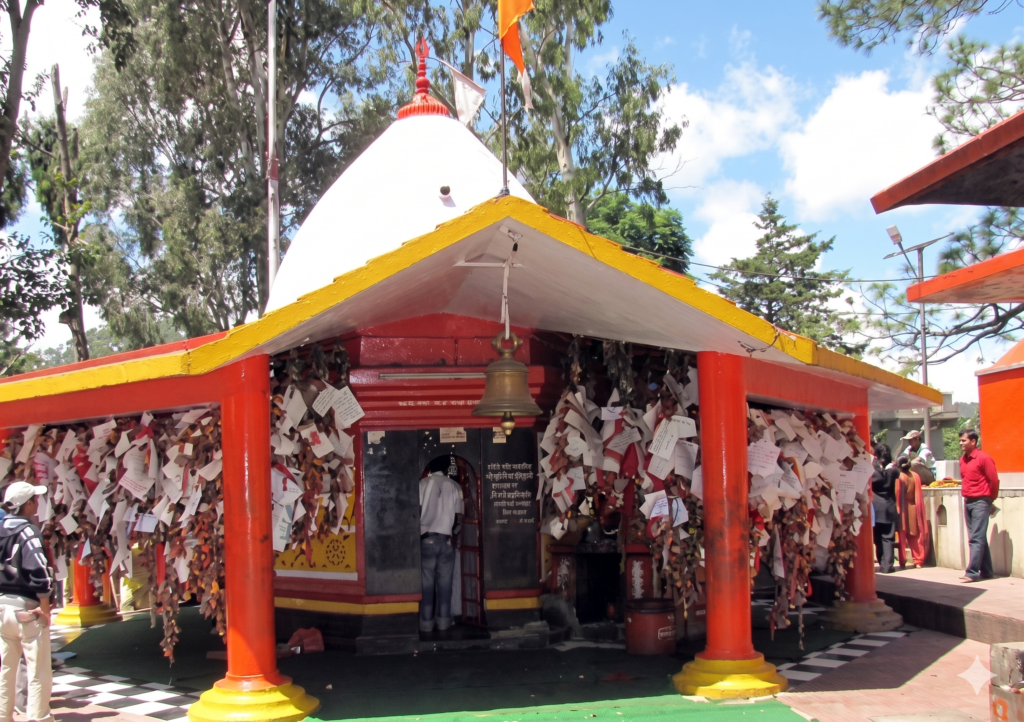
Layout Along the Hillside
The mandir of Chitai Golu is located on a hillside by the road. Such positioning makes it not only accessible but also visually impressive.
Its layout follows the natural inclination:
- The gateway to the temple is full of bells
- Pathways leading upward
- Central shrine area
- The surroundings are filled with letters
Such a design reflects the gradual accumulation of spiritual energy as the visitors enter the temple premises.
7. How to Visit Chitai Golu Devta Temple
Distance and Route between Almora
The temple of Chitai Golu Devta is approximately 8 kilometers away from the town of Almora. It is easily accessible by road for travelers.
The popular traveling modes are:
- local taxis from Almora
- shared jeeps along the road
- personal cars to be more flexible
The highway is well-maintained and very scenic all the way.
Best Time to Visit
The temple remains open year-round, but sometimes it offers a more immersive experience.
Ideal Seasons
- March to June: Pleasant weather and clear skies make it perfect for sightseeing
- September to November: Fresh greenery after the monsoon and fewer crowds
Avoid These Times
- July to August (Monsoon Season): Heavy rainfall often makes roads slippery and travel difficult. In addition, fog and poor visibility can affect the overall experience.
- Peak festival days (Navratri & local fairs): Although culturally vibrant, these periods bring very heavy crowds. Therefore, you may face difficulty in exploring the temple peacefully.
Festivals and Pilgrimage Periods
Festivals attract high footfall. On special occasions, devotees come in large numbers.
Key times include:
- local Kumaoni festivals
- Navratri celebrations
- significant local religious holidays
You can also visit this temple with us by joining our Almora and Kausani group tour or write to us for a customized tour package. You can also check out our upcoming trip calendar.
What Travelers Should Expect
Tourists ought to be ready to experience something truly unique; therefore, they should not expect a typical temple visit. Instead, they will encounter a deeply distinctive spiritual atmosphere.
As a result, you will notice:
- First, thousands of suspended bells adorning the entire temple complex
- In addition, heaps of handwritten petitions placed with devotion
- Moreover, the continuous chanting of “Jai Golu Devta” echoes throughout the surroundings
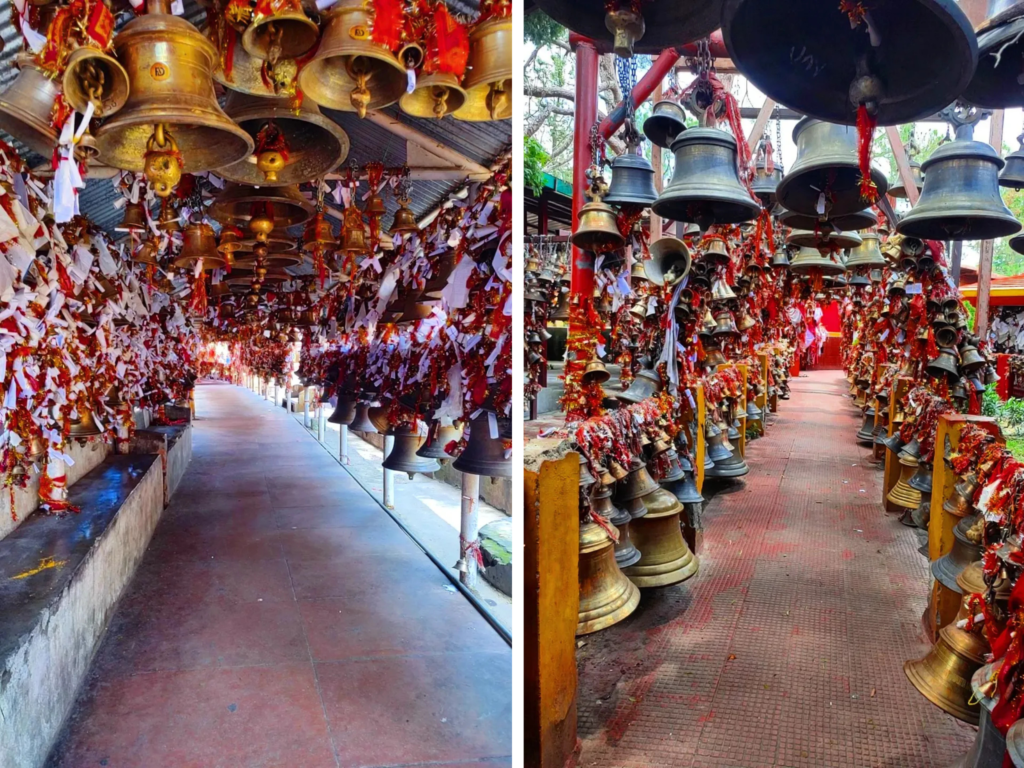
Consequently, all these elements together create an unforgettable and powerful experience. That is why you should have sufficient time at hand when you visit the temple.
8. Chitai Golu Devta Temple Timings, Entry Fee, and Visitor Information
What Are the Visiting Hours of Chitai Golu Devta Temple?
Chitai Golu Devta Temple is generally open from early morning to evening (around 6:00 AM to 7:00 PM). Devotees can visit throughout the day, but mornings and evenings are considered more spiritually active.
On Which Days Is Chitai Golu Devta Temple Open?
The temple is open on all days of the week, including weekends and public holidays. In fact, there are no fixed closing days; therefore, devotees can visit freely throughout the year.
Is There Any Entry Fee for Chitai Golu Devta Temple?
There is no entry fee to visit Chitai Golu Devta Temple. As a result, devotees can enter freely and offer prayers without any mandatory charges.
How Much Time Should You Spend at Chitai Golu Devta Temple?
Visitors typically spend around 1 to 2 hours at the temple. However, if you wish to:
- Write and submit a petition
- observe rituals and devotees
- explore the bell-covered pathways
you may, therefore, want to spend 2–3 hours for a more immersive experience.
9. My Experience: A Court of Faith
A Temple That Seems Like a Court
When I visited the temple, I was surprised to find it was more of a court than a shrine. Followers did not simply pray as they do in any other temple; instead, they seemed to be optimistically submitting their petitions and waiting for a resolution to their problems. Moreover, they appeared to rely on their faith and hope.
Many individuals stood near the railings, actively reciting their petitions. As a result, it felt as if they were presenting arguments in favor of their case before a judge. Devotees act as petitioners and advocates for their cases before a judge, none other than Chitai Golu Devta Temple.
Observing Devotees and Priests
I observed several practices that stood out as highly unique. First, worshippers wrote their petitions and fixed them sincerely to the railings. Meanwhile, priests actively guided devotees in petition writing and arranged the petitions, ensuring that each request received attention. In addition, individuals openly shared their personal issues, creating a deeply connected atmosphere.
As a result, this environment fostered a strong sense of shared faith in justice. Consequently, it made visitors feel hopeful that their problems might eventually find resolution.
Emotional Intensity Inside the Temple
Furthermore, the emotional intensity inside the temple felt both powerful and real. Unlike many other temples, where people primarily emphasize receiving the deity’s blessings, here the focus shifted significantly.
Instead, devotees concentrated on:
- Fairness in disputes
- Resolution of conflicts
- Protection from injustice
Therefore, the entire atmosphere reflected a deep collective belief in justice rather than ritual blessings alone.
Consequently, the temple’s atmosphere feels highly relatable to visitors.
Faith Beyond Ritual
This was an eye-opener: Chitai Golu Devta Temple is not just about religion. In fact, this highlights how people firmly base their belief system on the idea of justice.
During my visit, devotees constantly chanted “Jai Golu Devta,” which further enhanced the overall atmosphere.
10. Why is the Chitai Golu Devta Temple so popular?
Rise in Tourism and Digital Visibility
The temple has received enormous publicity in recent years. The social media sites have largely contributed to this.
Visitors frequently share:
- Photograph collections of Chitai Golu Devta
- Videos of bell-filled premises.
- Anecdotes concerning letter-writing ceremonies
- Stories behind the faith in Chitai Golu Devta
- Incidents when people received justice after visiting this temple.
This has sparked greater interest and curiosity among travelers.
Unique Rituals That Attract Visitors
The temple is unique owing to its practices. The visual and emotional effect is powerful because of writing petitions and hanging bells. That’s why you feel that Chitai offers something different from other temples.
Comparison with Typical Temples
| Aspect | Chitai Golu Devta Temple | Typical Hindu Temple |
| Core Purpose | Justice and resolution | Blessings and prayers |
| Main Offering | Letters and bells | Flowers and prasad |
| Devotee Interaction | Petition-based | Prayer-based |
| Visual Identity | Bells and papers | Idols and decorations |
This contrast is extremely memorable and shareable about the temple.
Internal Travel Connection
Tourists visiting Almora should not limit themselves to a single site. Instead, they can explore a wide range of cultural and spiritual experiences across the region. Therefore, we recommend reading our detailed Almora travel guide on Transforming Travel to help you plan your entire trip more effectively.
11. Frequently Asked Questions About Chitai Golu Devta Temple
Q1. What is the Chitai Golu Devta Temple famous for?
Chitai Golu Devta Temple is famous for its unique tradition of writing petitions to the deity. Here, devotees actively submit written letters to seek justice. As a result, it is widely recognized as the “God of Justice Temple” in Uttarakhand.
Q2. Where is the Chitai Golu Devta Temple located?
Chitai Golu Devta Temple is located about 8 km from Almora in Uttarakhand. Specifically, you will find it on the Almora–Pithoragarh road, surrounded by dense pine forests in the Kumaon region.
Q3. Why do people write letters at Chitai Golu Devta Temple?
Devotees write letters at Chitai Golu Devta Temple to seek justice in personal, legal, or financial matters. In fact, they believe that Golu Devta carefully listens to these petitions and eventually delivers fair decisions.
Q4. What are the timings of Chitai Golu Devta Temple?
Chitai Golu Devta Temple remains open from around 6:00 AM to 7:00 PM. Therefore, visitors can enter at any time during the day. However, most people prefer early morning or evening for a more peaceful darshan experience.
Q5. Is there any entry fee for the Chitai Golu Devta Temple?
No, visitors do not need to pay any entry fee at Chitai Golu Devta Temple. In other words, you can freely enter the temple premises and offer prayers without any mandatory charges.
Q6. How much time is needed to visit Chitai Golu Devta Temple?
Typically, visitors spend around 1 to 2 hours at Chitai Golu Devta Temple. However, if you plan to write a petition or explore the bell-covered pathways in detail, allow 2–3 hours.
Q7. What is the best time to visit Chitai Golu Devta Temple?
The best time to visit Chitai Golu Devta Temple is from March to June and September to November. During these months, the weather remains pleasant, and the surroundings look especially beautiful.
Q8. What is the significance of bells at Chitai Golu Devta Temple?
The bells at Chitai Golu Devta Temple symbolize fulfilled wishes. Devotees offer these bells after their prayers come true. Consequently, each bell represents gratitude and strong faith in Golu Devta’s justice.
12. Conclusion: Faith, Justice, and Tradition Together
The Chitai Golu Devta Temple represents a rare combination of faith and righteousness; therefore, it goes beyond orthodox forms of worship. In fact, it transforms religion into a practical expression through written petitions and symbolic offerings. As a result, worshippers do not simply wish for blessings; instead, they actively seek justice through their devotion.
Moreover, this temple stands out across India because devotees worship Chitai Golu Devta as the “God of Justice.” Consequently, this belief system becomes even stronger through the continuous repetition of the chant “Jai Golu Devta,” which reinforces collective faith.
In addition, the temple leaves a deep visual and emotional impact on every visitor. The rituals, bells, and handwritten letters, therefore, create a lasting impression that stays in memory long after the visit.
Furthermore, visitors should respect the temple, its belief system, and its surroundings. By doing so, they not only honor its traditions but also appreciate its cultural and spiritual richness.
Finally, the temple delivers an important lesson: faith can take many forms, but here it strongly emphasizes justice. Thus, Chitai Golu Devta Temple continues to stand as a powerful symbol of belief, hope, and fairness.

