


Dwarkadhish Temple – Complete Travel Guide, Timings, History & How to Reach
1. Dwarkadhish Temple – Why It Is One of India’s Most Sacred Temples
Dwarkadhish Temple is one of the most sacred pilgrimage places in India. This temple, located in the sacred city of Dwarka, attracts visitors year-round. It holds great religious significance because it honors Lord Krishna in his royal form as Dwarkadhish, the King of Dwarka.
Further, the temple is a vital part of the hallowed Char Dham Yatra, which comprises Badrinath, Rameswaram, Puri, and Dwarka. Thus, the visit to this temple is not only a spiritual experience but also a great milestone in the Hindu pilgrimage customs.
The temple stands on the coast, which enhances its unique appeal. The Arabian Sea borders it, adding to its spiritual ambiance. Consequently, religious people usually feel very much at ease and dedicated to God when they visit.
Quick Snippets
- Name of Temple: Dwarkadhish Temple
- Other Names: Shree Dwarkadhish Temple
- Location: Dwarka
- Deity: Lord Krishna (Dwarkadhish – King of Dwarka)
- Well-known: pilgrimage site of Char Dham
- Optimal Time of the Year to Visit: October to March

Moreover, travelers often look for real-time visuals before planning their visit. Therefore, the Instagram page of Transforming Travels regularly shares destination highlights and updates, helping visitors better understand the overall experience.
2. Background Story of Dwarkadhish Temple
The story of the Dwarkadhish Temple begins during one of the most important phases of Lord Krishna’s life. Before establishing Dwarka, Krishna lived in Mathura. Although Mathura remained spiritually significant, continuous attacks from powerful enemies disturbed the kingdom and threatened the safety of its people.
Among these enemies, Jarasandha posed the greatest challenge. He repeatedly attacked Mathura to take revenge against Krishna. As the attacks increased, Krishna realized that constant warfare would place innocent citizens in danger. Therefore, instead of choosing endless conflict, he chose wisdom, strategy, and protection of his people.
Consequently, Krishna decided to leave Mathura and establish a new kingdom on the western coast of India. According to Hindu scriptures, divine architects and celestial powers helped create this magnificent city. The sea itself is believed to have given land for the construction of Dwarka.
Ancient texts describe Dwarka as a golden city filled with grand palaces, wide roads, beautiful gardens, and strong fortifications. The city represented prosperity, discipline, spirituality, and ideal governance. Unlike many mythological kingdoms, which are mainly associated with power, Dwarka symbolized a balance between dharma, devotion, and administration.
Why Krishna Left Mathura
Krishna did not leave Mathura out of fear. Instead, he prioritized the safety of his people over personal pride. This decision highlighted his wisdom as a ruler and protector. Rather than allowing innocent lives to suffer during repeated wars, he strategically relocated his kingdom to a safer region near the Arabian Sea.
Because of this thoughtful decision, devotees often see Krishna not only as a divine figure but also as an ideal king who understood responsibility and leadership.
Establishment of Dwarka
After reaching the western coast, Krishna established Dwarka as the capital of his kingdom. Hindu scriptures mention that the city contained magnificent buildings decorated with gold and precious stones. Moreover, the kingdom became a center of culture, trade, spirituality, and political strength.
The coastal location also played an important role. The Arabian Sea naturally protected the city while simultaneously making Dwarka an important maritime center. As a result, Dwarka flourished both spiritually and economically.
Meaning of “Dwarkadhish”
The word “Dwarkadhish” means “King of Dwarka.” This title reflects Krishna’s royal identity during his years as ruler of the kingdom. Unlike the playful image associated with Vrindavan or the youthful stories of Gokul, Dwarkadhish represents Krishna as a mature leader, protector, strategist, and king.
Spiritual Importance of Krishna’s Kingdom
Dwarkadhish Temple represents far more than a place of worship. It symbolizes divine leadership, justice, discipline, and devotion. Devotees believe that Krishna governed Dwarka with fairness and compassion while guiding society toward righteousness.
Therefore, visiting the temple allows pilgrims to connect not only with Krishna’s divinity but also with his ideals of wisdom, balance, and responsible leadership.
3. History and Mythology of Dwarkadhish Temple
The history of the Dwarkadhish Temple combines mythology, faith, archaeology, and ancient Hindu traditions. For centuries, devotees, historians, and researchers have associated Dwarka with one of the greatest legends in Indian civilization.
Ancient Kingdom of Dwarka
Ancient Hindu scriptures such as the Mahabharata, Vishnu Purana, and Bhagavata Purana describe Dwarka as a highly advanced and prosperous kingdom ruled by Lord Krishna. The city reportedly contained luxurious palaces, assembly halls, temples, and carefully planned streets.
According to mythology, Krishna ruled Dwarka after leaving Mathura and transformed it into a center of peace and prosperity. The kingdom attracted sages, warriors, traders, and devotees from across India.
Moreover, many stories connected to Krishna’s later life took place in Dwarka. His role as a statesman, guide, and king became deeply associated with this sacred city.
Dwarkadhish Temple Origins and Reconstruction
According to popular belief, Krishna’s great-grandson, Vajranabh, built the original temple in memory of Lord Krishna after Krishna departed the earthly world.
Over the centuries, natural disasters, sea winds, and invasions repeatedly damaged the structure. Therefore, rulers and devotees repeatedly reconstructed the temple while preserving its sacred identity.
The present temple reflects architectural influences from different historical periods. However, despite renovations and rebuilding, the temple continues to preserve its ancient spiritual atmosphere.
Legend of the Submerged City
One of the most fascinating legends associated with Dwarka concerns the disappearance of Krishna’s kingdom beneath the sea.
According to mythology, the city submerged shortly after Krishna left the mortal world. Ancient scriptures mention that the sea gradually swallowed the magnificent kingdom, leaving behind only sacred memories and legends.
Interestingly, marine archaeological studies off the coast of Dwarka have uncovered underwater stone structures and remains that many researchers associate with an ancient settlement. Although historians continue to debate the exact timeline, these discoveries have strengthened public interest in the legend of submerged Dwarka.
As a result, Dwarka remains one of the few pilgrimage destinations where mythology and archaeology appear closely connected.
4. Architecture of Dwarkadhish Temple
The architecture of Dwarkadhish Temple reflects a remarkable blend of spirituality, symbolism, and ancient engineering excellence. Unlike many temples that focus only on ornamentation, this temple combines devotional importance with structural brilliance. As a result, it stands not only as a sacred shrine but also as one of the finest examples of medieval temple architecture in western India.
The temple rises nearly 78 meters above the ground and dominates the skyline of Dwarka. Its towering structure immediately captures attention from a distance, especially because it stands close to the Arabian Sea. Pilgrims approaching the city often first notice the temple’s flag fluttering high above the structure, which creates an unforgettable spiritual impression.
The five-story temple stands on 72 intricately carved pillars that support the massive structure with remarkable balance. Ancient artisans designed these pillars with precision, ensuring both strength and artistic beauty. Moreover, the use of limestone and sandstone helped the temple withstand strong coastal winds and changing weather conditions for centuries.
Garbhagriha (Sanctum Sanctorum)
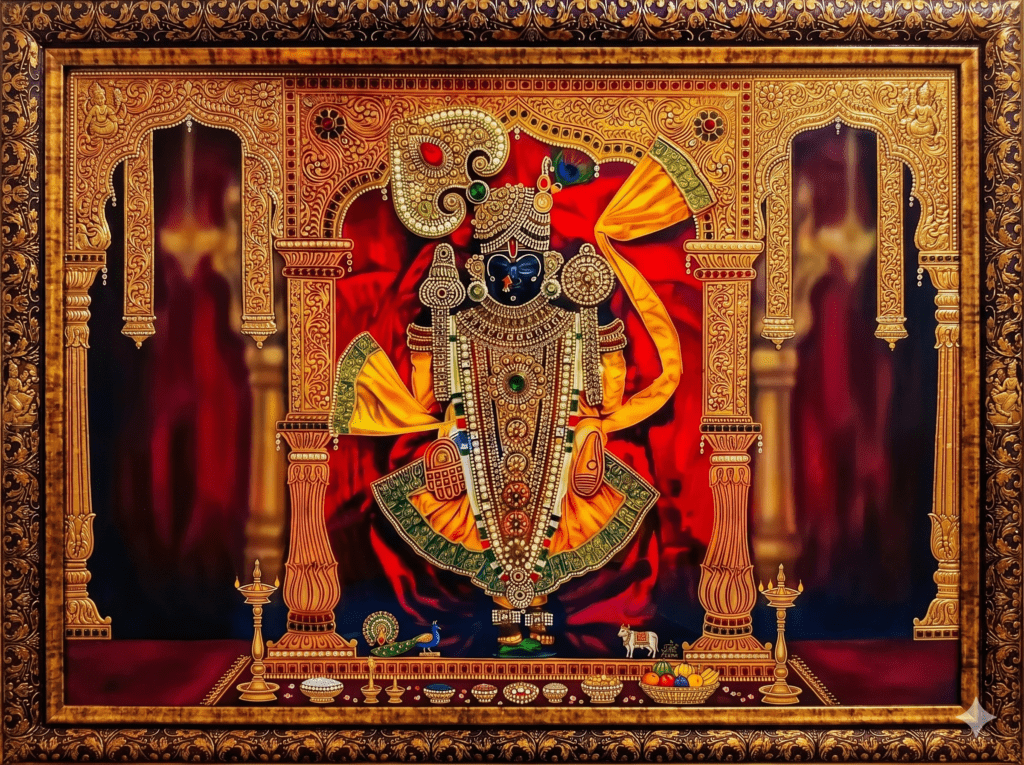
The Garbhagriha forms the spiritual heart of the temple. This sacred chamber houses the idol of Lord Krishna in his royal form as Dwarkadhish. Although devotees cannot enter the sanctum itself, they offer prayers and seek darshan from the designated area outside. Many pilgrims consider this the holiest part of the temple because it enshrines the principal deity and serves as the focal point of worship.
Priests adorn the idol with rich garments, jewellery, flowers, and crowns during different rituals and festivals. During special occasions, the sanctum displays elaborate decorations that significantly enhance the spiritual atmosphere.
Additionally, the lighting in the sanctum remains intentionally soft and traditional, creating a peaceful, meditative environment for devotees.
Sabha Mandap (Assembly Hall)
The Sabha Mandap serves as the main gathering hall for devotees and pilgrims. This section allows large groups to participate in prayers, bhajans, and religious ceremonies.
Beautifully carved pillars and ceilings decorate the hall with mythological symbols and floral patterns. Furthermore, the spacious layout enables priests to conduct rituals smoothly during major festivals and crowded pilgrimage periods.
The Sabha Mandap also plays an important role during aartis, as devotional chants and temple bells create a powerful spiritual atmosphere in the hall.
Intricate Carvings and Sculptures
The walls, pillars, and entrances of the temple display highly detailed carvings inspired by Hindu mythology. Ancient craftsmen carved divine figures, geometric designs, floral motifs, and sacred symbols into the stone surfaces with extraordinary precision.
These carvings not only enhance the temple’s beauty but also narrate stories connected to Krishna, devotion, and spiritual traditions. Consequently, visitors often spend considerable time observing the artistic details across the temple’s various sections.
Moreover, the craftsmanship reflects the advanced artistic skills that temple builders possessed centuries ago.
The Famous Dwarkadhish Temple Flag Ritual
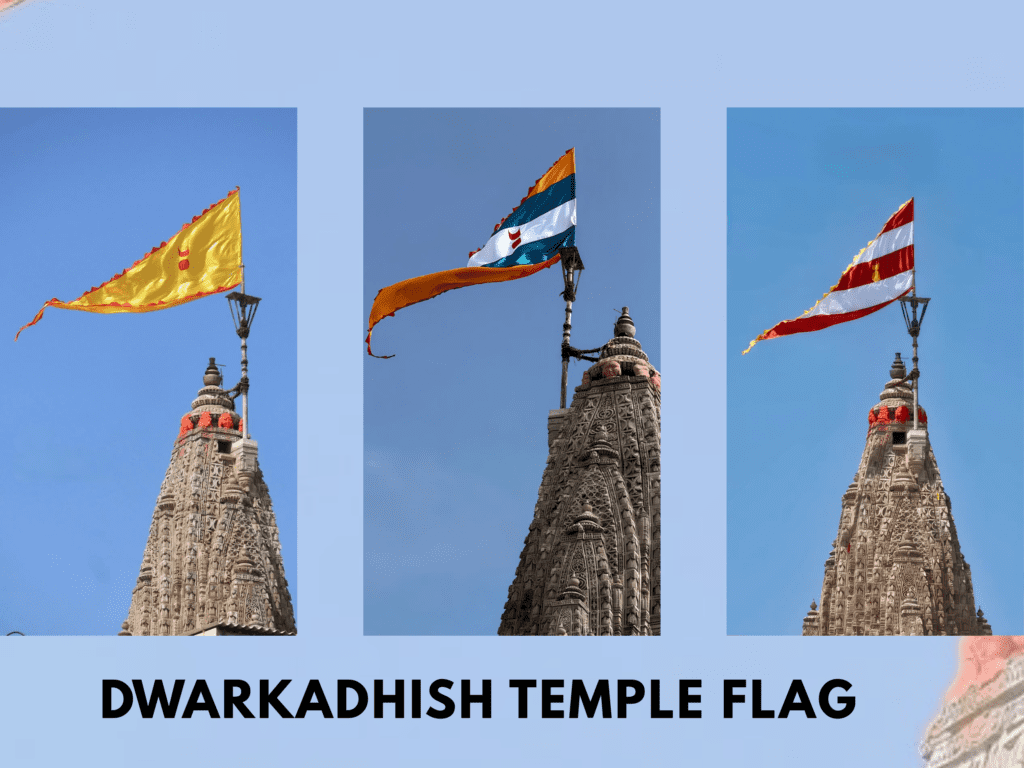
One of the most unique traditions of Dwarkadhish Temple involves the sacred temple flag, also known as the “Dhwaja.” Priests change this massive flag five times daily according to centuries-old customs.
The flag remains exceptionally significant because devotees believe it symbolizes Krishna’s divine presence over Dwarka. Many pilgrims sponsor the flag as a sacred offering and consider it highly auspicious.
Interestingly, the flag always displays symbols associated with the Sun and Moon. According to belief, these symbols represent the eternal existence of Lord Krishna’s kingdom.
The ritual of changing the flag attracts large crowds because priests climb the temple spire to perform the ceremony with great devotion and discipline.
Why the Architecture Feels Spiritually Unique
Several factors make the architecture of Dwarkadhish Temple visually and spiritually exceptional.
The temple’s towering vertical design naturally draws attention upward, symbolizing spiritual elevation and devotion. Simultaneously, the nearby Arabian Sea creates a calm and sacred atmosphere around the temple complex.
Unlike heavily crowded urban temples, Dwarkadhish Temple benefits from open coastal surroundings, temple chants, sea breeze, and uninterrupted skyline views. Therefore, the architectural experience feels deeply immersive and spiritually uplifting for pilgrims.
5. Dwarkadhish Temple Timings and Aarti Schedule
Understanding the temple’s timings and daily rituals helps visitors experience the spiritual atmosphere more meaningfully. Unlike ordinary tourist attractions, the temple follows a carefully structured schedule based on ancient traditions, devotional practices, and ceremonial worship.
Every part of the day inside the temple carries religious significance. From the morning rituals to the final night prayers, priests conduct each ceremony according to centuries-old traditions dedicated to Lord Krishna. Devotees particularly prefer the early morning hours and the late afternoon period between 4:00 PM and 5:00 PM, as these time slots generally offer a more comfortable darshan experience than the peak morning/evening hours.
Darshan Timings
The temple generally opens early in the morning and remains open until late evening, with brief breaks between rituals and preparations.
Morning darshan usually begins before sunrise because devotees believe early hours offer the purest spiritual environment. During this period, the atmosphere feels peaceful, devotional, and less crowded.
Evening darshan, on the other hand, attracts larger crowds because many pilgrims gather to witness the grand Sandhya Aarti. Temple chants, bells, lamps, and devotional music create an energetic and emotionally powerful environment during this time.
Importance of Daily Aartis
The aartis at Dwarkadhish Temple hold immense spiritual value because priests treat Lord Krishna not merely as a deity but as the king of Dwarka. Therefore, every ritual follows the traditions of royal worship.
Priests wake up the deity in the morning, decorate the idol during the day, offer meals at specific intervals, and finally perform night rituals before closing the temple.
This tradition creates a deeply personal connection between devotees and the deity because worship reflects the daily life of a living king.
Main Aarti Schedule
- Mangala Aarti – 6:30 AM
- Shringar Aarti – Morning
- Rajbhog Rituals – Afternoon
- Sandhya Aarti – 7:30 PM
- Shayan Aarti – Night
Mangala Aarti – The Most Peaceful Experience
Mangala Aarti remains one of the most spiritually significant rituals of the day. Priests perform this ceremony shortly after the temple opens in the morning. As a result, many devotees attend this aarti to begin their pilgrimage with prayers and blessings.
At this time, the temple atmosphere feels calm, devotional, and deeply meditative. Devotees often prefer this aarti because the crowd remains comparatively smaller, allowing a more peaceful darshan experience.
Additionally, the cool morning weather and soft temple chants enhance the overall spiritual feeling.
Sandhya Aarti – The Most Vibrant Ritual
The Sandhya Aarti transforms the temple into a vibrant devotional space filled with chanting, bells, lamps, and collective prayer.
As sunset approaches, large numbers of devotees gather inside the temple complex to witness the ceremony. Priests perform rituals with synchronized chants while devotees sing bhajans dedicated to Lord Krishna.
Consequently, many visitors consider the evening aarti the emotional highlight of their pilgrimage.
Best Time to Visit According to Crowd Conditions
| Feature | Morning (6:00 AM – 9:00 AM) | Evening (5:00 PM – 9:30 PM) |
|---|---|---|
| Crowd Level | Low to Moderate | High |
| Atmosphere | Calm & Meditative | Energetic & Devotional |
| Main Attraction | Mangala Aarti | Sandhya Aarti |
| Weather | Cool & Comfortable | Pleasant Sea Breeze |
Important Crowd Insights
- Janmashtami attracts extremely heavy crowds throughout the day
- Weekdays generally provide shorter waiting times
- Early mornings and the late afternoon, between 4:00 PM and 5:00 PM, generally provide a smoother darshan experience than the peak morning/evening hours.
- Swarga Dwara usually remains less crowded than Moksha Dwara
Furthermore, planning the visit can make a significant difference, especially during peak seasons. The Trip Calendar by Transforming Travels helps travelers track upcoming group tours and select dates that align with their schedule.
6. Dwarkadhish Temple, Gujarat vs Mathura – Key Differences
Although both Dwarka and Mathura share a deep connection with Lord Krishna, they represent completely different phases of his life and spirituality. Therefore, pilgrims often experience very different atmospheres while visiting these sacred cities.
Mathura represents Krishna’s birthplace and childhood memories. In contrast, Dwarka symbolizes Krishna’s reign as a wise ruler and king. Consequently, the emotional and spiritual energies of both destinations feel distinct.
Spiritual Significance
Mathura connects devotees with Krishna’s birth, childhood miracles, and playful nature. Stories from Gokul and Vrindavan dominate the spiritual atmosphere there. Devotees often experience vibrant celebrations, devotional songs, and emotionally charged temple rituals.
Dwarka, however, reflects Krishna’s mature phase as Dwarkadhish, the King of Dwarka. The city symbolizes leadership, governance, wisdom, and responsibility. Therefore, the spiritual environment in Dwarka feels calmer, more disciplined, and deeply meditative.
Cultural Atmosphere
Mathura remains lively throughout the year because festivals such as Holi and Janmashtami attract enormous crowds. Streets remain filled with devotional music, cultural performances, and pilgrims from across India.
Dwarka offers a comparatively peaceful environment due to its coastal setting. The Arabian Sea, temple bells, and slower pace of life create a spiritually soothing atmosphere.
Pilgrimage Experience
Both destinations hold immense religious importance, yet the overall travel experience differs significantly.
| Feature | Dwarka | Mathura |
|---|---|---|
| Spiritual Identity | Krishna’s Kingdom | Krishna’s Birthplace |
| Atmosphere | Peaceful & Coastal | Festive & Crowded |
| Main Spiritual Focus | Leadership & Dharma | Childhood & Devotion |
| Crowd Levels | Moderate | Heavy Throughout the Year |
| Travel Experience | Calm & Reflective | Energetic & Cultural |
Because of these differences, many devotees prefer visiting both destinations to understand the complete spiritual journey of Lord Krishna.
Additionally, travellers who prefer a more flexible itinerary can opt for customized travel plans. Transforming Travels’ tailor-made tours to destinations like Dwarka allows visitors to travel at their own pace while covering all key experiences.
7. Other Famous Dwarkadhish Temples in India
Although the Dwarkadhish Temple in Gujarat remains the most spiritually important shrine dedicated to Krishna as Dwarkadhish, several other temples across India preserve devotion toward this royal form of Krishna.
Each temple reflects regional traditions, architectural styles, and devotional practices while maintaining the same spiritual essence.
Shree Dwarkadhish Temple, Mathura
The Dwarkadhish Temple in Mathura remains one of the most important Krishna temples in northern India. Unlike Dwarka, which highlights Krishna’s role as king, this temple emphasizes his connection with Mathura and his early life stories.
During major festivals, especially Janmashtami and Holi, the temple becomes a center of celebration, filled with devotional music, decorations, and spiritual energy.
The temple’s colorful interiors and festive atmosphere attract both pilgrims and cultural travelers year-round.
Dwarkadhish Temple, Kankroli
The Dwarkadhish Temple in Kankroli, Rajasthan, is of great importance within the Vallabh Sampradaya tradition. Devotees from Rajasthan and Gujarat regularly visit this temple for spiritual gatherings and religious ceremonies.
Although the rituals resemble those followed in Dwarka, the temple displays strong Rajasthani architectural influences through its carvings, pillars, and decorative elements.
The peaceful setting near Rajsamand Lake further enhances the temple’s spiritual environment.
Importance of Visiting Multiple Dwarkadhish Temples
Visiting multiple Dwarkadhish temples allows devotees to understand Krishna’s spiritual journey from different perspectives.
Mathura connects pilgrims with Krishna’s childhood and birth stories, while Dwarka reflects his responsibilities as ruler and protector. Consequently, devotees experience a deeper emotional and spiritual connection by exploring both traditions.
8. Best Time to Visit Dwarkadhish Temple
Choosing the right season greatly influences the overall pilgrimage experience at Dwarkadhish Temple.
The months from October to March offer the most comfortable weather for temple visits and sightseeing. During this period, temperatures remain moderate, the sea breeze keeps the climate pleasant, and outdoor exploration feels less exhausting.
Additionally, the pleasant winter weather creates a peaceful atmosphere around the temple complex. Many visitors prefer either the early morning hours or the late afternoon period between 4:00 PM and 5:00 PM for a more comfortable darshan experience.
Weather Conditions Throughout the Year
Summer temperatures in Gujarat often reach extremely high levels, particularly in the afternoon. Therefore, daytime travel and temple visits may feel tiring between April and June.
The monsoon season brings occasional rainfall and cooler weather. However, strong coastal winds and humidity can sometimes make travel more difficult during this period.
Consequently, most pilgrims prefer winter and post-monsoon months for a smoother spiritual journey.
Janmashtami – The Grandest Festival Celebration
Janmashtami remains the most important festival celebrated at Dwarkadhish Temple because devotees honor the birth of Lord Krishna with extraordinary devotion and enthusiasm.
During the festival, priests decorate the temple with flowers, lights, traditional fabrics, and ornaments. Bhajans, devotional dances, and special ceremonies continue throughout the day and night.
At midnight, devotees gather in massive numbers to witness the symbolic celebration of Krishna’s birth.
However, Janmashtami also attracts extremely large crowds. Therefore, visitors should arrange accommodation and transportation well in advance.
Best Experience According to Travel Style
- Early morning and the late afternoon between 4:00 PM and 5:00 PM often offer a more peaceful darshan experience than the peak morning and evening hours.
- Evenings offer vibrant devotional energy during aartis
- Weekdays generally remain less crowded than weekends
- Winter months allow the most comfortable sightseeing conditions
Therefore, travelers who seek calm spiritual experiences should prefer weekday mornings between October and March.
9. How to Reach Dwarkadhish Temple
Dwarka enjoys excellent connectivity via air, rail, and road networks, making travel convenient from major Indian cities.
Moreover, improved infrastructure and tourism facilities have significantly simplified pilgrimage travel in recent years.
From Delhi
Travelers from Delhi can reach Dwarka through direct train services connecting major railway routes with Gujarat.
Alternatively, travelers can take a flight to Jamnagar and continue the journey by road. This option significantly reduces overall travel time. Although Delhi has better flight connectivity to Rajkot and Ahmedabad, most travelers prefer the same.
From Ahmedabad
Ahmedabad serves as one of the primary gateways to Dwarka. Regular buses, trains, taxis, and private vehicles connect both cities efficiently.
Additionally, the highways between Ahmedabad and Dwarka remain well-maintained, ensuring a smooth journey.
From Rajkot
Rajkot lies comparatively closer to Dwarka. Therefore, many travelers prefer buses or taxis from Rajkot because the journey is shorter. Rajkot airport also offers excellent connectivity to all major Indian cities.
As a matter of fact, you can very easily reach Dwarka from all major cities of India, hassle-free, either by train or flight.
Travel Modes
By Air
Jamnagar Airport serves as the nearest airport to Dwarka. But flight connections to Jamnagar are very poor from Delhi. Travelers can hire taxis or use bus services from the airport to reach the temple city comfortably.
By Train
Dwarka Railway Station connects with several major Indian cities, including Delhi, Ahmedabad, Rajkot, and Mumbai.
The railway station is also relatively close to the temple area, making local transportation easier.
By Road
Well-maintained highways support comfortable travel through private cars, buses, and taxis. Coastal road journeys through Gujarat also provide scenic landscapes along certain routes.
Moreover, travelers can simplify their journey by following a structured itinerary. A detailed Dwarkadhish Temple travel plan from Transforming Travels covers routes, nearby attractions, and essential travel details in an organized way.
10. Places to Visit Near Dwarkadhish Temple
Several important attractions surround Dwarkadhish Temple, adding historical, spiritual, and scenic value to the pilgrimage experience.
Gomti Ghat
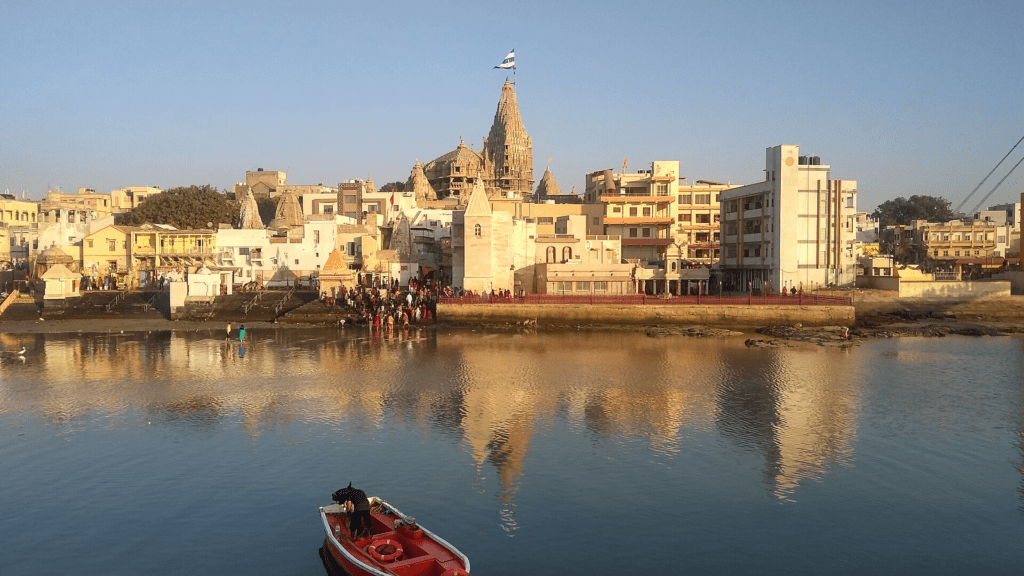
Gomti Ghat, beside the temple, is one of the most sacred bathing spots in Dwarka.
According to belief, devotees cleanse themselves spiritually before entering the temple by taking a holy dip in the Gomti River. Priests also perform religious rituals and offerings near the ghats throughout the day.
The peaceful riverside atmosphere further makes the location ideal for meditation and quiet reflection.
Bet Dwarka
Bet Dwarka lies on an island and is now accessible through a short road journey from Dwarka city.
According to mythology, Lord Krishna lived here with his family after establishing Dwarka. Therefore, devotees consider this destination highly sacred.
The combination of mythology, island settings, and temple visits creates a memorable pilgrimage experience for visitors.
Rukmini Devi Temple
The Rukmini Devi Temple honors Goddess Rukmini, the principal consort of Lord Krishna.
Ancient legends explain that a sage’s curse separated Rukmini from Dwarka, which is why the temple stands slightly away from the city center.
Beautiful carvings, spiritual stories, and peaceful surroundings make this temple an essential stop during the pilgrimage.
Nageshwar Jyotirlinga
Nageshwar Jyotirlinga is one of the twelve sacred Jyotirlingas dedicated to Lord Shiva.
Devotees often combine visits to Dwarkadhish Temple and Nageshwar Jyotirlinga because both hold immense spiritual significance within Hindu traditions.
Additionally, the massive Shiva statue near the temple attracts both devotees and photographers.
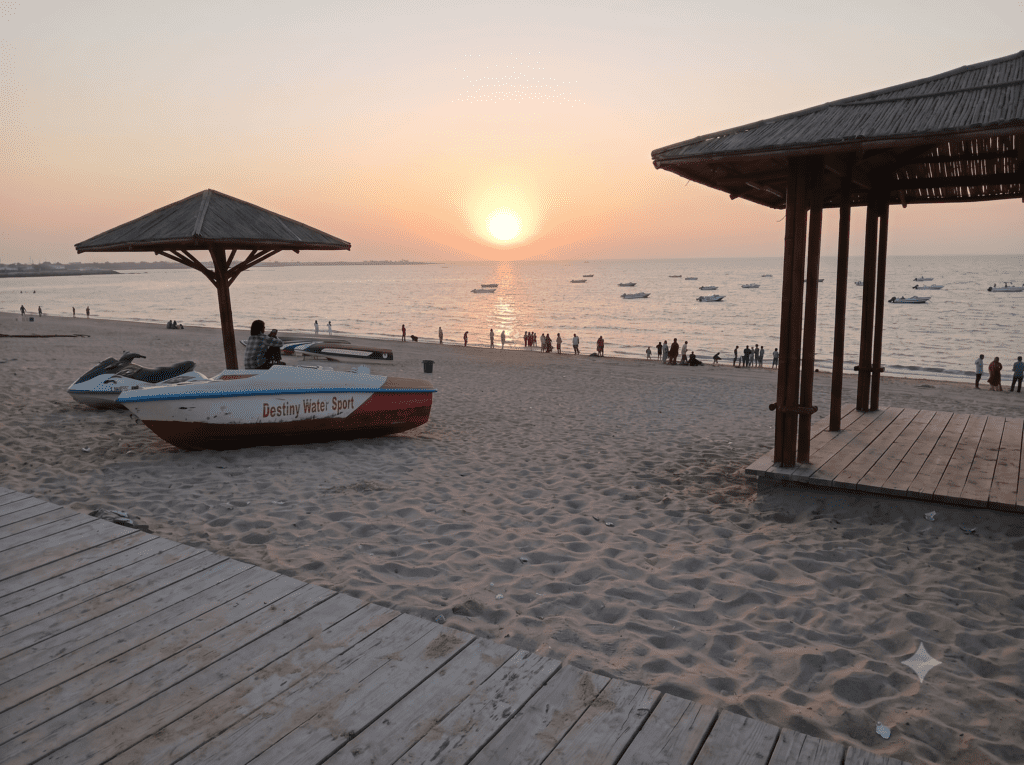
Shivrajpur Beach
Shivrajpur Beach offers a refreshing contrast to the spiritual atmosphere of Dwarka.
Clean blue waters, peaceful surroundings, and soft white sand create a relaxing environment after temple visits. Consequently, many travelers spend evenings here after completing darshan.
11. Hotels Near Dwarkadhish Temple
Travelers can easily find accommodations near Dwarkadhish Temple, as Dwarka offers hotels across various budget categories.
Budget Hotels
Budget hotels provide clean rooms, essential facilities, and convenient access to the temple area.
Mid-Range Hotels
Mid-range properties provide larger rooms, improved comfort, dining facilities, and better overall services for families and group travelers.
Luxury Hotels
Luxury hotels offer premium facilities, including spacious suites, sea-facing rooms, private dining areas, and enhanced hospitality services.
Some high-end accommodations also offer beautiful views of the Arabian Sea, enhancing the overall stay experience.
Important Booking Tips
- Book hotels early during Janmashtami and winter holidays
- Choose accommodations near the temple for easier darshan access
- Confirm parking availability during peak seasons
- Prefer verified stays with strong cleanliness and service ratings
Additionally, accommodations within walking distance of the temple help visitors avoid traffic congestion during crowded festival periods.
12. Travel Tips for Visiting Dwarkadhish Temple
Careful planning helps visitors have a smoother, more spiritually fulfilling pilgrimage.
Important Dwarkadhish Temple Guidelines:
- Dress modestly to respect temple traditions
- Visit early in the morning for a peaceful and less crowded darshan
- Visitors must not carry mobile phones inside the temple
- They must remove their shoes and store them in designated areas before entering
- Keep belongings minimal to avoid inconvenience
Best Visiting Practices
Early morning and the late afternoon between 4:00 PM and 5:00 PM usually offer shorter queues, calmer surroundings, and better opportunities for peaceful prayer.
Additionally, pilgrims should maintain queue discipline and follow temple guidelines respectfully to preserve the sacred atmosphere inside the premises.
Local Travel Advice
Visitors should carry drinking water, especially during warmer months. Comfortable footwear also helps while exploring nearby attractions around Dwarka.
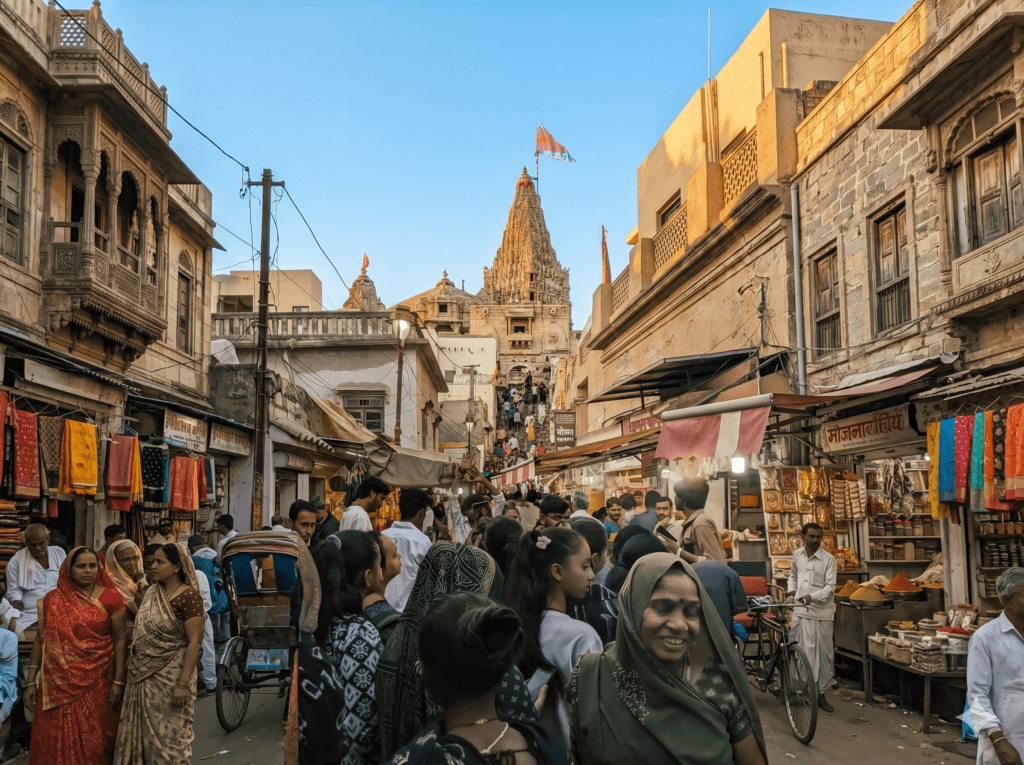
Additionally, large vehicles cannot reach the main temple entrance. Visitors usually need to get down near areas such as Bhadrakali Temple or Teen Batti Circle and then walk approximately 500 to 800 meters to the temple. Alternatively, they can use local auto-rickshaws or cycle rickshaws.
Moreover, the area around the temple remains crowded for most of the day. Therefore, visitors should avoid carrying expensive jewelry, large amounts of cash, or other unnecessary valuables.
Furthermore, travelers should allow sufficient time for nearby destinations such as Bet Dwarka and Nageshwar Jyotirlinga rather than rushing through the pilgrimage.
Furthermore, travelers planning extended spiritual journeys can explore travel insights and destination updates on Transforming Travels’ Instagram page.
13. Dwarkadhish Temple Photos, FAQs, and Travel Summary
Dwarkadhish Temple offers several memorable photography opportunities alongside its spiritual significance.
Best Photo Spots in Dwarkadhish Temple
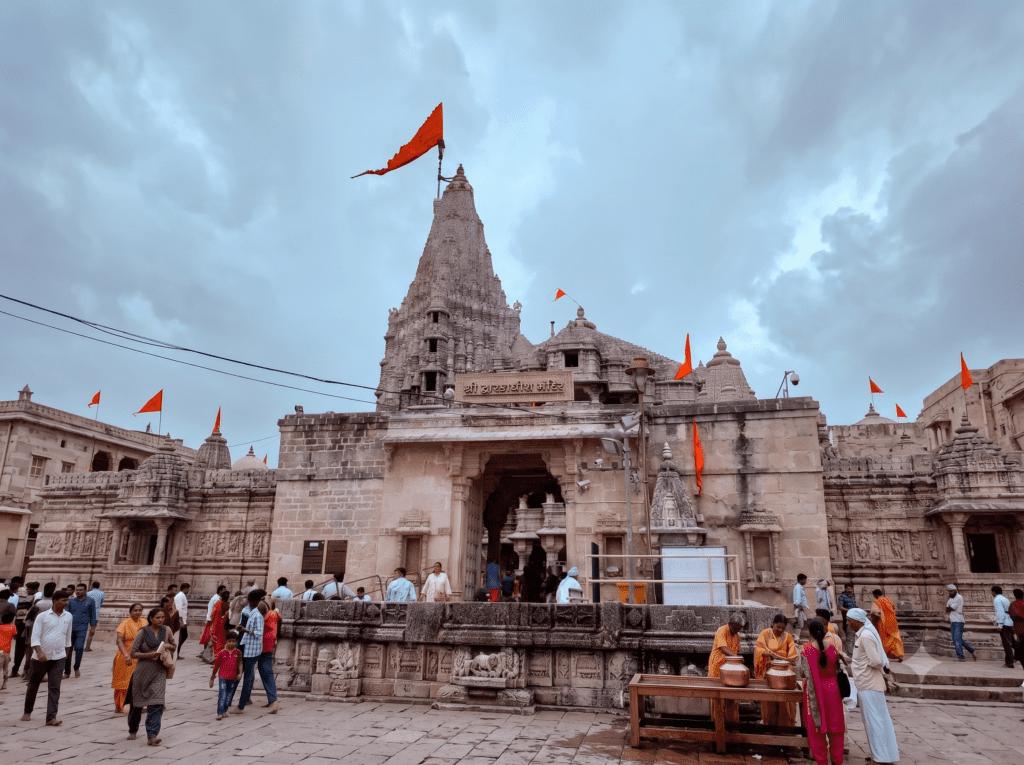
Temple Entrance
The grand entrance features detailed carvings, ancient craftsmanship, and impressive stone architecture, creating excellent photo compositions.
Temple Flag
The massive temple flag remains one of the most iconic visual elements of Dwarka. Since priests change the flag multiple times daily, visitors often gather to witness and photograph the ritual.
Gomti River Side
The peaceful surroundings near Gomti Ghat provide scenic views during sunrise and sunset. The combination of temples, riverfront steps, and devotional atmosphere creates visually stunning frames.
Frequently Asked Questions About Dwarkadhish Temple
Q1. Is mobile allowed inside Dwarkadhish Temple?
No, visitors cannot carry mobile phones inside the temple premises.
Q2. What is the best time to visit Dwarkadhish Temple?
October to March offers the most comfortable weather conditions for temple visits and sightseeing.
Q3. How long does Darshan usually take?
Darshan may take anywhere between 30 minutes and 2 hours, depending on crowd levels and festival periods.
Q4. Is VIP darshan available?
Limited VIP darshan arrangements may remain available during certain periods and festival seasons.
Q5. Is there any dress code?
Although the temple does not enforce a strict dress code, visitors should wear modest and respectful clothing suitable for a sacred religious site.
Conclusion
Dwarkadhish Temple combines spirituality, mythology, history, architecture, and coastal beauty in a truly extraordinary way. From the legends of Krishna’s golden kingdom to the sacred rituals performed daily inside the temple, every aspect of the pilgrimage carries deep spiritual significance. The temple not only strengthens devotion toward Lord Krishna but also allows visitors to experience the timeless legacy of one of Hinduism’s most sacred kingdoms.
Additionally, travelers can further combine this pilgrimage with peaceful destinations such as Kausani to create a more balanced travel experience. Dwarka offers powerful spiritual energy, while Kausani presents calm Himalayan landscapes and natural serenity. Therefore, a thoughtfully planned journey to Dwarkadhish Temple provides both spiritual fulfillment and unforgettable travel memories.
Furthermore, travellers who enjoy exploring spiritually significant destinations can continue their journey beyond Dwarka. Sacred sites in Uttarakhand, such as Chitai Golu Devta Temple in Almora, offer a different yet equally enriching spiritual experience. While Dwarkadhish Temple reflects the royal legacy of Lord Krishna, Chitai Golu Devta Temple showcases the unique devotional traditions and cultural heritage of the Kumaon region.

