


1. Introduction – Why Kausani Is Called the Switzerland of India
It is one of the most peaceful Himalayan villages in the Kumaon region of Uttarakhand. This destination is a quiet place, unlike overcrowded hill stations, where one can travel slowly and enjoy uninterrupted views of the Himalayas. This is exactly why the term ‘Kausani, Switzerland of India’ remains very appealing to tourists seeking the untamed beauty of nature.
The comparison goes back to Mahatma Gandhi, who stayed here in 1929. During his visit, he was deeply impressed by its vast Himalayan landscape and the serene environment. As a result, he extended his stay and, moreover, composed parts of his commentary on the Bhagavad Gita here. It was Gandhi who famously described Kausani as the “Switzerland of India,” not just for its snow-clad peaks, but for its quiet, untouched beauty.

In modern times, it still lives up to that title. For travelers who wish to explore hidden gems, they can discover curated itineraries and local insights on the Transforming Travel Almora and Kausani pages.
2. Where Kausani Is Located and What Makes Its Setting Unique in Kumaon
It is a town in the Bageshwar district of Uttarakhand, located at an altitude of approximately 1,890 meters above sea level. It lies approximately
- 53 km from Almora
- 120 km from Nainital
- 180 km from Kathgodam railway station.
What makes Kausani different?
It is not affected by mass tourism, unlike commercial hill stations, such as Nainital or Mussoorie. This directly impacts the experience.
Unique geographical advantages
- A wide view of the Himalayan range is visible from here as the village is located on a ridge top; therefore, the landscape feels open and expansive.
- There is no urban chaos; instead, the silence of nature defines the experience.
- Moreover, thick pine forests and tea gardens surround the village, adding to its scenic charm.
- As a result, the low tourist density makes it ideal for slow and peaceful travel.
Quick Snippet
- Best For: Traveling peacefully, doing nature photography.
- Popular Attractions: It includes Himalayan scenery, sunrise, tea gardens, Rudradhari Falls and Caves, Anashakti Ashram, and Baijnath Temple.
- Altitude: 1,890 meters
- Ideal stay: 2–3 days
For these reasons, Kausani is a destination rather than a place.
3. The Himalayan Views – Nanda Devi, Changing Light, and Panoramic Landscapes
Kausani has the greatest feature: a 180-degree view of the Himalayan range. When there is no storm, the mountains look so near that they seem unreal.
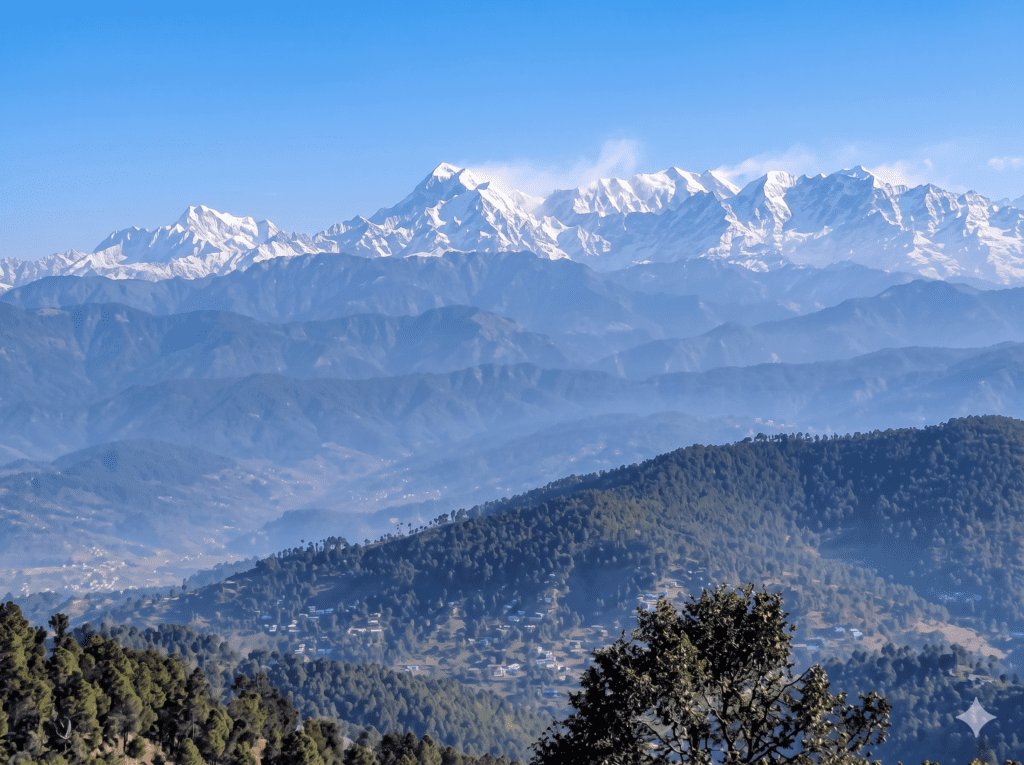
Major peaks visible from Kausani
- Nanda Devi (the second-highest peak in India)
- Trishul
- Panchachuli Peaks
Yet what makes the experience even greater is not only the peaks but also how they change their colors throughout the day.
How the landscape transforms
Morning – Golden Awakening
The sunbeams struck the snow peaks, turning them golden. This is the most captivating image in Kausani.
Afternoon – Crystal Clarity
The weather is clear, and the mountain ranges are sharply outlined and seen in detail. This perfectly fits in landscape photography.
Evening – Soft Sunset Colors.
The peaks gradually turn orange as the rays of the setting sun are reflected, then pink, and fade to blue shadows. The whole valley looks so serene and unreal.
Because the landscape changes constantly, the same view looks different every few hours.
4. Sunrise Experiences – Kausani vs Almora
Sunrise in Kausani is often considered one of the best in Uttarakhand. However, the nearby town of Almora offers a beautiful sunrise experience.
Comparison Table
| Location | Experience | Crowd Level | Best For |
| Kausani | Wide Himalayan sunrise view | Low | Peaceful photography |
| Almora | Layered hill sunrise | Moderate | Quick viewpoints |
Key Differences Explained
- Kausani offers a wider Himalayan range
The open horizon offers a full panoramic view of sunrise over snow-covered peaks. - Almora provides layered landscapes.
Instead of peaks, you get rolling hills fading into each other. - Crowd factor matters
It remains quieter, making it ideal for travelers seeking solitude.
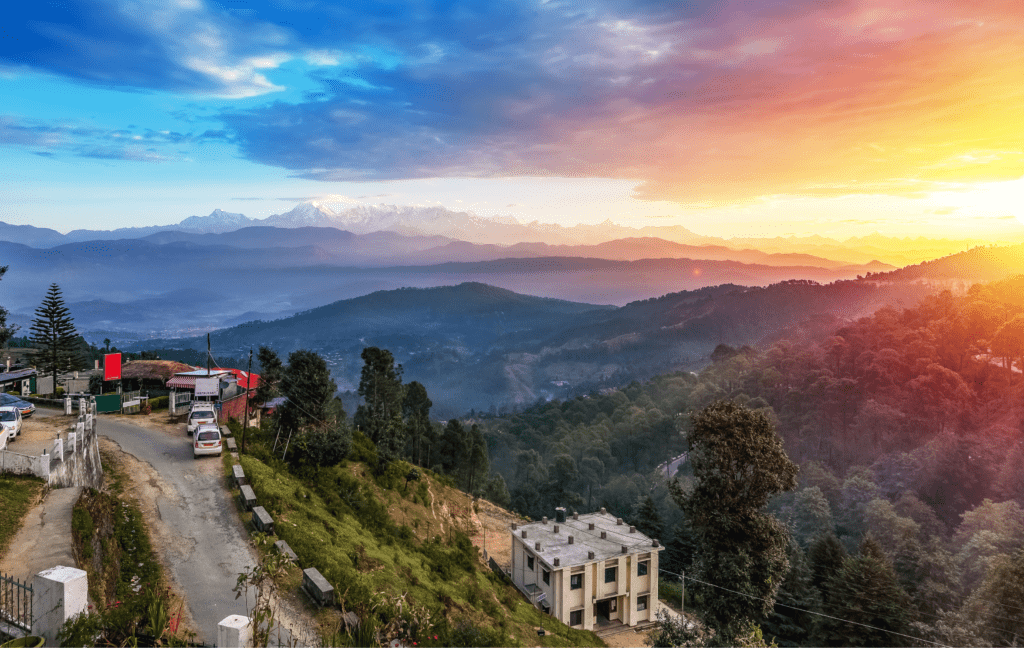
Both experiences are valuable, but they cater to different moods. Those looking for iconic Himalayan views often prefer Kausani.
5. Kausani Tea Estate – Walking Through Uttarakhand’s Scenic Tea Gardens
The Kausani Tea Estate, therefore, adds a unique charm to the region; moreover, spread across lush green slopes, it offers a refreshing contrast to the snow-covered peaks.
History and significance
The tea estate was developed during the British era. The climate and soil conditions were found suitable for tea cultivation, similar to regions like Darjeeling.
What to experience here
- Guided plantation walks
- Understanding tea processing from leaf to cup
- Tasting locally produced organic tea
Atmosphere and experience
Walking through the tea gardens feels slow and meditative; meanwhile, the sound of wind through the leaves gently replaces city noise. As a result, it becomes a perfect spot for:
- Photography
- Relaxation
- Short nature walks
We often share real-time visuals from such locations on the Transforming Travel Instagram page, helping travelers get a realistic idea before visiting.

For those planning a trip, Transforming Travels also offers customized tours and group experiences.
6. Places Around Kausani for a Complete Experience
Kausani is not just about views; rather, it offers much more. In addition, several nearby attractions add cultural and natural depth to the overall journey.
Anashakti Ashram
Associated with Mahatma Gandhi, this ashram is where he stayed during his visit.
Why visit:
- Historical significance
- Peaceful environment
- Insight into Gandhi’s philosophy
Rudradhari Falls and Caves
A hidden natural spot surrounded by dense forests.
Highlights:
- Scenic trekking route
- Waterfall views
- Ancient caves and temples
This location is ideal for those who want to explore beyond mainstream viewpoints.
Baijnath Temple
An ancient temple complex located on the banks of the Gomti River.
Key features:
- Stone architecture dating back to the 12th century
- Spiritual and historical importance
- Calm riverside setting
A short drive from Kausani also allows travelers to visit nearby gems around Almora, such as the Katarmal Sun Temple, Kasar Devi Temple, and Jageshwar Temple, enriching the experience even further.

Quick Travel Insight
- Combine these places in a half-day trip from Kausani
- Best explored early morning for fewer crowds
- Ideal for both cultural and nature-focused travelers
It is not just another hill station. It is, therefore, a destination where nature, silence, and perspective come together. This is exactly what made Mahatma Gandhi compare it to Switzerland, and why that comparison still feels relevant today.
7. Visiting Kausani – How to Reach, Best Time to Visit, and Travel Planning Tips
When planning a trip to Kausani, Uttarakhand, it is important to know the accessibility, seasonal variations, and when the Himalayas are likely to offer clear views. As a result, careful planning makes the overall experience far more enjoyable.
How to Reach Kausani
It is well-connected yet still retains its offbeat appeal.
Road
- Motorable roads extend from Almora, Nainital, and Kathgodam to Kausani, thus ensuring convenient travel
- Regular cabs and buses frequently connect Kausani with Almora, thereby making travel between the two destinations convenient
- A private taxi can be hired, allowing travelers to enjoy a more comfortable and flexible journey
Rail
- Nearest railway station: Kathgodam (approx. 130 km from Kausani)
- A private taxi, shared cab, or bus can be hailed from here
Air
- Nearest airport: Pantnagar Airport (approx. 160 km from Kausani)
- From the airport, one needs to continue via road, taking a private taxi
8. Best Time to Visit Kausani for Clear Himalayan Views
Visibility is, therefore, directly affected by the weather in Kausani. Hence, selecting the appropriate season ensures you do not miss the renowned view of Nanda Devi.
Seasonal Breakdown
Winter (October-March)
- Ideal for: Sightseeing, relaxation, witnessing crystal clear mountain views, and snow-white mountains
- Visibility: Excellent
- Experience: Chilly, yet very satisfying
- Weather: Pleasant to very cold
April to June (Summer)
- Ideal for: Sightseeing, relaxation, outdoor experiences
- Visibility: Good, slight haze might occur
- Experience: Very comfortable and soothing
- Weather: Slightly warm to pleasant
July-September (Monsoon)
- Ideal for: Relaxation and monsoon enjoyment
- Visibility: Low because of clouds
- Experience: Stunning Green landscapes and clouds
- Weather: Rainy
Quick Travel Snippet
- Best months for Himalayan views: October-March
- To avoid: Peak monsoon
- Optimal time to spend: 2 days
To plan trips more effectively, travelers often refer to the Transforming Travel calendar page, which showcases group tours to this region and many other places in India and internationally.
9. What Makes Kausani Feel Underrated Despite Its Beauty
Kausani possesses the rarest of all attributes, silence. Although it offers some of the finest photogenic and panoramic views of the Himalayas, it is still not overly crowded.
Why Kausani Feels Different
- It has minimal commercialization compared to Nainital and Mussoorie, thereby preserving its natural charm.
- The area experiences low traffic and noise, thus creating a peaceful environment.
- It offers an authentic village atmosphere that reflects the local culture.
- Visitors can connect with nature, creating a more refreshing and immersive experience.

Experience Beyond Tourism
Instead of crowded viewpoints, the place offers:
- Quiet mornings with mountain views create a peaceful start to the day.
- Slow walks through tea gardens, allowing you to unwind and connect with nature.
- Evenings without city lights, offering a calm and starlit atmosphere.
- Himalayan views from Anashakti Ashram
- A more close-up interaction with nature while hiking to Rudhrahari Falls and Caves
This creates a deeper travel experience rather than a checklist trip.
Quick Insight
Kausani is not about things to do; rather, it is about the feeling the place evokes in you.
Kausani is not about activities; instead, it focuses on the emotions and peace the place brings within you.
It is for this reason that most travelers find it too late, usually after visiting more frequented places. That is also why guided tours on the Transforming Travels Almora and Kausani pages will help travelers explore them in a more meaningful way.
10. A Practical Six-Day Itinerary for Kausani
Besides short stays, a 6-day Kumaon tour is favored by many visitors, covering Kausani and other cultural, spiritual, and scenic spots in the area. This is the initial itinerary, presented in short, concise form.
Day 1: Group Departure from Delhi.
The expedition begins in Delhi and then heads into the hills of Uttarakhand; as a result, as the landscape transforms, the experience gradually shifts from the urban rush and moves to a serene mountain environment.
Day 2: Almora arrival | Kasar Devi Temple at Sunset.
Arrive in Almora and check into your hotel, allowing yourself some time to relax and soak in the peaceful mountain atmosphere. Later in the evening, visit Kasar Devi Temple, known not only for its spiritual significance but also for its serene surroundings and mesmerizing sunset views. As the sun gradually disappears behind the Himalayan ridges, the calm environment and cool mountain air further make the experience truly unforgettable.
Day 3: Baijnath Temple, Kausani Tea Gardens & Anashakti Ashram
The day begins with a visit to Baijnath Temple, an ancient temple complex situated on a peaceful riverside, thereby setting a calm and spiritual tone for the journey.
Afterward, continue to Kausani, where lush tea gardens and refreshing mountain air create a serene, immersive Himalayan experience.
Later, visit Anashakti Ashram, which is not only associated with Mahatma Gandhi but also admired for its peaceful atmosphere and breathtaking panoramic views of the Himalayan peaks.

Day 4: Jageshwar Temple, Katarmal Sun Temple & Chitai Golu Devta Temple
This day focuses on heritage, spirituality, and history; as a result, it offers a deeper cultural experience throughout the journey.
First, visit Jageshwar Temple, a cluster of ancient temples surrounded by thick deodar forests; as a result, the place creates a peaceful and spiritual atmosphere.
Afterward, continue to the Katarmal Sun Temple, which is not only architecturally remarkable but also historically significant, thereby adding further depth to the experience.
Later, visit Chitai Golu Devta Temple, widely known for its thousands of hanging bells and strong local faith, offering a unique glimpse into the spiritual traditions of the Kumaon region.
Day 5: Kainchi Dham & Bhimtal
The journey continues with a blend of spirituality and relaxation; consequently, the day feels both peaceful and refreshing.
First, visit Kainchi Dham, a renowned spiritual destination known for its calm atmosphere and religious significance.
Afterward, continue towards Bhimtal, where the serene lakeside environment, along with boating activities, further creates a relaxing and enjoyable experience.
Finally, travelers can proceed from Bhimtal to Haldwani to board their sleeper bus for the onward journey; thus, the trip concludes with a comfortable travel experience.
Day 6: Arrival in Delhi & Departure
Finally, the journey concludes with a return to Delhi, thereby completing a balanced Kumaon experience filled with nature, culture, and scenic beauty.
11. Frequently asked questions about Kausani.
Q1. What made Kausani the Switzerland of India?
Mahatma Gandhi gave Kausani this title during his visit. He liked its serene environment and Himalayan vistas and compared them with Switzerland, and the name has remained ever since.
Q2. What is the best time to see the Nanda Devi peak from Kausani?
The best time to see the Nanda Devi skies is in the winter months (October to March). Otherwise, early morning hours are also a good time when the skies are clear. Excellent visibility is sometimes there, even after rain.
Q3. Which is better: Sunrise Point in Almora or Kausani?
They, however, both provide varied experiences. Kausani offers an extensive Himalayan sunrise, whereas Almora has stratified hill scenery. Kausani is the favored choice for mountain scenery, but in Almora, you can make quick scenic stops.
Q4. Is Kausani a good destination to spend 1 or 2 days?
Yes, Kausani is a good place to visit. A 2-day vacation will be perfect because, in addition to local sightseeing, there will be time to see the sunrise and sunset. It can be a 1-day trip, but it can feel rushed.
Q5. What is the necessary number of days to explore Kausani?
It typically takes about 2 days to explore it; however, many travelers choose to extend their trip by visiting the surrounding areas.
Q6. What are the key attractions in Kausani?
The major attractions include Anashakti Ashram, Kausani Tea Estate, Baijnath Temple, and other Himalayan vistas, thereby offering a well-rounded experience.
Q7. What is the distance between Kausani and Almora?
Kausani is about 50-55 km from Almora, and the drive takes about 2 hours.
Q8. Can you stay in Kausani?
Yes, Kausani offers a variety of accommodations, including hotels, homestays, and resorts. Most accommodations offer direct views of the Himalayas, making the stay even more memorable.
12. Conclusion – Why Kausani Truly Lives Up to the Switzerland of India Title
It is more than just a scenic destination. It is, therefore, a form of slow travel that offers a deeper and more meaningful experience. Moreover, the panoramic Himalayan scenery, the iconic view of Nanda Devi from Kausani, and its tranquil setting together make it truly unique.

It is not merely a comparison, the name Kausani, Switzerland of India, but an expression of feeling, of the effect of the place, which is unfiltered and real, like the golden sunrises or silent evenings.
It offers an enchanting experience to travellers who want meaningful trips rather than crowded ones. Exploring Kausani is not only easy but also very soulful.
Finally, Kausani is not in a hurry to see the attractions. Instead, Kausani encourages travelers to slow down, admire the surroundings, and truly experience the Himalayas.

